A roofing system is more than just the outer covering of a building. It is a complete system designed to protect the structure from water damage, weather exposure, heat loss, and long-term deterioration.
Roof performance depends on several factors, including correct design, suitable materials, proper installation methods, drainage planning, waterproofing details, inspections, and regular maintenance.
This is where Roofing COP (Code of Practice) becomes important.
A Roofing Code of Practice provides recognized guidelines and professional practices that help roofing contractors complete roofing work safely, consistently, and according to accepted industry standards.
For property owners and contractors in New York City, Roofing COP principles should be considered together with applicable NYC Building Code requirements, manufacturer installation instructions, project specifications, and safety requirements.
In this guide, we explain what Roofing COP means, what it covers, why it matters, how contractors use it, and how it helps improve roofing quality.
Quick Answer: What Is Roofing COP?
Roofing COP means Roofing Code of Practice. It is a set of professional guidelines that explains recommended methods for designing, installing, inspecting, and maintaining roofing systems.
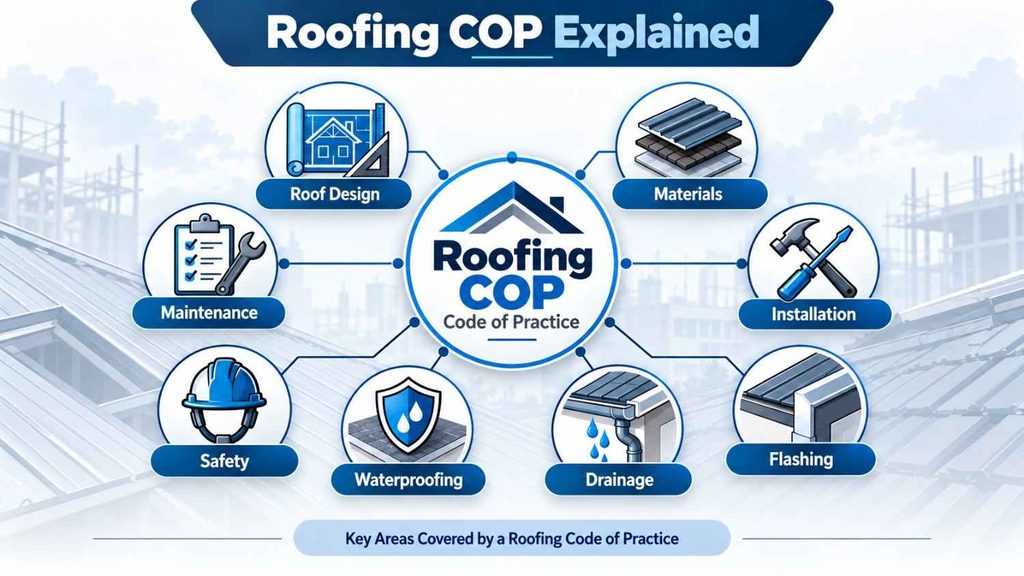
A Roofing COP commonly covers:
- Roof design and planning
- Material selection
- Installation procedures
- Flashing details
- Drainage systems
- Waterproofing
- Roof penetrations
- Safety practices
- Inspection procedures
- Maintenance requirements
A Roofing COP does not automatically replace local building regulations. Instead, it works together with building codes, manufacturer instructions, and project requirements.
What Is Roofing COP (Code of Practice)?
COP stands for Code of Practice. In the roofing industry, it refers to a structured approach that helps roofing professionals complete work according to accepted industry standards.
Every roofing system contains multiple components that must work together. A failure in one area, such as poor drainage or incorrect flashing installation, can affect the entire roof system.
A Roofing COP helps contractors understand the correct methods for:
- Selecting suitable roofing materials
- Preparing roof surfaces
- Installing roofing components correctly
- Managing water movement
- Protecting vulnerable roof areas
- Performing inspections
- Maintaining long-term roof performance
Although specific Roofing COP requirements may vary by location and roofing system, the main objective remains the same: creating safer, more durable, and better-performing roofs.
Why Roofing COP Matters for Roofing Projects
Following Roofing COP guidelines is important because many roofing failures are caused by installation mistakes rather than defective materials.
A roof can use high-quality products, but incorrect installation may still result in:
- Water leaks
- Damaged insulation
- Reduced roof lifespan
- Structural moisture problems
- Failed inspections
- Expensive repair costs
Improves Roofing Quality
Professional roofing standards provide contractors with a clear process for completing important tasks correctly.
For example, proper flashing installation around roof penetrations, walls, and edges helps prevent water from entering areas where roofing materials meet other building components.
Supports Roofing Compliance
Roofing compliance means completing work according to applicable standards, regulations, and manufacturer requirements.
A professional contractor considers:
- Local building requirements
- Roofing system specifications
- Safety guidelines
- Material installation instructions
This approach reduces avoidable problems and improves long-term performance.
Protects Property Investment
A properly installed roof can provide years of reliable protection. Following Roofing COP principles helps property owners avoid unnecessary repairs caused by poor workmanship or incorrect installation methods.
Roofing COP vs Building Code: What Is the Difference?
Roofing COP and building codes are related but serve different purposes.
| Roofing COP | Building Code |
|---|---|
| Provides industry guidance | Provides legal construction requirements |
| Explains recommended practices | Defines minimum standards |
| Focuses on roofing methods | Covers broader construction requirements |
| Helps improve workmanship | Supports regulatory compliance |
A Roofing Code of Practice helps contractors understand accepted roofing methods, while building codes establish mandatory requirements depending on location.
For NYC roofing projects, contractors may need to consider both roofing practices and applicable NYC construction regulations.
Roofing COP Requirements for NYC Buildings
New York City buildings often have unique roofing considerations because many properties include:
- Flat roof systems
- Parapet walls
- Rooftop equipment
- Older building structures
- Complex drainage requirements
NYC roofing projects may involve requirements related to:
- Roof construction
- Waterproofing
- Drainage systems
- Roof alterations
- Safety procedures
- Inspections
- Permits
- Parapet conditions
For example, flat roofs commonly require careful attention to drainage and waterproofing because water accumulation can lead to membrane damage and interior leaks.
Professional roofing companies such as SK Group NYC Corp help property owners evaluate roofing conditions and complete projects using professional installation practices and industry standards.
What Does a Roofing Code of Practice Include?
A Roofing Code of Practice covers several important areas of roofing construction and maintenance.
Roof Design and Planning Standards
A successful roofing project begins with proper planning.
Important design factors include:
- Building structure
- Roof slope and pitch
- Climate conditions
- Drainage requirements
- Roof penetrations
- Expected maintenance needs
For example, flat roof systems require careful drainage planning because standing water can accelerate membrane deterioration and increase leak risks.
Roofing Material Selection Requirements
Choosing the correct roofing materials is essential for durability and performance.
Common roofing materials include:
- Asphalt shingles
- Metal roofing
- TPO membranes
- PVC roofing systems
- EPDM membranes
- Modified bitumen
- Tile roofing
The correct material depends on factors such as:
- Building type
- Roof design
- Weather exposure
- Maintenance expectations
- Manufacturer specifications
Using the wrong material or installing a product incorrectly can affect the roof’s performance and warranty coverage.
Roof Installation Requirements
Installation quality is one of the most important parts of Roofing COP compliance.
Professional installation includes:
- Correct fastening methods
- Proper underlayment placement
- Accurate flashing details
- Secure roof edges
- Correct waterproofing techniques
A common mistake is focusing only on the visible roofing surface while ignoring smaller components that protect the system from water intrusion.
Roof Drainage and Water Management
Water management is one of the most critical elements of roofing performance.
A Roofing COP approach considers:
- Roof slopes
- Drain locations
- Gutters
- Downspouts
- Scuppers
- Overflow systems
Poor drainage can create ponding water, which may damage roofing membranes and shorten the service life of the system.
During professional inspections, drainage problems are often one of the first areas contractors evaluate.
Flashing Installation and Waterproofing Standards
Flashing protects areas where water could enter the roofing system.
Common flashing locations include:
- Chimneys
- Skylights
- Vents
- Roof edges
- Walls
- Mechanical equipment
Many roof leaks occur at transitions and penetrations rather than in the main roof covering. This is why proper flashing installation and waterproofing details are essential.
Roofing Safety Guidelines
Roofing work involves risks related to:
- Working at height
- Equipment use
- Weather conditions
- Material handling
Following roofing safety guidelines helps protect workers, property owners, and building occupants during installation and repair projects.
Roofing COP Standards Checklist
The following checklist summarizes key Roofing COP areas:
| Roofing Area | What Professionals Evaluate |
|---|---|
| Roof Design | Structure, slope, climate exposure, drainage planning |
| Materials | Compatibility, durability, manufacturer requirements |
| Installation | Fasteners, waterproofing, flashing, workmanship |
| Drainage | Drains, gutters, slopes, water movement |
| Roof Penetrations | Vents, pipes, equipment, sealing details |
| Safety | Access, protection systems, safe work practices |
| Maintenance | Inspections, repairs, preventive care |
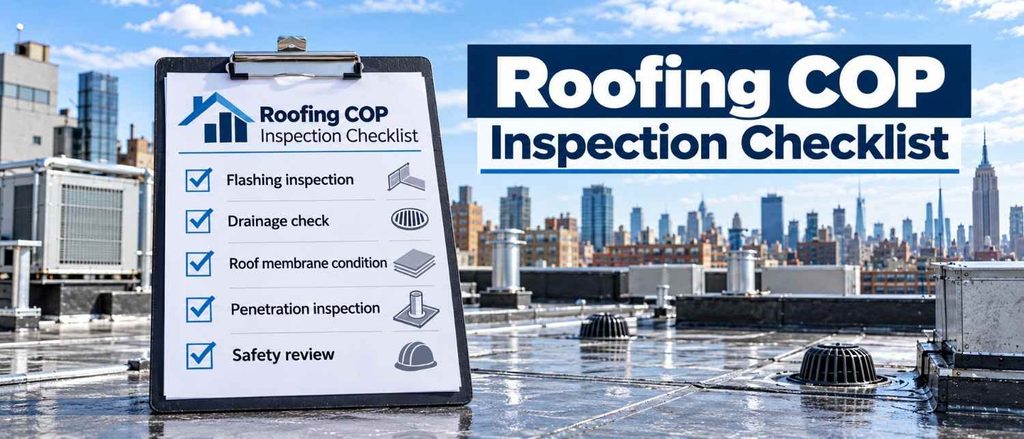
Professional Roofing COP Inspection Checklist
A complete roof inspection should evaluate more than surface damage.
Roof Covering Inspection
Professionals check for:
- Cracks
- Missing materials
- Surface deterioration
- Loose sections
- Weather damage
Flashing Inspection
Inspectors examine:
- Loose flashing
- Damaged seals
- Open joints
- Failed transitions
Drainage Inspection
Important checks include:
- Blocked drains
- Standing water
- Damaged gutters
- Poor water flow
Roof Penetration Inspection
Roof penetrations require special attention because they create possible entry points for moisture.
Inspectors review:
- Pipes
- HVAC equipment
- Skylights
- Vents
Structural Inspection
Professionals may look for:
- Sagging areas
- Moisture damage
- Signs of movement
- Structural concerns
A detailed inspection helps determine whether the roof requires maintenance, repair, or replacement.
Roofing COP and Roof Maintenance
A Roofing Code of Practice is not only important during installation. Proper maintenance also helps extend roof performance.
Regular checks should include:
- Damaged roofing materials
- Blocked drainage systems
- Failed sealants
- Loose flashing
- Water accumulation
- Membrane deterioration
- Signs of interior leaks
Regular inspections allow problems to be identified before they become expensive repairs.
How Professional Roofing Contractors Apply Roofing COP Guidelines
Experienced contractors use Roofing COP principles throughout the entire roofing process.
Initial Assessment
The contractor evaluates:
- Existing roof condition
- Damage level
- Drainage performance
- Structural concerns
Planning and Material Selection
The roofing system is selected based on building requirements, environmental conditions, and long-term performance goals.
Installation or Repair
Work is completed using proper installation methods, safety procedures, and quality control practices.
Final Inspection
The finished project is reviewed to confirm:
- Proper installation
- Waterproofing performance
- Drainage function
- Flashing quality
This process helps ensure the roofing system performs as intended.
Common Roofing COP Mistakes to Avoid
- Ignoring Drainage Issues: Poor drainage can cause standing water, leaks, and premature roof deterioration.
- Incorrect Flashing Installation: Improper flashing is one of the most common causes of roofing leaks.
- Skipping Professional Inspections: Small defects can become major problems when they are not identified early.
- Ignoring Manufacturer Instructions: Roofing materials must be installed according to manufacturer requirements to achieve expected performance.
- Neglecting Maintenance: Even a properly installed roof requires regular inspection and maintenance.
Roofing COP vs Roof Coping: Understanding the Difference
The terms Roofing COP and roof coping sound similar but describe different things.
Roofing COP
Roofing COP means Roofing Code of Practice.
It refers to:
- Guidelines
- Standards
- Installation practices
- Safety procedures
Roof Coping
Roof coping is a physical protective component installed on top of a parapet wall or exposed wall edge.
Its purpose is to:
- Protect the wall from water exposure
- Direct water away from the structure
- Improve weather resistance
| Term | Definition |
|---|---|
| Roofing COP | Professional roofing guidelines and standards |
| Roof Coping | Protective material installed on parapet walls |
Understanding this difference prevents confusion when discussing roofing projects.
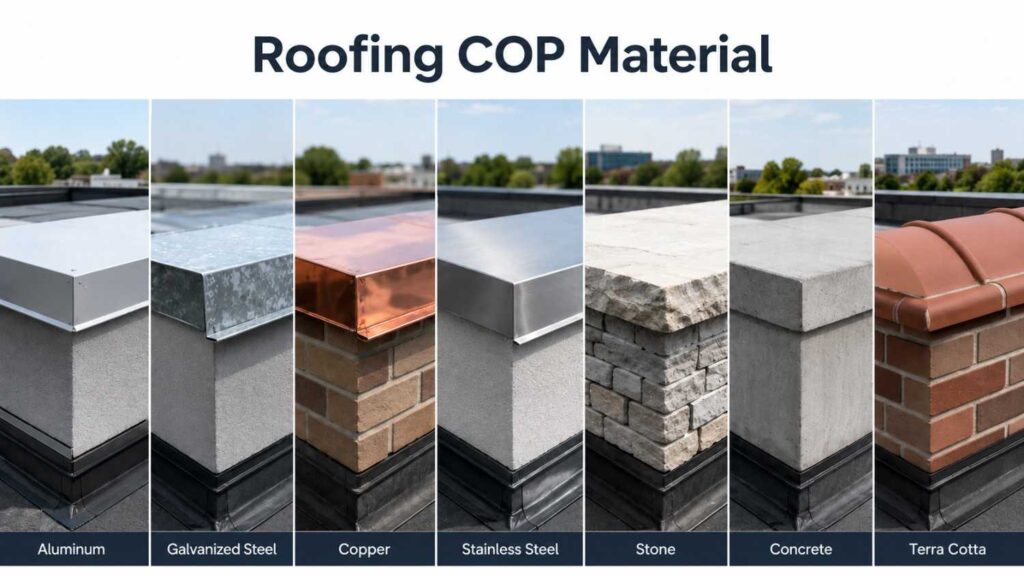
Common Roofing Cop Materials
Roof coping materials play an important role in how well the roof edge performs over time. The best material depends on the building style, parapet wall condition, budget, maintenance needs, and exposure to NYC weather.
| Material | Main advantage | Consideration |
|---|---|---|
| Aluminum | Lightweight and corrosion-resistant | Requires appropriate fastening and movement allowance |
| Galvanized steel | Strong and commonly used | Coating damage can lead to corrosion |
| Copper | Durable with a distinctive appearance | Higher initial cost |
| Stainless steel | Strong corrosion resistance | More expensive than common alternatives |
| Stone coping | Architectural appearance | Heavy and requires properly detailed joints |
Different materials offer different levels of strength, appearance, rust resistance, and long-term protection. Choosing the right roofing cop material helps reduce leaks, protect the parapet wall, and improve flat roof durability.
Why Choose SK Group NYC Corp for Roofing Services?
SK Group NYC Corp provides roofing solutions for residential and commercial properties in NYC.
Services include:
- Roof inspections
- Roof repairs
- Flat roofing
- Waterproofing
- Roof replacement
Our approach focuses on proper installation methods, quality materials, and long-term roofing performance.
Frequently Asked Questions
What does Roofing COP mean?
Roofing COP means Roofing Code of Practice. It provides guidelines for safe, consistent, and professional roofing work.
Is Roofing COP a law?
A Roofing COP is not always a legal requirement. Whether it is mandatory depends on the location, project specifications, applicable regulations, and whether it has been incorporated into contractual requirements.
What does COP mean in roofing?
COP means Code of Practice. In roofing, it refers to professional guidelines that describe accepted methods for completing roofing work safely and correctly.
Does Roofing COP apply to NYC?
Roofing projects in NYC must follow applicable city construction requirements. Roofing COP principles may also apply depending on the roofing system, project requirements, and professional standards being followed.
What does a Roofing COP inspection check?
A Roofing COP inspection may evaluate roofing materials, flashing, drainage, penetrations, fasteners, waterproofing, roof edges, and visible structural concerns.
Is roofing cop the same as roof coping?
Not always. Roofing COP may refer to a Code of Practice, while roof coping is a protective cap installed on top of a parapet wall. The intended meaning depends on the context.
What is the purpose of roof coping on flat roofs?
Roof coping protects the exposed top of parapet walls from rainwater and weather exposure. Properly designed coping helps direct water away from vulnerable wall areas and reduces the risk of moisture entering the building envelope.
Final Thoughts
Roofing COP provides a structured approach for achieving safer, more reliable, and longer-lasting roofing systems.
While specific requirements can vary depending on location and roof type, the core principles remain consistent: proper design, suitable materials, correct installation, effective drainage, waterproofing, inspections, and maintenance.
For property owners, understanding Roofing COP makes it easier to evaluate roofing quality and choose experienced professionals. A successful roofing project is not only about selecting the right materials — it depends on following the right process from planning through long-term maintenance.
If you need help evaluating your roof condition, identifying potential issues, or planning a roofing project, working with an experienced professional roofing contractor can help protect your property and prevent costly future repairs.