Concrete is one of the most durable building materials used for driveways, sidewalks, patios, foundations, and commercial projects throughout New York City. However, one question property owners frequently ask after a new installation is: How Long Does Concrete Take to Cure?
The answer depends on several factors, including weather conditions, humidity, concrete mix design, and the type of project. While the surface may appear dry within a day or two, the actual concrete curing time is much longer. Understanding how long does concrete take to cure is important because proper curing helps prevent cracks, surface damage, and costly repairs while maximizing the strength and lifespan of the concrete.
Whether you recently installed a driveway in Queens, a sidewalk in Brooklyn, or a patio in Staten Island, this guide explains how long does concrete take to cure, when you can safely use it, and how NYC weather affects the process.
How Long Does Concrete Take to Cure?
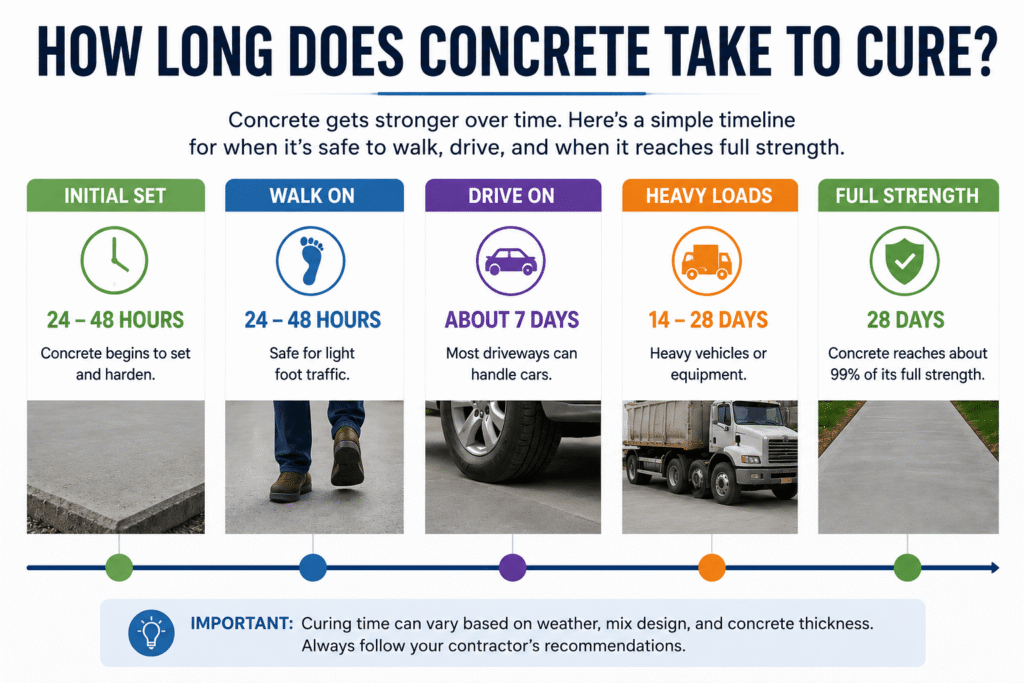
Most concrete projects follow this general curing timeline:
| Stage | Approximate Time |
|---|---|
| Initial set | 24–48 hours |
| Light foot traffic | 24–48 hours |
| Vehicle traffic | About 7 days |
| Heavy loads | 14–28 days |
| Full cure | 28 days |
If you are wondering how long does it take for concrete to cure completely, the industry standard is approximately 28 days. During this period, the concrete continues gaining strength through a chemical process known as hydration.
Concrete Drying vs Concrete Curing
Many homeowners confuse drying with curing. Understanding the difference is important.
Concrete drying occurs when moisture evaporates from the surface. Concrete curing refers to the internal chemical reaction that strengthens the material over time.
A slab may appear dry within a day, but that does not mean it has completed the concrete curing time. This is why contractors recommend waiting before parking vehicles or placing heavy objects on newly poured concrete.
How Long Does It Take for Concrete to Cure in NYC?
New York weather can significantly affect curing times.
Summer Conditions
During hot summer months, concrete may set faster. However, excessive heat can cause moisture to evaporate too quickly, increasing the risk of cracking.
Spring Rain
Rain can interfere with fresh concrete surfaces if it occurs too soon after pouring. Proper protection is essential during the first 24 hours.
Winter Temperatures
Cold temperatures slow hydration and extend the concrete curing time. In some cases, contractors use blankets or additives to protect the concrete.
Humid Conditions
High humidity can help maintain moisture levels, supporting proper curing.
For NYC property owners, understanding these seasonal conditions is important when planning a concrete project.
How Long Before You Can Walk on Concrete?
One of the most common homeowner questions is how long does concrete take to cure before walking on it.
Most concrete surfaces can support light foot traffic within 24 to 48 hours. However, contractors typically recommend minimizing traffic during the first few days to avoid surface damage.
For sidewalks and patios, waiting at least two days provides better protection while curing continues.
How Long Before You Can Drive on Concrete?
Concrete driveway curing time is longer than many people expect.
Most residential driveways require approximately seven days before cars can safely drive on them. Heavy trucks, moving vehicles, and commercial equipment should stay off the surface for up to 28 days.
Even though the concrete may look fully hardened, the internal curing process is still ongoing.
Concrete Curing Times by Project Type
Different projects may require different curing periods.
Driveways
Concrete driveway curing time generally ranges from 7 days for passenger vehicles to 28 days for full strength.
Sidewalks
Most sidewalks can be walked on within 24 to 48 hours.
Patios
Patios often require two days before normal use and approximately 28 days for complete curing.
Foundations
Foundation concrete should be allowed to cure fully before being subjected to heavy structural loads.
Garage Floors
Garage slabs typically require at least one week before vehicles are introduced.
Factors That Affect Concrete Curing Time
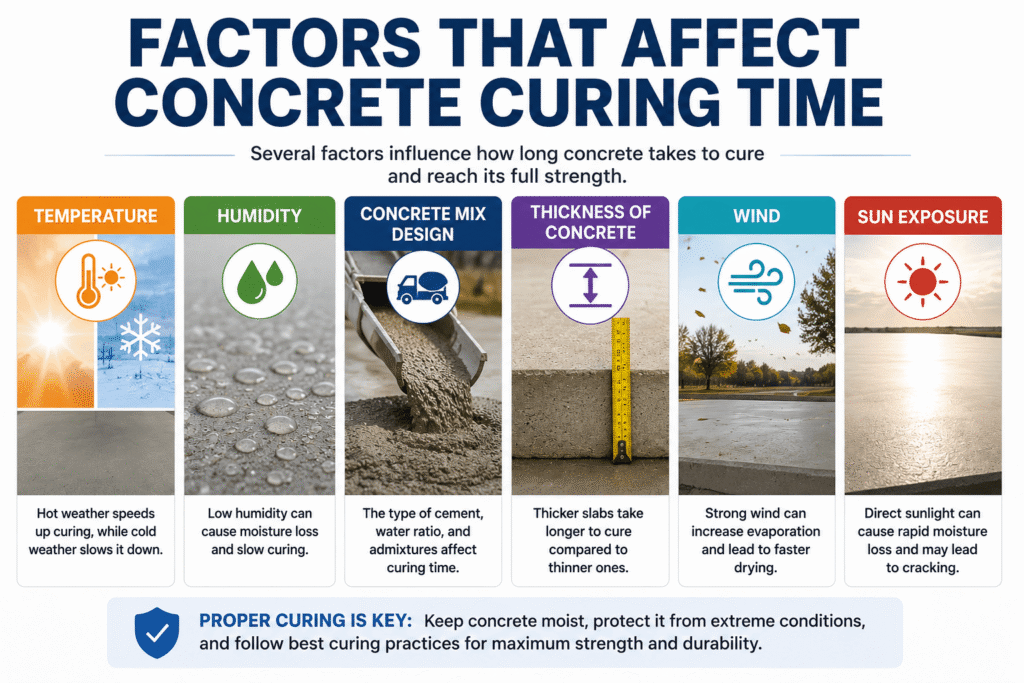
Temperature
Higher temperatures accelerate hydration, while colder temperatures slow the process.
Moisture
Proper moisture retention is critical for strength development.
Concrete Mix Design
Different mixes contain varying cement contents and additives, which affect curing speed.
Slab Thickness
Thicker concrete sections may require additional curing time.
Wind Exposure
Strong winds can remove moisture from the surface too quickly.
Common Concrete Curing Mistakes
Property owners often make mistakes that reduce durability.
- Walking on concrete too soon.
- Driving on a new driveway before curing is complete.
- Allowing the surface to dry out too quickly.
- Skipping curing compounds or water curing.
- Ignoring weather conditions.
Avoiding these mistakes helps maximize the lifespan of your investment.
Signs Your Concrete Is Properly Cured
Although concrete continues strengthening for weeks, there are signs of successful curing.
- Uniform color throughout the surface.
- Hard and dense texture.
- Minimal dusting.
- No early cracking.
- Improved resistance to wear.
These indicators suggest the concrete curing time is progressing correctly.
When to Hire a Professional Concrete Contractor
If you’re installing a driveway, sidewalk, patio, retaining wall, or foundation, working with an experienced contractor helps ensure proper installation and curing. Since How Long Does Concrete Take to Cure can vary based on weather, moisture, and project conditions, professional contractors follow the right curing methods to maximize strength and durability.
In New York City, changing temperatures, humidity, and seasonal weather can affect the curing process. Experienced contractors understand How Long Does Concrete Take to Cure under local conditions and use proven techniques to protect fresh concrete, reduce cracking, and ensure long-lasting performance.
How Contractors Cure Concrete Properly
Professional contractors use several methods to ensure concrete reaches its maximum strength and durability. Proper curing helps prevent cracking, surface scaling, and premature deterioration.
Water Curing
Water curing keeps the concrete surface moist during the early stages of hydration. Contractors may spray water on the surface or use wet coverings to maintain moisture levels.
Curing Compounds
Liquid curing compounds create a protective membrane that reduces moisture loss. This method is commonly used on driveways, sidewalks, and commercial slabs.
Plastic Sheeting
Plastic covers help retain moisture and protect fresh concrete from wind and direct sunlight. This technique is especially useful during hot summer weather.
Wet Burlap Coverings
Contractors often place wet burlap over concrete surfaces to provide a steady source of moisture while protecting the surface from rapid drying.
Proper curing methods can significantly improve concrete strength, durability, and long-term performance.
What Happens If Concrete Is Not Properly Cured?
Poor curing can create several problems that may not appear immediately.
Surface Cracking
Rapid moisture loss can cause shrinkage cracks to form. These cracks often weaken the concrete and allow water penetration.
Reduced Strength
Without proper curing, concrete may never achieve its intended design strength. This can shorten the lifespan of driveways, patios, and foundations.
Surface Dusting
Improperly cured concrete can develop a dusty or powdery surface that wears down more quickly.
Scaling and Flaking
Freeze-thaw cycles common in New York can cause poorly cured concrete to chip, flake, and deteriorate over time.
Increased Maintenance Costs
Repairing damaged concrete is often more expensive than investing in proper curing from the beginning.
Cost of Repairing Improperly Cured Concrete
Many homeowners underestimate the cost of concrete repairs.
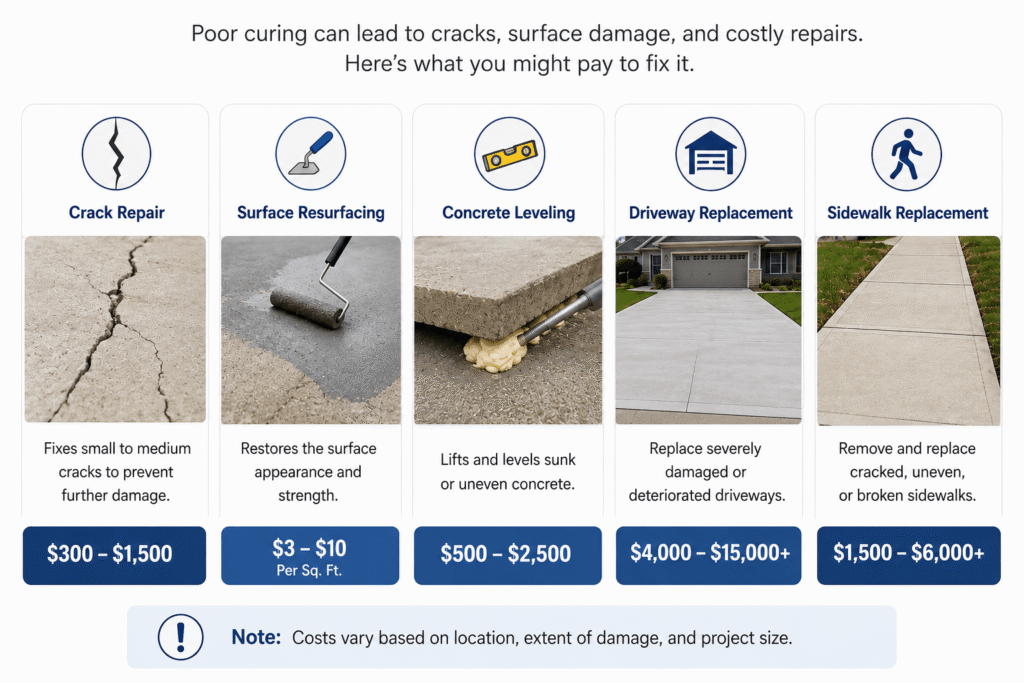
| Repair Type | Average Cost Range |
|---|---|
| Crack Repair | $300 – $1,500 |
| Surface Resurfacing | $3 – $10 per sq. ft. |
| Concrete Leveling | $500 – $2,500 |
| Driveway Replacement | $4,000 – $15,000+ |
| Sidewalk Replacement | $1,500 – $6,000+ |
Allowing the full concrete curing time can help avoid many of these costly repairs.
Concrete Curing Tips for NYC Homeowners
If you recently installed a concrete driveway, patio, sidewalk, or foundation, follow these practical tips:
- Avoid walking on fresh concrete for at least 24 to 48 hours.
- Wait approximately seven days before parking vehicles on new driveways.
- Keep concrete moist during hot weather.
- Protect fresh concrete from heavy rain.
- Follow your contractor’s curing recommendations.
- Avoid placing heavy objects on the surface too early.
- Do not use de-icing salts during the first winter after installation.
These simple steps can improve durability and extend the life of your concrete.
FAQ’s
1. How Long Does Concrete Take to Cure Completely?
Most concrete reaches full design strength in approximately 28 days, although it continues gaining strength beyond that point.
2. How Long Does It Take for Concrete to Cure Before Walking on It?
Most concrete surfaces can support light foot traffic within 24 to 48 hours.
3. How Long Does It Take for Concrete to Cure Before Driving on It?
Residential driveways generally require about seven days before vehicles can safely use them.
4. How Long for Concrete to Dry Compared to Cure?
Concrete may appear dry within one or two days, but the curing process continues for approximately 28 days.
5. Does Rain Affect Fresh Concrete?
Heavy rain can damage freshly poured concrete if it occurs before the surface has adequately set.
6.Does Cold Weather Increase Concrete Curing Time?
Yes. Low temperatures slow hydration and can significantly extend the curing process.
Conclusion
Understanding How Long Does Concrete Take to Cure helps homeowners and property owners avoid costly mistakes after a concrete installation. While concrete may seem dry within a few days, the curing process continues for several weeks and directly affects its strength, durability, and long-term performance. Whether you’re installing a driveway, patio, sidewalk, or foundation in NYC, allowing proper curing time is essential for achieving the best results. By following recommended curing practices and protecting fresh concrete from harsh weather conditions, you can ensure a stronger, longer-lasting surface that stands up to daily use and New York’s changing climate.