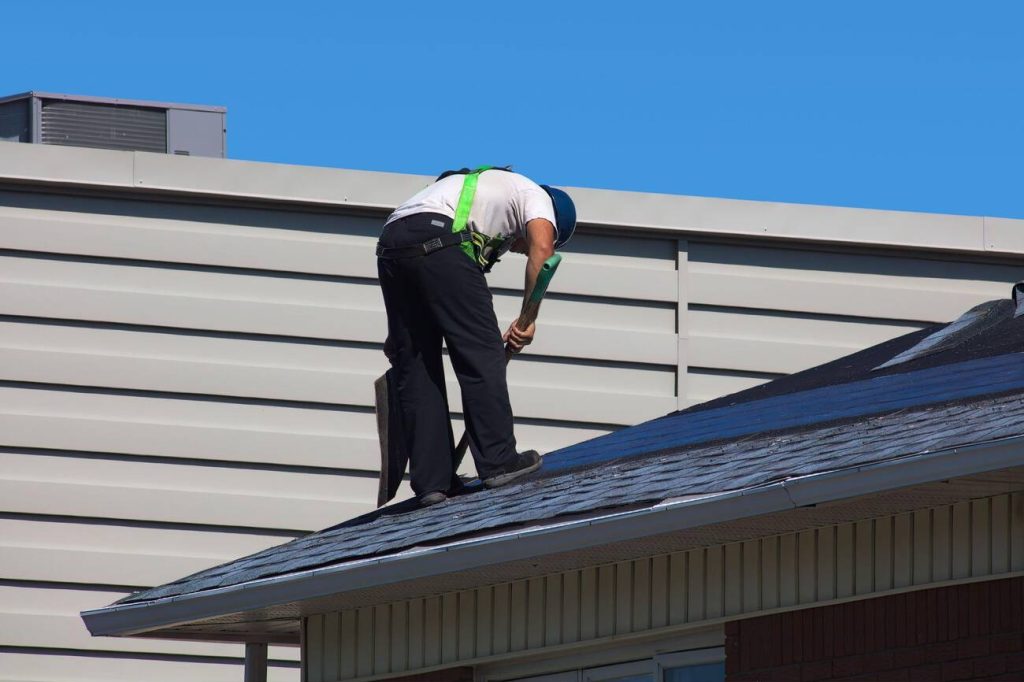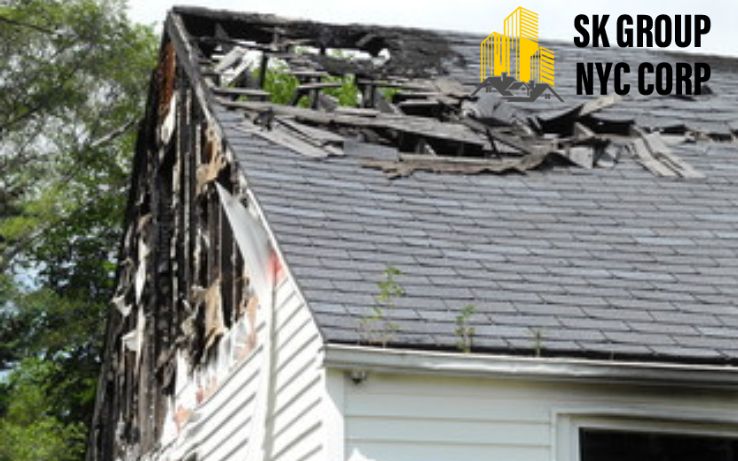
A free roof inspection gives homeowners a clear understanding of their roof’s condition, especially when potential problems are not visible from the ground. Lifted shingles, cracked flashing, clogged drains, loose pipe boots, soft spots, and small openings around vents can all allow water to enter slowly before obvious signs, such as ceiling stains, moisture damage, or an active leak, begin to appear.
By identifying visible storm damage, aging materials, drainage issues, missing shingles, roof leaks, and other early warning signs, a free roof inspection can help prevent minor concerns from turning into costly repairs. It also gives homeowners the information they need to make practical decisions about maintenance, repair, or further evaluation.
This guide explains what a free roof inspection includes, what roofing professionals typically check, when homeowners should schedule one, and how to use the inspection findings to make confident, informed decisions about their roof.
What Is a Free Roof Inspection?
A free roof inspection is a professional visual check of your roof’s visible and accessible areas. A roofing contractor looks for signs of roof damage, leaks, aging materials, drainage issues, flashing problems, storm damage, and other conditions that may affect the performance of the roof.
In most cases, “free” means there is no inspection fee. However, homeowners should still ask what is included before scheduling. Some inspections include photos and a repair estimate, while others may only include a basic visual review.
A good inspection should give you clear information. It should not feel rushed, vague, or sales-driven.
What Homeowners Should Expect During a Free Roof Inspection
A professional free roof inspection should be organized, practical, and easy to understand. The roofer should ask questions, inspect the right areas, document visible concerns, and explain the findings clearly.
1. A Short Conversation About Your Roof
The inspection usually starts with a few questions about your home and roof history. The roofer may ask:
- How old is the roof?
- Have you noticed leaks or ceiling stains?
- Did the property recently experience heavy rain, wind, hail, or snow?
- Have you seen missing shingles, loose roofing materials, or gutter problems?
- Has the roof been repaired before?
- Are you buying, selling, or renovating the property?
These questions help the roofer understand where to look more closely. For example, a ceiling stain may suggest a leak near flashing, vents, roof valleys, or pipe boots. Recent storm damage may require a closer look at shingles, drainage points, and roof penetrations.
2. Exterior Roof Inspection
The roofer will inspect the outside of the roof to evaluate its overall condition. Depending on roof type, height, access, and safety, this may involve walking the roof, using a ladder, checking roof edges, or reviewing visible areas from a safe position.
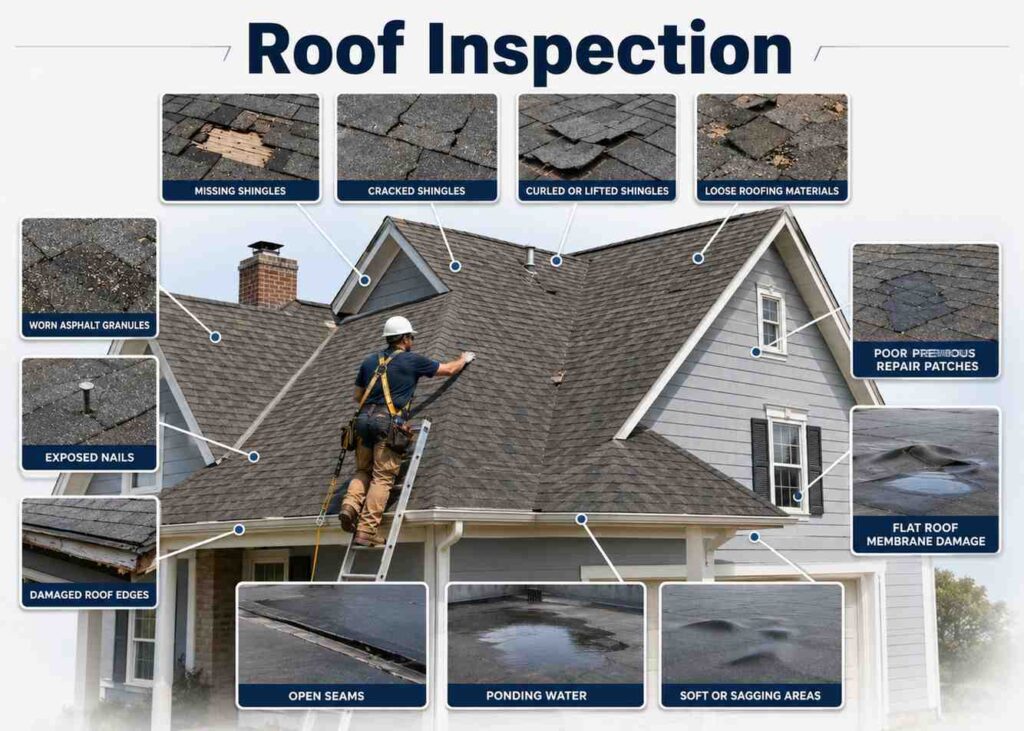
During the exterior inspection, the roofer may check for:
- Missing shingles
- Cracked, curled, or lifted shingles
- Loose roofing materials
- Worn asphalt granules
- Exposed nails
- Damaged roof edges
- Flat roof membrane damage
- Open seams
- Ponding water
- Soft or sagging areas
- Signs of poor previous repairs
A responsible contractor should also explain if any part of the roof cannot be inspected safely.
3. Flashing, Valleys, Vents, and Roof Penetrations
Many roof leaks begin where the roof connects to another surface or where something passes through the roof. These areas are more vulnerable because water naturally moves toward openings, seams, corners, and low points.
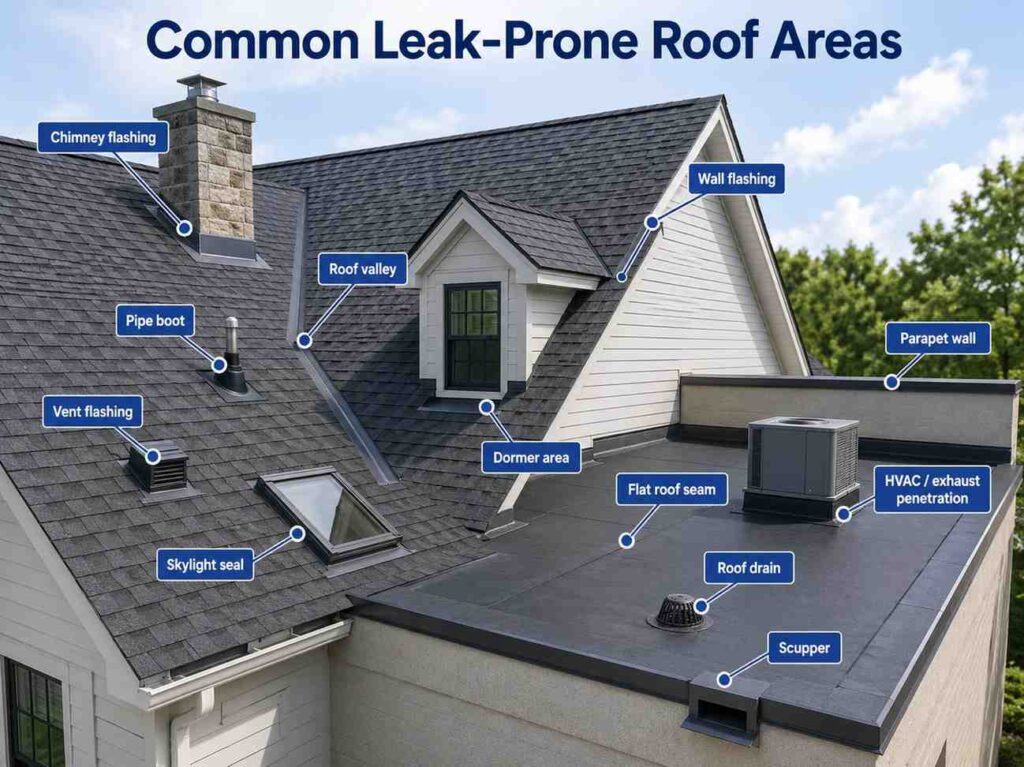
A professional roof inspection may include checking:
- Chimney flashing
- Wall flashing
- Roof valleys
- Pipe boots
- Vent flashing
- Skylight seals
- Dormer areas
- Flat roof seams
- Parapet walls
- Roof drains
- Scuppers
- HVAC or exhaust penetrations
Flashing damage is one of the most common causes of roof leaks. Even a small gap, crack, loose seal, or poorly repaired area can allow water to enter during heavy rain.
4. Gutters and Drainage
A roof cannot perform well if water does not drain properly. Gutters, downspouts, roof drains, and scuppers help move water away from the roof and the structure.
During a free roofing inspection, the contractor may check for clogged gutters, sagging gutters, loose downspouts, blocked roof drains, water backing up near the roof edge, and signs of fascia or soffit damage.
Drainage is especially important for flat roofs. Standing water can weaken roofing materials, stress seams, and shorten the roof’s lifespan. In NYC, where many homes and buildings have flat or low-slope roofs, drainage problems should be taken seriously.
5. Interior or Attic Check When Needed
Not every inspection includes an attic or interior review, but it can be helpful when there are signs of water intrusion. If attic access is available, the roofer may look for water stains, wet insulation, mold growth, dark spots on roof decking, poor ventilation, or daylight coming through roof gaps.
Interior signs can help confirm whether an exterior roof issue is allowing water into the home.
What a Free Roof Inspection Usually Includes
A free roof inspection is usually visual, but it should still be detailed enough to help homeowners understand the roof’s condition.
Roof Surface
The roofer checks the main roof surface for visible damage, aging, wear, and installation issues. On shingle roofs, this may include missing shingles, cracked shingles, lifting, curling, loose shingles, or granule loss.
On flat roofs, this may include membrane cracks, bubbles, open seams, ponding water, damaged edges, and weak areas around drains.
Flashing and Sealed Areas
Flashing protects some of the most leak-prone areas of a roof. The roofer should inspect flashing around chimneys, skylights, walls, vents, valleys, dormers, and roof penetrations.
Loose, rusted, cracked, or poorly sealed flashing can cause leaks even when the rest of the roof appears to be in good condition.
Gutters and Drainage Areas
The roofer may check whether gutters, downspouts, roof drains, and scuppers are moving water properly. Poor drainage can lead to leaks, fascia damage, wood rot, foundation concerns, and early roof wear.
Storm Damage
After strong weather, the roofer may look for wind-lifted shingles, hail marks, loose materials, punctures, damaged flashing, and signs that water has entered vulnerable areas.
Storm damage is not always visible from the ground, which is why a roof inspection after heavy rain, hail, or high winds can be useful.
Leak Indicators
A roof leak inspection may include checking for stains, moisture, mold, soft decking, wet insulation, worn sealant, and possible water entry points around vents, flashing, valleys, or roof edges.
Photos or Written Notes
When visible damage is found, photos or written notes can help homeowners understand the issue. They also make it easier to compare recommendations if you decide to get another opinion.
What May Not Be Included in a Free Roof Inspection
A free roof inspection is helpful, but it is not always the same as a full structural, engineering, or warranty-level evaluation.
Unless the contractor clearly states otherwise, a free inspection may not include:
- Removing shingles or roofing materials
- Infrared moisture scanning
- Structural engineering analysis
- Mold testing
- Warranty certification
- Insurance claim approval
- Hidden damage confirmation behind walls or ceilings
This does not make the inspection less useful. It simply means homeowners should understand the scope before booking.
Free Roof Inspection in NYC: Why Local Experience Matters
When homeowners search for “free roof inspection near me,” they usually need a roofing company that understands local roof types, building conditions, and weather-related damage.
In NYC, roof inspections often involve flat roofs, low-slope roofs, older buildings, brownstones, row houses, parapet walls, roof drains, scuppers, and limited roof access. These details matter because drainage issues, flashing problems, and storm damage can look different from one property to another.
SK Group NYC Corp can help homeowners identify visible roof concerns and understand the right next steps based on the condition of their property.
Is a Free Roof Inspection Really Free?
In most cases, yes. A free roof inspection means the roofing company does not charge a separate inspection fee. The contractor inspects the roof, explains the findings, and may provide repair recommendations if damage is found.
Before scheduling, homeowners should ask:
- Is the inspection completely free?
- What areas will be checked?
- Will I receive photos or written notes?
- Is there any obligation to approve repairs?
- Will you explain which repairs are urgent and which can wait?
- Do you inspect both shingle and flat roofing systems?
A trustworthy roofing contractor should be transparent. If the roof is in good condition, they should say so. If repairs are needed, they should explain the issue clearly and show evidence when possible
When Should You Schedule a Free Roof Inspection?
You do not need to wait until water is coming through the ceiling. In many cases, the best time to schedule a roof inspection is before visible damage becomes serious.
After Heavy Rain, Wind, or Hail
Strong weather can loosen shingles, damage flashing, clog gutters, and expose weak points around roof penetrations. If your property recently experienced a storm, an inspection can help identify damage early.
When You Notice Ceiling or Wall Stains
Brown stains, bubbling paint, peeling drywall, or moisture marks may point to water intrusion. Even a small stain should be checked before the damage spreads.
If Your Roof Is More Than 10 Years Old
Older roofs can become brittle, worn, or less reliable over time. A roof maintenance inspection can help you understand whether your roof is still performing well or needs attention.
Before Buying or Selling a Home
A residential roof inspection can help buyers understand the condition of the property before closing. For sellers, it can identify issues before they delay a sale or reduce buyer confidence.
If You See Visible Roof Damage
Missing shingles, damaged gutters, loose flashing, sagging areas, roof debris, or water pooling are all good reasons to schedule an inspection.
Roof Inspection Checklist for Homeowners
Before or after your inspection, this simple checklist can help you understand what matters.
Exterior Signs to Watch For
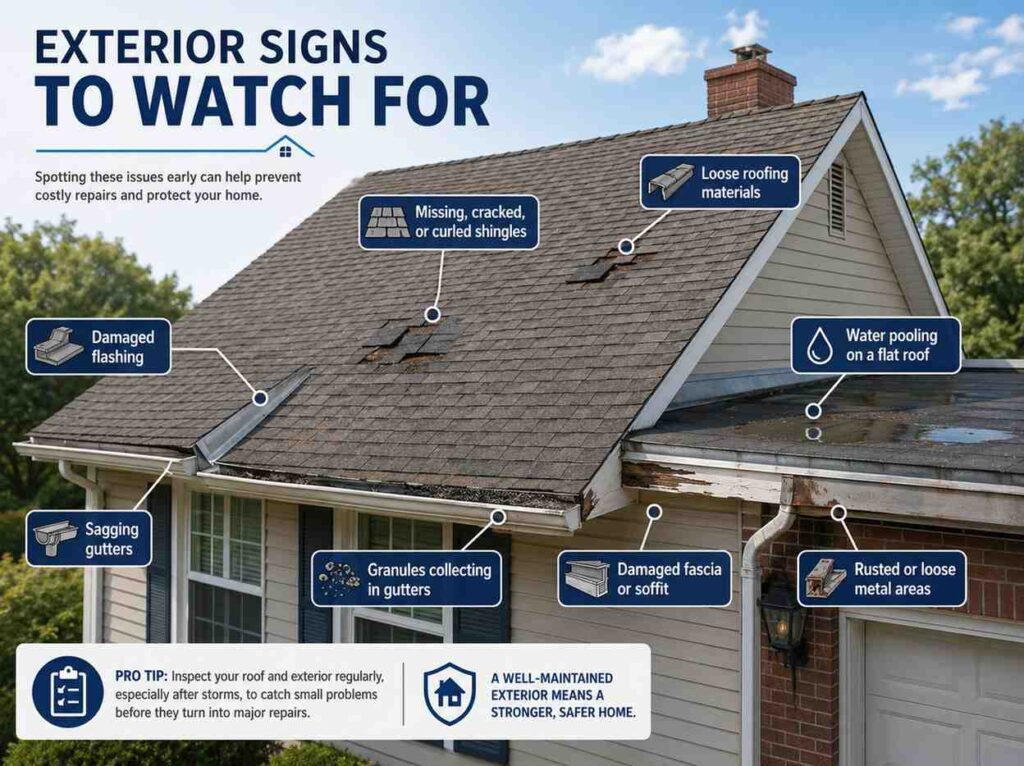
- Missing, cracked, or curled shingles
- Loose roofing materials
- Damaged flashing
- Sagging gutters
- Water pooling on a flat roof
- Damaged fascia or soffit
- Rusted or loose metal areas
- Granules collecting in gutters
Interior Signs to Watch For
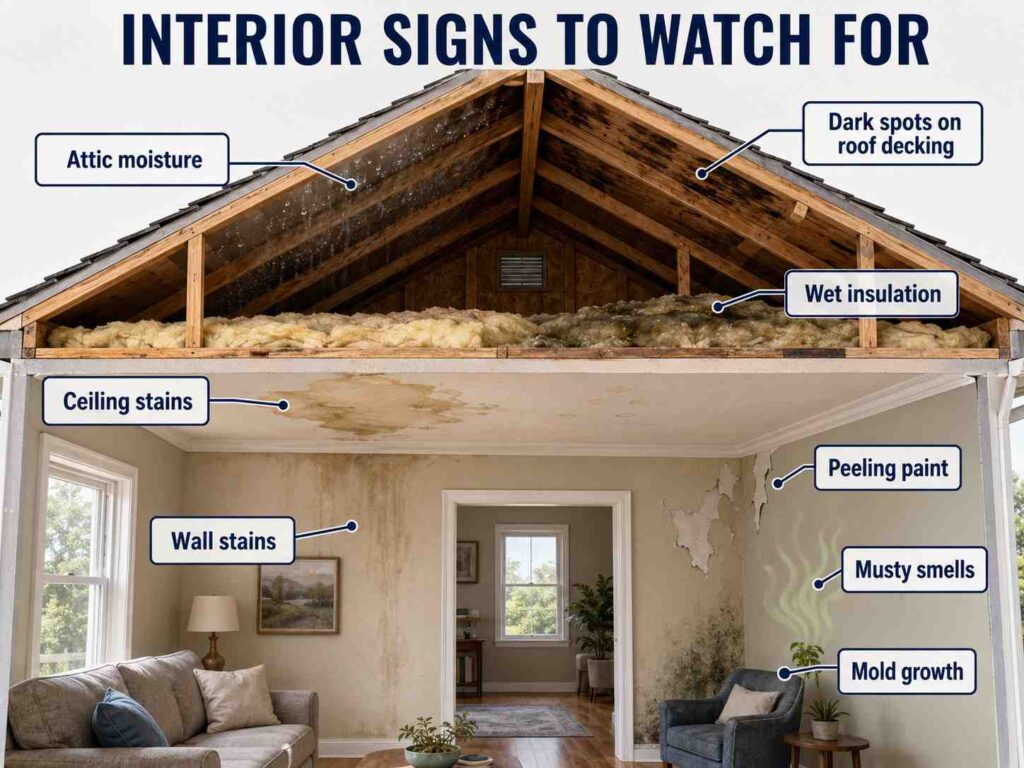
- Ceiling stains
- Wall stains
- Peeling paint
- Musty smells
- Mold growth
- Wet insulation
- Attic moisture
- Dark spots on roof decking
Questions to Ask the Roofer
- What did you find during the inspection?
- Can you show photos of the damage?
- Is the issue urgent or can it wait?
- What repair options are available?
- What happens if the problem is ignored?
- Will I receive a written estimate?
This checklist helps homeowners stay involved and avoid making decisions without enough information.
What Happens After the Inspection?
After the inspection, the roofer should explain the condition of your roof clearly. You should understand whether the roof is in good shape, needs routine maintenance, has storm damage, has active leaks, or requires repair.
If damage is found, the contractor may provide:
- Photos of affected areas
- A summary of the issue
- Repair recommendations
- An estimated cost
- An urgency level
- Suggested next steps
Not every issue requires emergency work. Active leaks, major flashing failure, exposed roof sections, blocked flat roof drains, and soft or sagging areas may need faster attention. Minor sealant wear, light debris buildup, or early aging may be handled through planned maintenance.
Frequently Asked Questions
What is included in a free roof inspection?
A free roof inspection usually includes a visual check of the roof surface, flashing, gutters, vents, drainage areas, and visible signs of leaks, storm damage, or aging materials.
Is a free roof inspection really free?
In most cases, yes. It means there is no separate inspection fee, but homeowners should still ask what is included and whether there is any obligation to approve repairs.
When should I schedule a free roof inspection?
Schedule one after heavy rain, hail, strong winds, visible roof damage, ceiling stains, or if your roof is older and has not been checked recently.
Can a roof inspection find hidden leaks?
A roof inspection can often identify signs of hidden leaks, such as attic moisture, ceiling stains, wet insulation, damaged flashing, mold growth, or soft roof decking.
Final Thoughts
A free roof inspection is a practical way to understand your roof’s condition before small problems become expensive repairs. It can help identify missing shingles, flashing damage, roof leaks, gutter issues, storm damage, attic moisture, poor ventilation, ponding water, and other concerns that are easy to miss from the ground.
The best inspections are clear, honest, and useful. They give homeowners real information, visible evidence when available, and recommendations based on the actual condition of the roof.
If your roof is older, recently went through a storm, has visible damage, or shows signs of leaking, scheduling a free roof inspection can help you make a confident decision. A professional roofing contractor should help you understand your roof, not pressure you into work you do not need.
Have Questions? Call Us Now!
+1 (718) 507-7000
We’re here to help quick answers, friendly service, anytime you need!
Contact SK Group NYC
🌐 Website: www.skgroupnyccorp.com
📍 Serving: Manhattan, Brooklyn, Queens, The Bronx, and Staten Island
📍 Address: 87-88 172nd St, Jamaica, New York, NY, United States, New York