Your home’s gutter system plays a critical role in protecting your property from water damage, and gutter sealant is one of the most effective tools for keeping it leak-free. When gutters begin to leak, even a small crack or loose joint can allow water to escape and reach your roof, siding, foundation, and landscaping. Over time, these leaks can lead to mold growth, basement moisture problems, structural damage, and costly repairs.
In New York, gutters face constant exposure to heavy rain, snow, ice, humidity, and temperature fluctuations throughout the year. These harsh conditions cause gutter systems to expand, contract, and deteriorate faster than many homeowners realize. As a result, damaged seams and failing gutter sealant are among the most common causes of gutter leaks in residential properties.
Fortunately, most gutter leaks can be repaired without replacing the entire system. Applying a high-quality gutter sealant helps seal cracks, joints, seams, and small holes before they develop into major issues. A durable waterproof seal creates a protective barrier that prevents water from escaping while extending the lifespan of your gutter system.
What Is Gutter Sealant?
Gutter sealant is a waterproof material used to seal gaps, cracks, seams, and joints within a gutter system. Its primary purpose is to stop water from leaking through damaged areas and ensure rainwater flows safely away from your property.
Unlike ordinary household adhesives, gutter sealants are specifically designed to withstand outdoor weather conditions. They remain flexible during temperature changes, resist moisture, and maintain a strong bond to gutter materials such as aluminum, steel, copper, and vinyl.
When applied correctly, a high-quality rain gutter sealant creates a watertight barrier that protects your home from water intrusion. It can be used for repairing leaking joints, sealing end caps, fixing small cracks, and preventing future water damage.
How Does Gutter Sealant Work?
Gutter sealant works by filling openings where water can escape. Once applied, the material cures and forms a flexible waterproof bond over the damaged area.
Unlike rigid fillers, modern sealants expand and contract with the gutter system. This flexibility is especially important in New York, where seasonal temperature swings can place significant stress on gutter joints and seams.
The sealant prevents water penetration while protecting the repair area from UV exposure, moisture, freezing temperatures, and debris buildup.
When Do Homeowners Need Gutter Sealant?
Most homeowners don’t think about gutter maintenance until visible leaks appear. However, several warning signs indicate that resealing may be necessary.
You may need gutter sealant if you notice:
- Water dripping from gutter joints during rainfall
- Stains running down exterior walls
- Small cracks in aluminum or vinyl gutters
- Rust spots around seams and connections
- Water pooling near your home’s foundation
- Peeling or deteriorating old sealant
- Moisture buildup around fascia boards
Addressing these issues early can prevent larger problems and reduce future gutter repair costs. A simple resealing project today can help avoid extensive structural repairs tomorrow.
Signs Your Gutters Need Resealing
Gutters are designed to direct rainwater away from your home, but over time, weather exposure and normal wear can weaken the seals that hold the system together. Identifying problems early can help prevent costly repairs and extend the lifespan of your gutter system.
Leaking Joints
Leaking joints are one of the most common signs that your gutters need resealing.
If you notice water dripping from gutter seams during rainfall, the existing sealant may have cracked, shrunk, or separated from the gutter surface. Applying a high-quality gutter sealant can often restore a watertight connection and prevent further damage.
Water Stains on Exterior Walls
Dark streaks or water stains running down siding, brickwork, or stucco surfaces often indicate gutter leaks. Water escaping from damaged seams can travel along the exterior of your home instead of flowing through the downspouts.
Over time, these stains can become difficult to remove and may lead to premature deterioration of exterior finishes.
Rust Spots and Corrosion
Small rust spots may not seem serious at first, but they often signal ongoing moisture problems. Once water repeatedly contacts metal surfaces, corrosion begins to develop.
If left untreated, rust can create small holes that gradually expand and allow more water to escape.
Foundation Puddles
One of the most dangerous consequences of leaking gutters is water collecting around the foundation.
Repeated water exposure around foundations can contribute to soil erosion, basement moisture issues, and structural concerns. If you frequently notice standing water after rainfall, your gutter system should be inspected immediately.
Mold and Mildew Growth
Moisture from leaking gutters can create ideal conditions for mold and mildew growth. Homeowners may notice black spots near rooflines, soffits, fascia boards, or exterior walls.
In addition to affecting your home’s appearance, mold can contribute to indoor air quality issues if moisture begins penetrating the building envelope. Proper resealing helps eliminate the source of excess moisture before larger problems develop.
Why Gutters Fail in New York
New York homeowners face unique weather conditions that place significant stress on gutter systems throughout the year. Understanding these challenges can help explain why regular maintenance and gutter sealant applications are so important.
Winter Freeze-Thaw Cycles
Winter is one of the most damaging seasons for gutters in New York.
This repeated freeze-thaw cycle creates pressure inside seams, joints, and existing repairs. Over time, seals weaken, cracks form, and water begins escaping through damaged areas.
Heavy Spring Rain
Spring storms often bring prolonged rainfall and high water volumes. Gutters that already have minor weaknesses may begin leaking under the increased flow.
Seams and joints that appear intact during dry weather can quickly reveal problems during heavy rain events. This is why spring inspections are recommended for homeowners throughout New York.
Summer Heat Expansion
Many homeowners overlook the impact of summer heat on their gutter system. Metal gutters naturally expand when temperatures rise and contract when temperatures cool.
This constant movement places stress on existing sealant. Over several years, even quality sealants may begin separating from the gutter surface, creating openings where water can escape.
Fall Debris Buildup
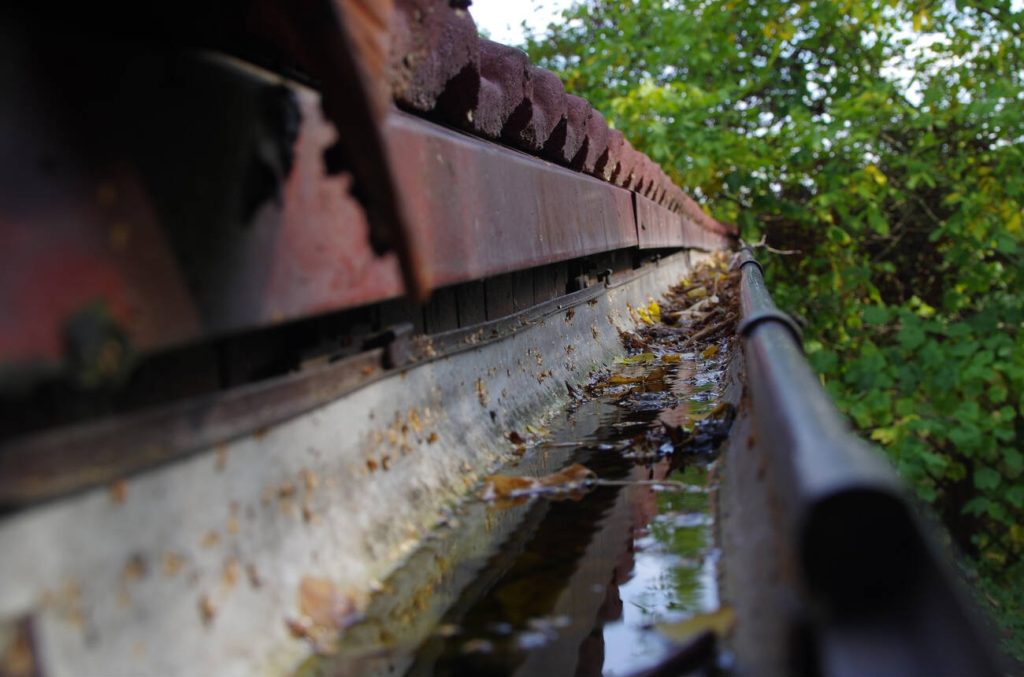
During autumn, leaves, twigs, and debris frequently accumulate inside gutters. When blockages occur, water can no longer flow properly toward the downspouts.
Standing water increases pressure on seams and joints while also accelerating corrosion. Debris buildup can additionally trap moisture against existing sealant, reducing its lifespan and increasing the likelihood of leaks.
Best Types of Gutter Sealant
Not all sealants perform the same way. Choosing the right product depends on your gutter material, local climate, and the type of repair needed. The best gutter sealant should provide strong adhesion, flexibility, waterproof protection, and resistance to temperature changes.
Polyurethane Sealant (Best Overall Option)
Polyurethane sealant is widely considered the best choice for long-term gutter repairs. It bonds strongly to aluminum, steel, copper, and vinyl gutters while remaining flexible during seasonal expansion and contraction.
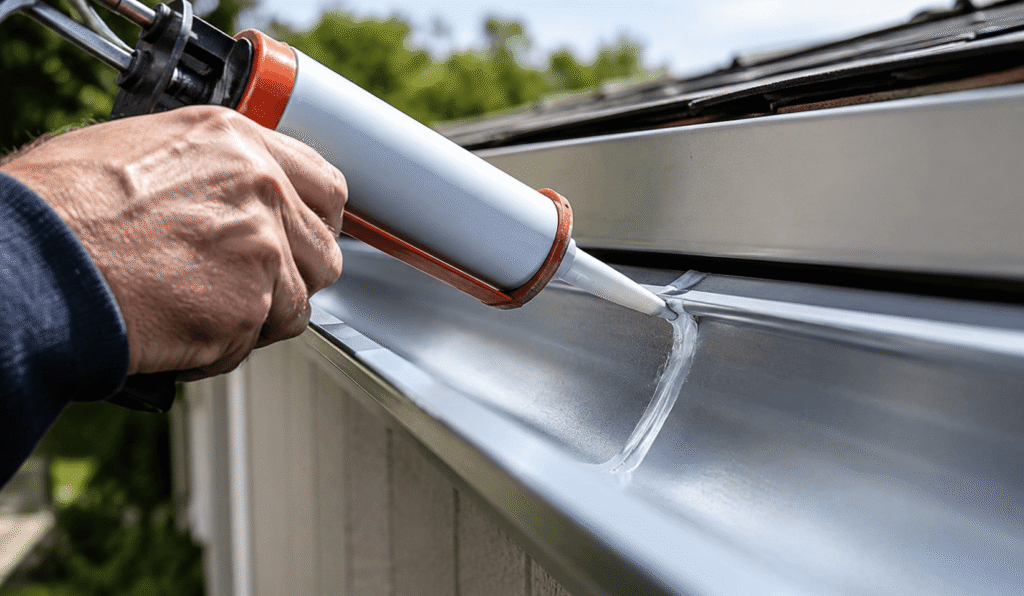
This type of waterproof gutter sealant performs exceptionally well in New York’s changing weather conditions. It can withstand heavy rain, snow, freezing temperatures, and UV exposure without losing its effectiveness.
Pros
- Strong adhesion to most gutter materials
- Excellent waterproof protection
- Handles expansion and contraction well
- Long lifespan
- Resistant to harsh weather conditions
Cons
- Higher cost than basic sealants
- Longer curing time
- Can be more difficult to remove
Best Use Cases
- Leaking gutter joints
- Seam repairs
- Long-term gutter leak repair
- Areas exposed to severe weather
- Professional gutter maintenance
Silicone Sealant
Silicone sealant is another popular option for minor gutter repairs. It creates a waterproof barrier and remains flexible after curing. Many homeowners choose silicone because it is easy to apply and readily available.
While silicone works well for smaller repairs, it may not provide the same level of durability as polyurethane in extreme climates.
Pros
- Easy to apply
- Flexible after curing
- Waterproof
- Widely available
- Affordable
Cons
- Shorter lifespan than polyurethane
- Less resistant to harsh weather
- May require more frequent reapplication
Best Use Cases
- Small cracks
- Light-duty repairs
- Temporary leak fixes
- DIY gutter maintenance
Rubber-Based Sealant
Rubber-based sealants are designed to remain flexible even in extremely cold temperatures. This makes them a reliable choice for regions that experience harsh winters.
Many contractors use rubber-based products when repairing gutters that experience frequent freeze-thaw cycles.
Pros
- Excellent flexibility
- Performs well in cold weather
- Strong waterproof protection
- Resistant to cracking
Cons
- Can attract dirt over time
- May not last as long as premium polyurethane products
- Some products require periodic maintenance
Best Use Cases
- Cold climates
- Winter gutter repairs
- Freeze-thaw environments
- Seasonal maintenance projects
Glue for Gutters vs Gutter Sealant
Many homeowners searching online for “glue for gutters” assume that glue and gutter sealant are the same thing. While both products can bond materials together, they serve different purposes.
Ordinary glue is designed primarily for adhesion. Gutter sealant is designed to create a flexible waterproof barrier that can withstand outdoor weather conditions.
For this reason, most gutter professionals recommend sealants rather than traditional adhesives when repairing leaks.
Comparison Table
| Feature | Glue for Gutters | Gutter Sealant |
|---|---|---|
| Waterproof Protection | Limited | Excellent |
| Flexibility | Low | High |
| Weather Resistance | Moderate | Excellent |
| UV Resistance | Limited | Strong |
| Lifespan | Short-Term | Long-Term |
| Leak Prevention | Temporary | Permanent Repair |
| Professional Recommendation | Rarely Used | Preferred Choice |
How to Apply Gutter Sealant
Applying gutter sealant correctly helps create a durable waterproof barrier. Start by cleaning dirt, debris, rust, and old sealant from the repair area. Allow the gutter surface to dry completely before applying the product.
Apply a continuous bead of gutter sealant along seams, joints, or cracks and smooth it with a putty knife. Follow the manufacturer’s instructions for curing time before exposing the area to heavy rainfall
Proper application improves adhesion and extends the lifespan of the repair.
How Long Does Gutter Sealant Take to Dry?
The drying time of gutter sealant depends on the product type, temperature, and humidity levels. Most silicone sealants become touch-dry within a few hours, while polyurethane sealants may require 24 to 48 hours for full curing. Cold weather and high humidity can increase drying time. For the best results, avoid heavy rain during the curing process and always follow the manufacturer’s recommendations.
Best Sealant for Gutter Seams
The best sealant for gutter seams is usually a high-quality polyurethane sealant because it provides strong adhesion, excellent flexibility, and long-lasting waterproof protection. It performs well in harsh weather conditions and can handle the expansion and contraction that gutters experience throughout the year. Silicone and rubber-based sealants can also be effective for certain repairs, but polyurethane is often preferred for long-term durability.
FAQ’s
How long does gutter sealant last?
Most high-quality gutter sealants last between 5 and 10 years depending on weather conditions, gutter material, and maintenance.
What is the best gutter sealant?
Glue can provide a temporary fix, but it is not designed to stop water leaks. A gutter sealant creates a waterproof and flexible seal, making it the better option for gutter repairs.
Can I use glue for gutters instead of gutter sealant?
Gutter sealant repair cost in NYC usually ranges from $100 to $800, depending on the damage and gutter condition.
Is DIY gutter repair worth it?
DIY repairs work well for small leaks and cracks. For widespread damage, difficult access areas, or recurring leaks, professional gutter repair is usually the better choice.
How often should gutters be inspected?
Gutters should be inspected at least twice a year, usually in spring and fall. Additional inspections are recommended after major storms or heavy snowfall.
Conclusion :
In New York, small gutter issues can quickly turn into costly damage if ignored. Using a high-quality gutter sealant helps prevent leaks, protect your home, and reduce repair costs.
Applying the right rain gutter sealant at the right time ensures long-lasting performance, especially in harsh NYC weather. Choosing the best rain gutter sealant and maintaining your gutters regularly is the key to keeping your home safe and damage-free.
If you want professional results and long-term protection, trust SK Group NYC Corp for expert gutter repair and sealing services.