Concrete paving creates durable cast-in-place surfaces for driveways, sidewalks, parking areas, courtyards, loading zones, and commercial access routes. Long service life, however, depends on more than concrete strength. Soil support, slab thickness, drainage, joints, finishing, curing, and expected loads all influence performance.
This guide focuses on poured concrete pavement, not individual interlocking pavers, and explains how durable pavement is built and why common failures occur.
What Is Concrete Paving?
Concrete paving is the construction of a hard pavement surface by placing and finishing fresh concrete over a prepared foundation. Unlike concrete pavers, which are manufactured units installed individually, cast-in-place pavement is poured as a slab and divided with planned joints.
The visible slab is only part of the system. Federal Highway Administration guidance emphasizes uniform foundation support and effective drainage because conditions beneath the slab affect performance.
What Supports Long-Term Concrete Pavement Performance?
Concrete pavement performs as a system. Durable work depends on stable subgrade, suitable base support, drainage, thickness, joint layout, finishing, curing, and loads that match the design.
If soil settles unevenly or becomes saturated, portions of the slab can lose support and move under traffic, contributing to cracking or uneven pavement even when the concrete mix is sound.
A subbase or aggregate base may be used where design conditions require it to improve support and provide a stable construction platform.
The pavement section should reflect its use. A sidewalk, driveway, commercial lane, and truck loading area place different demands on concrete, so thickness, jointing, and support should match actual service conditions.
A useful rule is simple: strong concrete cannot compensate for unstable support, inadequate drainage, or an undersized pavement section.
How Concrete Paving Is Installed
1. Site Evaluation and Excavation
Installation starts by evaluating traffic, elevations, drainage, utilities, adjacent structures, and existing pavement or soil. Unsuitable material may need removal, and existing drainage problems should be identified before new concrete is placed.
2. Subgrade and Base Preparation
The subgrade is the soil beneath the pavement. It should be graded for reasonably uniform support. Soft areas, poorly consolidated fill, excessive moisture, or abrupt changes in support can increase settlement risk. Where a subbase is required, its type and thickness should respond to soil, loading, and drainage.
3. Forms and Reinforcement
Forms establish edges, elevations, slopes, and dimensions. Reinforcement may be included when specified, while dowels or tie bars can serve particular joint and load-transfer functions.
Reinforcement does not eliminate shrinkage or replace proper joint design. Concrete still moves as temperature and moisture conditions change.
4. Concrete Placement and Finishing
Concrete is placed to the required elevation and thickness, then screeded and floated. Broom finishes are common where traction matters. Overworking a wet surface or finishing while bleed water remains can reduce surface quality.
5. Joint Installation
Contraction or control joints create planned locations where shrinkage-related cracking is more likely to occur. Construction joints separate placements, while isolation joints may be used where pavement meets fixed structures.
Joint location, spacing, depth, and timing should be planned before placement rather than treated as a cosmetic detail afterward.
6. Initial Curing
Once finishing is complete, curing begins. Curing compounds, wet coverings, plastic sheeting, or another specified method may be used to limit premature moisture loss while the concrete develops its intended properties.
Why Does Concrete Pavement Crack?
Concrete can crack because it shrinks as moisture leaves the material and moves as temperatures change. That natural behavior is one reason joints are intentionally incorporated into pavement.
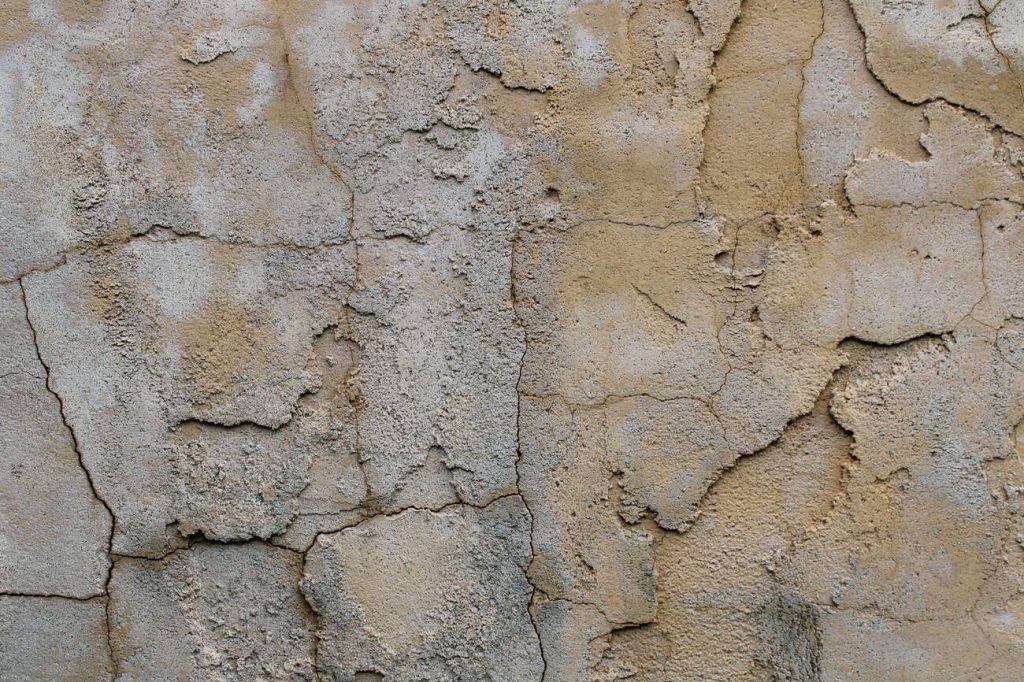
Random cracking can also be influenced by settlement, uneven support, inadequate jointing, excessive loading, poor drainage, incorrect slab design, or unfavorable curing conditions.
A visible crack does not automatically reveal its cause. Evaluation should consider crack pattern, movement, nearby joints, drainage, and slab elevation. Filling a settlement-related crack without restoring support may only hide the symptom.
Why Control Joints Matter
Control joints do not stop concrete from shrinking. They create planned weakened planes so movement is more likely to occur at selected locations instead of randomly across the slab.
Joint performance depends on layout, spacing, depth, timing, and slab geometry. Corners and abrupt changes in shape can concentrate stress, and reinforcement does not remove the need for thoughtful jointing.
How Thick Should Concrete Pavement Be?
Concrete pavement thickness should be selected according to expected loads and support conditions, not one universal number.
Soil strength, base support, vehicle type, traffic frequency, wheel loads, drainage, and project requirements all matter. A pedestrian walkway and a delivery-truck route should not automatically receive the same pavement section. Property owners should ask why a particular thickness is being proposed, not only what the number is.
Why Concrete Curing Matters
Curing helps concrete retain suitable moisture and temperature conditions while hydration continues. Rapid drying in hot, windy weather can hurt surface performance, while cold temperatures can slow strength development.
Opening pavement to vehicles should be based on adequate strength and project requirements, not appearance alone. Curing affects performance, not simply the construction schedule.
Concrete vs. Asphalt
Neither material is universally better. The right choice depends on budget, loads, climate, installation schedule, and maintenance expectations.
| Factor | Concrete | Asphalt |
|---|---|---|
| Initial installation | Often higher | Often lower |
| Time before use | Usually longer | Typically shorter |
| Structural behavior | Rigid pavement | Flexible pavement |
| Surface | Light-colored | Dark-colored |
| Maintenance | Joint/localized repairs | Patching, sealing, overlays |
| Best fit | Project-specific | Project-specific |
Concrete may suit projects prioritizing rigidity, while asphalt may fit projects where faster installation or lower initial cost matters more. Both require proper pavement design.
What Affects Project Cost?
Concrete paving cost depends on more than square footage. Demolition, excavation, disposal, subgrade repair, base material, slab thickness, reinforcement, drainage, access, finishing, concrete specification, project size, and site logistics can all change the scope.
Two areas of the same size can have very different costs. A simple replacement over stable support is not the same as work requiring soil correction or drainage changes. Compare what each proposal includes below, within, and around the slab—not only price per square foot.
Common Pavement Problems
Random cracking may be linked to shrinkage, poor jointing, settlement, uneven support, loading, or temperature movement.
Settlement or uneven slabs may indicate weak soil, erosion, water movement, or loss of base support.
Scaling and spalling can be influenced by finishing, curing, freeze-thaw exposure, deicing chemicals, or impact.
Ponding water may indicate poor elevations, inadequate slope, settlement, or blocked drainage.
Joint deterioration can result from traffic, debris, moisture, movement, or aging joint materials.
One symptom can have several causes, so durable repairs should address the underlying problem as well as the visible damage.
How to Protect Concrete Pavement After Installation
Once the pavement is built correctly, maintenance focuses on preserving drainage, joints, surface condition, and support.
Keep drainage paths clear and inspect joints for debris, edge deterioration, or damaged sealant where maintenance is required. Localized cracks or settlement should be evaluated before they expand.
Traffic should remain consistent with the design; a slab intended for passenger vehicles may deteriorate prematurely under regular heavy-truck use. Long pavement life depends on building the system correctly and maintaining the conditions it was designed to handle.
New York Project Considerations
Concrete paving in New York may involve freeze-thaw exposure, deicing chemicals, tight access, sidewalks, curbs, utilities, entrances, cellar structures, and surrounding pavement elevations.
On dense sites, changing one slab elevation can redirect water toward an entrance, neighboring pavement, or foundation.
For existing pavement, SK Group NYC Corp can evaluate cracking, settlement, drainage, joint condition, and site access before recommending repair or replacement.
How to Choose a Concrete Paving Contractor
A paving proposal should explain more than square footage and concrete price. Ask how excavation, subgrade condition, base preparation, drainage, thickness, concrete specification, joint layout, finishing, curing, and opening time will be handled.
For repairs, ask what caused the damage. Filling cracks or replacing slabs without considering settlement, water movement, or failed support may solve only the visible symptom.
A well-defined scope should make clear how the pavement will be supported, drained, jointed, finished, and cured not merely how much concrete will be poured.
Frequently Asked Questions
Is Concrete Better Than Asphalt?
Not in every situation. Concrete offers rigidity, while asphalt can provide faster construction and lower initial cost. Use, climate, maintenance, schedule, and budget should guide the choice.
How Long Does Concrete Pavement Last?
There is no single lifespan. Service life depends on design, support, traffic, drainage, jointing, curing, climate, and maintenance.
How Long Does Concrete Need to Cure?
Concrete hardens quickly, but strength develops over time. Weather, mix design, curing, required strength, and intended traffic should determine opening time.
Does All Concrete Pavement Crack?
Cracking is possible because concrete naturally shrinks and moves. Proper joints help control where shrinkage-related cracks are likely to form, but they do not eliminate all cracking.
Can Damaged Concrete Pavement Be Repaired?
Yes. Localized damage may be repairable, while widespread settlement or deterioration can justify replacement. Identify the cause before choosing a repair.
What Causes Concrete Pavement to Sink?
Weak soil, erosion, water movement, inconsistent compaction, loss of support, and repeated loading can contribute. Repairing the slab without correcting the support problem may allow settlement to return.
Build the Pavement as a Complete System
Long-lasting concrete paving results from coordinated design, preparation, placement, and maintenance, not one strong ingredient. The soil must provide reliable support, the pavement section must match expected loads, water needs a controlled path away, and joints must accommodate movement.
Finishing and curing help establish a durable surface, while maintenance protects drainage and support. The key question is not simply how strong the concrete is, but whether the entire pavement system is built for the conditions it will actually face.
Have Questions? Call Us Now!
+1 (718) 507-7000
We’re here to help quick answers, friendly service, anytime you need!
Contact SK Group NYC
🌐 Website: www.skgroupnyccorp.com
📍 Serving: Manhattan, Brooklyn, Queens, The Bronx, and Staten Island
📍 Address: 87-88 172nd St, Jamaica, New York, NY, United States, New York