Brick and mortar construction remains one of the most trusted building methods worldwide. From residential homes and commercial buildings to restoration projects and decorative features, masonry continues to provide durability, strength, and timeless visual appeal.
However, bricks alone do not create a reliable structure. The difference between an average wall and a long-lasting wall comes from the expertise of the person installing it. A skilled Worker With Bricks and Mortar understands how materials interact, how weather conditions affect masonry, and how small construction decisions can impact a building’s future performance.
Experienced masons do more than stack bricks. They evaluate foundations, select suitable materials, maintain proper alignment, control mortar consistency, and apply techniques that improve structural strength. Their work combines traditional craftsmanship with modern construction practices to create safe and durable buildings.
What Does a Worker With Bricks and Mortar Do?
A masonry worker specializes in constructing and repairing structures using brick, stone, concrete blocks, and bonding materials. Their responsibilities go beyond physical labor because successful masonry requires technical knowledge and attention to detail.
The main tasks performed by a professional bricklayer include:
- Preparing surfaces and foundations before construction
- Measuring layouts and marking wall positions
- Selecting appropriate bricks and mortar materials
- Mixing mortar according to project requirements
- Installing bricks with accurate spacing
- Checking wall levels and alignment
- Repairing damaged brickwork
- Finishing mortar joints for appearance and protection
One important aspect of masonry work is understanding that every project has unique requirements. For example, a garden wall, a load-bearing exterior wall, and a historic restoration project may require different materials and installation methods.
A professional mason evaluates these factors before beginning construction to achieve better results.
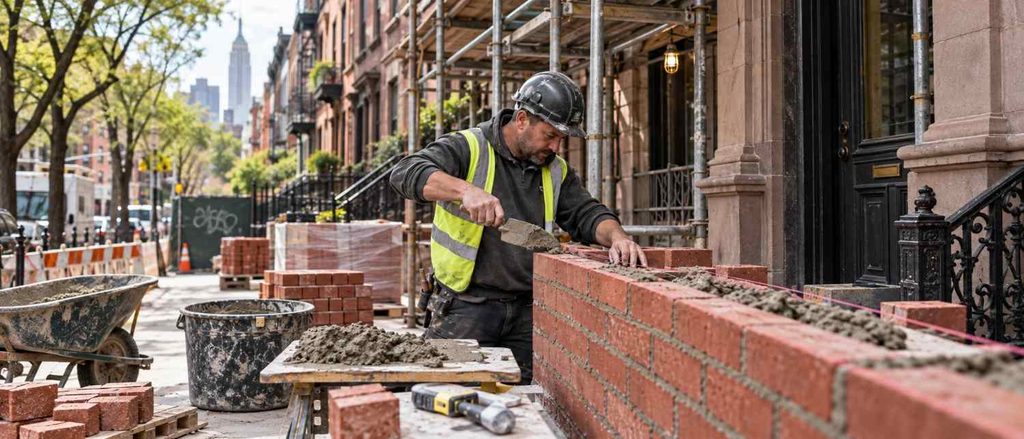
The Role of Skilled Masons in Modern Construction
Modern buildings rely on a combination of advanced engineering and skilled craftsmanship. While technology has improved construction methods, experienced masonry workers remain essential because precision and judgment cannot always be replaced by machines.
Creating Structurally Strong Walls
The primary purpose of masonry is to create structures that remain stable under different conditions. Proper brick placement helps distribute weight evenly, while correctly prepared mortar creates strong connections between individual units.
A poorly constructed wall may develop problems such as:
- Cracks around joints
- Water penetration
- Uneven surfaces
- Reduced structural stability
Experienced masons prevent these issues by following proper installation methods.
Combining Traditional Skills With Modern Techniques
Traditional masonry methods have been used for centuries because they provide proven results. Today, professional workers combine these methods with modern construction techniques, improved tools, and better materials.
For example, modern leveling equipment allows masons to achieve greater accuracy while traditional knowledge helps them understand brick patterns, mortar behavior, and finishing methods.
How Masons Build Durable Walls Step by Step
Building a strong brick wall requires a careful process. A Worker With Bricks and Mortar follows several important stages to ensure quality and durability.
1. Foundation Preparation
The foundation is one of the most important parts of any masonry structure. Before laying bricks, masons inspect the base to confirm it is stable, level, and capable of supporting the wall weight.
Many future wall problems begin with poor foundation preparation. A skilled professional focuses on this stage because even excellent brickwork cannot compensate for an unstable base.
2. Material Selection
Choosing the right materials directly affects the performance of a wall.
Professionals consider:
- Brick strength
- Brick absorption rate
- Weather exposure
- Mortar compatibility
- Building requirements
For example, exterior walls exposed to heavy rain require different considerations compared with interior decorative brickwork.
3. Proper Mortar Mixing
Mortar acts as the connection between bricks. The correct mixture provides bonding strength while allowing the wall to handle movement caused by temperature changes.
Common mortar materials include:
- Cement
- Sand
- Water
- Lime or other additives depending on requirements
Incorrect mortar proportions can weaken brick connections and increase the risk of cracking.
4. Applying Bricklaying Techniques
Bricklaying requires precision. Professional masons carefully place each brick while maintaining consistent joints and alignment.
Important techniques include:
- Maintaining uniform mortar joints
- Checking horizontal and vertical alignment
- Removing excess mortar
- Allowing proper curing time
- Following suitable brick patterns
Small errors during installation can create larger issues later, which is why experienced workmanship matters.
Common Brick Bond Patterns Used by Masons
Brick bonds determine how bricks are arranged and influence both appearance and strength.
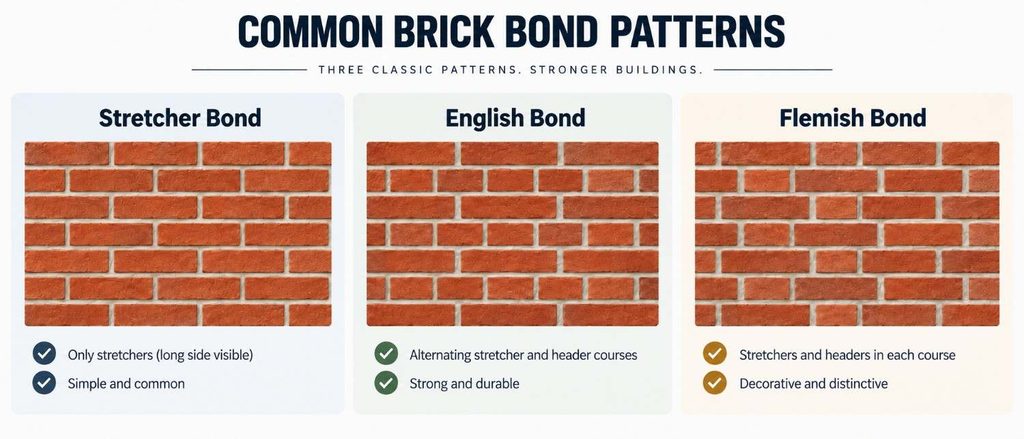
Stretcher Bond
This is one of the most common brick patterns. Bricks are placed lengthwise and are often used for partition walls and modern residential construction.
English Bond
English bond alternates rows of headers and stretchers. It is known for strength and is commonly used where structural performance is important.
Flemish Bond
Flemish bond combines headers and stretchers within the same course. It is often selected when appearance and decorative brickwork are important.
A knowledgeable mason chooses the appropriate bond depending on the purpose of the wall.
Types of Mortar Used in Brick Construction
Different masonry projects require different mortar characteristics.
| Mortar Type | Characteristics | Common Applications |
|---|---|---|
| Cement Mortar | Strong and widely used | Modern brick construction |
| Lime Mortar | Flexible and breathable | Historic restoration projects |
| Type N Mortar | Balanced strength | Residential walls |
| Type S Mortar | Higher strength | Exterior and load-bearing applications |
Selecting the correct mortar is important because extremely strong mortar is not always suitable for every brick type. Older bricks, for example, may require more flexible solutions.
Essential Tools Used in Masonry Work
A professional masonry worker relies on specialized tools to achieve accuracy and efficiency.
Common masonry tools include:
- Brick trowel for applying mortar
- Spirit level for checking alignment
- Masonry hammer for cutting bricks
- Measuring tape for accurate dimensions
- String line for straight brick courses
- Jointing tools for finishing mortar lines
Proper tools improve productivity, but experience determines how effectively those tools are used.
Important Skills Every Professional Mason Should Have
Successful masonry requires a combination of technical knowledge and practical experience.
Material Knowledge
A skilled mason understands how different bricks, mortar types, and construction conditions affect the final result.
Attention to Detail
Brickwork depends on precision. Proper spacing, alignment, and finishing directly influence the appearance and strength of the structure.
Problem-Solving Skills
Construction projects often involve unexpected challenges, including uneven surfaces, weather delays, or material issues. Experienced professionals know how to adapt.
Safety Awareness
Masonry involves heavy materials and equipment. Following proper safety procedures protects workers and improves project efficiency.
Common Causes of Brick Wall Problems
Even quality materials can fail if construction practices are incorrect.
Moisture Problems
Water penetration is one of the most common causes of masonry damage. Proper drainage, sealing, and construction methods help prevent moisture-related issues.
Efflorescence
White powdery marks on bricks are caused by salt deposits carried through moisture. While often cosmetic, excessive efflorescence may indicate water-related concerns.
Incorrect Mortar Selection
Using unsuitable mortar can create stress between bricks and joints, leading to premature deterioration.
Poor Installation Practices
Uneven brick placement, weak joints, and insufficient curing time can reduce wall durability.
Why Hiring Experienced Masonry Professionals Matters
Quality masonry is an investment. Hiring experienced professionals helps ensure that materials are used correctly and construction standards are followed.
An experienced Worker With Bricks and Mortar provides:
- Stronger structural performance
- Better finishing quality
- Reduced repair costs
- Improved project safety
- Longer-lasting results
At SK Group NYC Corp, construction projects involving masonry require careful planning, skilled workmanship, and attention to material quality to deliver reliable building solutions.
Frequently Asked Questions
What does a Worker With Bricks and Mortar do?
A Worker With Bricks and Mortar constructs and repairs brick structures by preparing materials, applying mortar, placing bricks, and ensuring proper alignment.
What skills does a professional mason need?
A professional mason needs construction knowledge, measurement accuracy, material understanding, problem-solving ability, and practical bricklaying experience.
How long does brick wall construction take?
The timeline depends on wall size, design complexity, weather conditions, material availability, and the experience of the construction team.
Why is mortar important in brick construction?
Mortar bonds bricks together and helps create stable structures. The correct mortar mixture improves strength and protects the wall from damage.
How can homeowners identify quality masonry work?
Quality masonry usually shows consistent joints, straight alignment, proper finishing, and no visible signs of cracking or poor installation.
Final Thoughts
A Worker With Bricks and Mortar plays a vital role in creating safe, durable, and attractive structures. Behind every strong brick wall is careful planning, technical knowledge, and skilled craftsmanship.
From choosing materials and preparing foundations to applying advanced bricklaying techniques, professional masons influence the quality and lifespan of every project they complete.
For homeowners, builders, and contractors, investing in experienced masonry professionals means fewer future repairs, better structural performance, and construction results that provide lasting value.
Have Questions? Call Us Now!
+1 (718) 507-7000
We’re here to help quick answers, friendly service, anytime you need!
Contact SK Group NYC
🌐 Website: www.skgroupnyccorp.com
📍 Serving: Manhattan, Brooklyn, Queens, The Bronx, and Staten Island
📍 Address: 87-88 172nd St, Jamaica, New York, NY, United States, New York