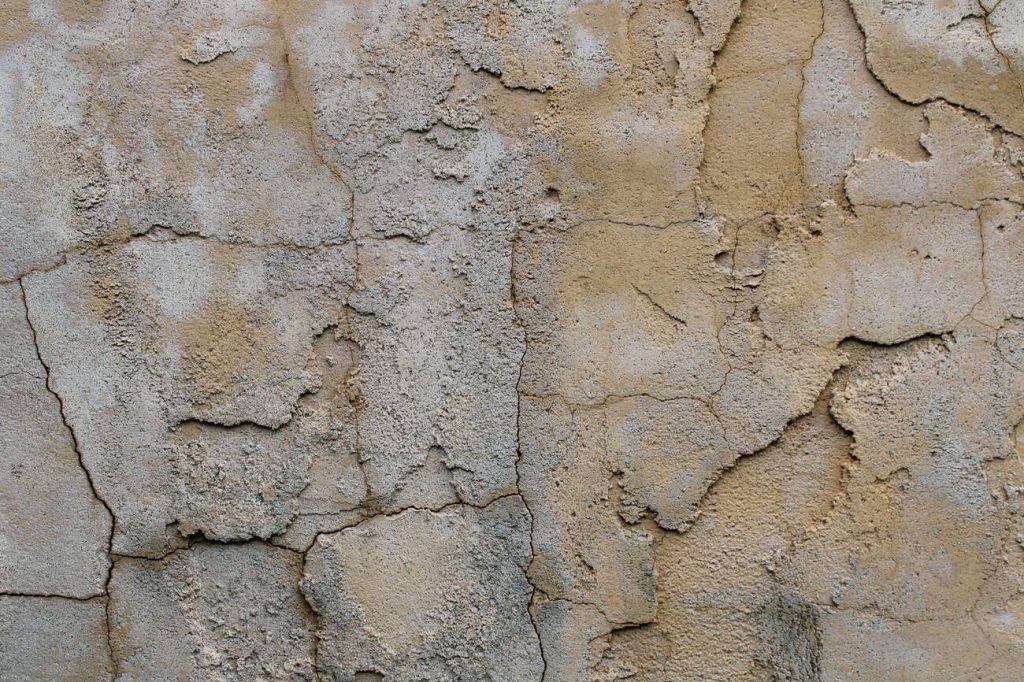
A parapet wall is a low protective wall that extends above the edge of a roof, terrace, balcony, or exterior wall. It may look like a simple design feature, but it plays an important role in roof edge protection, weather resistance, safety, drainage, and long-term building maintenance.
On flat-roof buildings, parapets help protect the roof membrane, reduce water entry at exposed edges, hide rooftop equipment, and give the structure a cleaner architectural finish. When built and maintained properly, they can help prevent leaks, loose masonry, moisture damage, and costly exterior repairs.
This guide explains what a parapet is, the main types, how it is designed, what problems to watch for, and how regular maintenance can protect your property.
Quick Answer: What Is a Parapet Wall?
A parapet wall is a short wall or wall extension built above the roofline or edge of a structure. It is commonly used around flat roofs, balconies, terraces, and building perimeters. Its main purpose is to protect the roof edge, improve safety, support waterproofing details, and improve the appearance of the building.
Why Parapet Walls Matter
A parapet is not just a decorative feature. It is part of the building envelope, which means it helps separate the interior of the building from weather, moisture, and exterior conditions.
A well-built roof parapet can help with:
- Roof edge safety
- Protection for roofing membrane edges
- Leak prevention around roof perimeters
- Better drainage control
- Wind and weather protection
- Fire separation in some building designs
- Screening of rooftop equipment
- Improved exterior appearance
When a parapet is poorly built or neglected, the problems often appear as roof leaks, cracked mortar, loose coping, interior stains, or damaged masonry near the top of the building.
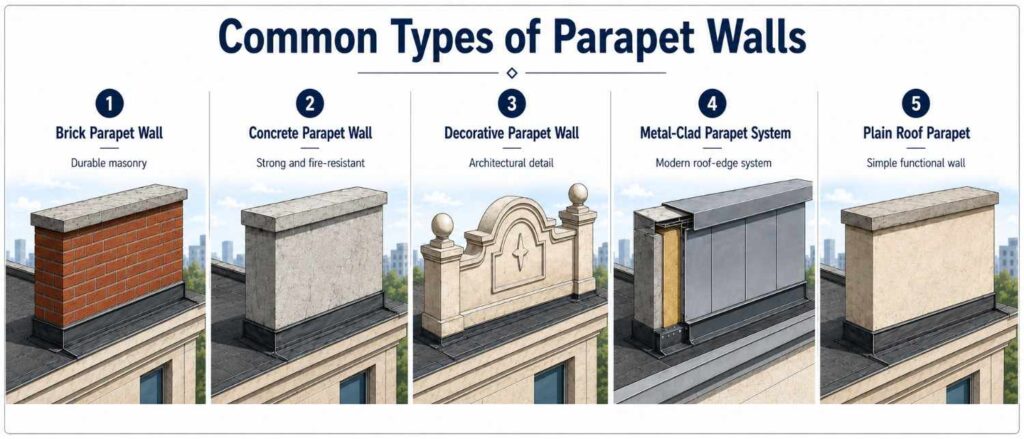
Common Types of Parapet Walls
Different buildings use different parapet styles depending on structure, design, age, roof type, and maintenance needs.
Brick Parapet Wall
A brick parapet is common on older masonry buildings, row houses, multifamily properties, and traditional flat-roof structures. Brick is durable and attractive, but the mortar joints can weaken over time from rain, snow, heat, and freeze-thaw movement.
Common maintenance needs include repointing, replacing damaged bricks, repairing coping, and checking flashing where the roof meets the wall.
Concrete Parapet Wall
A concrete parapet is often used on commercial buildings, garages, apartment buildings, and modern structures. Concrete is strong and fire-resistant, but it can still crack, absorb moisture, or deteriorate if water enters through open joints or surface damage.
Small cracks should be repaired early because water can spread inside the wall and create larger problems later.
Decorative Parapet Wall
A decorative parapet is designed to improve the look of a building. It may include stone caps, shaped profiles, custom trim, raised sections, panels, or architectural details.
These designs can improve curb appeal, but they also need careful maintenance because decorative edges, joints, and caps can create more places for water to enter.
Metal-Clad Parapet System
Modern roof-edge systems may use metal panels, steel framing, sheathing, insulation, waterproofing layers, and metal coping. These systems can provide a clean appearance and lower maintenance when installed correctly.
Their performance depends on proper fastening, sealed joints, flashing, and drainage. Loose metal coping or failed sealant can quickly lead to water intrusion.
Plain Roof Parapet
A plain roof parapet is a simple wall extension above the roofline. It is usually built for function rather than decoration. This type is often used to protect the roof edge, support flashing, and create a clean finish around a flat roof.
Parapet Wall Design: What Makes It Work?
Good parapet wall design is about more than height and appearance. The wall must work with the roof system, drainage layout, exterior wall, and waterproofing details.
Important design factors include:
- Height: The height should match the building use, roof access needs, safety concerns, and local requirements.
- Material: Brick, concrete, stone, metal, and cladding systems all perform differently.
- Coping: The top of the wall must be protected so water does not enter from above.
- Flashing: The joint where the roof meets the wall must be sealed correctly.
- Drainage: Water should move away from the parapet, not collect around it.
- Wind exposure: Roof edges are exposed to stronger wind, so detailing matters.
- Movement: Building materials expand and contract, which can create cracks if joints are not planned well.
- Waterproofing: Moisture control should be part of the design from the beginning.
A parapet often fails not because the wall itself is weak, but because water enters through the top, the flashing, or poorly sealed joints.
Parapet Wall Height: What Should You Know?
There is no single perfect height for every parapet. The right height depends on the building type, roof use, safety needs, architectural style, and code requirements.
A low parapet may be enough for basic roof-edge protection and appearance. A taller one may be used for privacy, rooftop equipment screening, or added safety around accessible roof areas.
Before building, raising, or rebuilding a parapet, property owners should consult a qualified professional. Final height decisions should not be based only on appearance because roof access, structural support, wind exposure, and safety rules may also apply.
Main Components of a Parapet Wall
A durable parapet depends on several parts working together. If one part fails, water can enter and damage the roof, wall, or interior spaces.
Coping
Coping is the cap installed on top of the parapet. It may be made from stone, precast concrete, metal, brick, or masonry.
Its job is to shed water away from the wall. Good coping should be properly sloped, securely attached, and sealed at the joints. If coping is cracked, loose, flat, or poorly sealed, water can enter from the top and damage the wall below.
Flashing
Flashing protects the joint where the roof meets the parapet. This is one of the most important waterproofing details on a flat roof.
Failed flashing can allow water to enter behind the roof membrane or into the wall. Many roof-edge leaks start at this connection.
Roof Membrane Tie-In
On flat roofs, the roofing membrane usually turns up the parapet and is secured with termination details. If this tie-in is loose, punctured, poorly sealed, or pulling away, water can move behind the roof system.
Mortar Joints
On brick and masonry parapets, mortar joints hold the wall together and help keep water out. Over time, mortar can crack, soften, or wash away.
Damaged mortar should be repaired before deeper moisture damage develops.
Waterproofing Layer
Waterproofing may include membranes, sealants, breathable masonry treatments, flashing systems, coatings, or properly sealed coping joints. The right method depends on the wall material and the source of water entry.
Parapet Wall Types and Best Uses
| Parapet Type | Best Used For | Main Benefit | Common Maintenance Need |
|---|---|---|---|
| Brick parapet | Older homes, row houses, and masonry buildings | Strong traditional appearance | Repointing, brick repair, coping checks |
| Concrete parapet | Commercial and modern structures | Strength and durability | Crack repair and surface protection |
| Decorative parapet | Properties needing architectural detail | Better curb appeal | Joint sealing and detail inspection |
| Metal-clad system | Modern roof-edge designs | Clean look and lighter construction | Sealant, fastener, and coping checks |
| Plain roof parapet | Flat roofs and simple building edges | Practical roof-edge protection | Flashing, coping, and drainage maintenance |
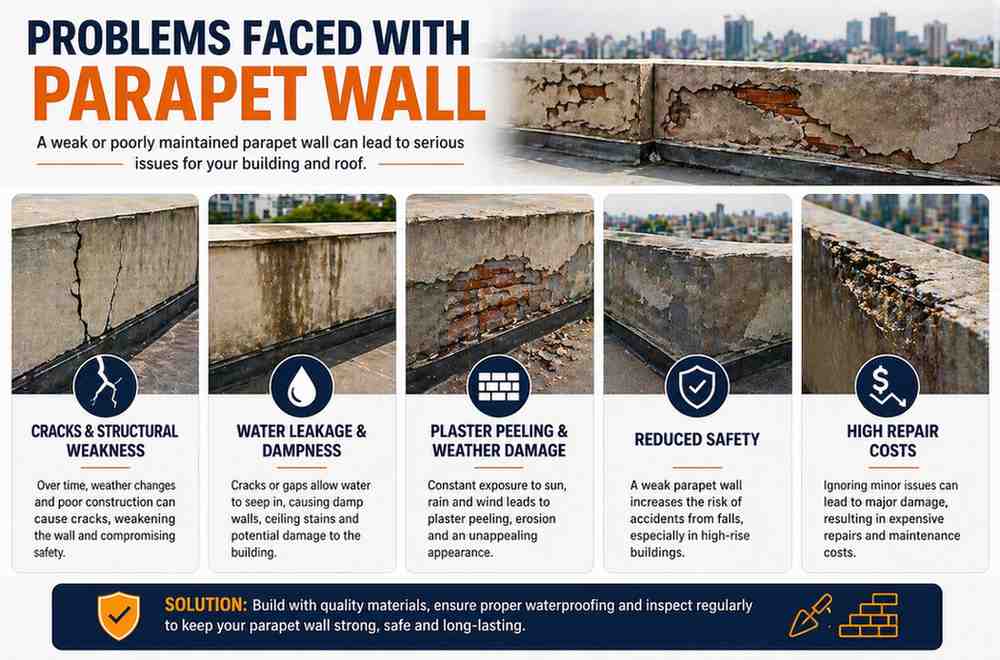
Common Parapet Wall Problems
Because a parapet is exposed to weather from the top, sides, and roof edge, it can deteriorate faster than lower exterior walls.
Cracks in the Wall
Cracks may form because of age, moisture, thermal movement, poor drainage, settlement, or freeze-thaw cycles. Even small cracks should be watched because they can let water enter the wall.
Loose Bricks or Blocks
Loose masonry is a serious warning sign. It may mean the mortar has failed, water has entered the wall, or hidden metal components are expanding from rust.
Failed Mortar Joints
Soft, missing, or cracked mortar allows water to move deeper into the wall. Repointing restores the joints and helps protect the masonry from further damage.
Damaged Coping
Cracked or loose coping is one of the most common sources of parapet leaks. Once water enters from the top, it can travel downward and damage bricks, mortar, flashing, insulation, and interior finishes.
Flashing Separation
When flashing separates from the wall or roof membrane, water can enter at the roof edge. This often causes recurring leaks that are difficult to solve with surface patching alone.
Interior Water Stains
Ceiling stains, peeling paint, wet insulation, or musty smells near the top floor can point to water entering around the parapet or roof perimeter.
Bulging or Leaning Sections
A parapet that appears to bow, lean, or shift should be inspected quickly. This may indicate structural movement, moisture damage, or weakened masonry.
Rust Stains
Rust marks may suggest corroding anchors, lintels, fasteners, or embedded steel. Rust expands as it forms, which can push masonry apart and create cracks.
Professional Insight: Why Parapets Often Fail
Many parapet problems start at the top of the wall. If coping joints open, water can enter directly into the masonry. The outside of the wall may still look acceptable, but moisture can weaken the inside over time.
Another common issue is the roof-to-wall connection. If the flashing or roof membrane tie-in fails, water can move behind the roofing system. This often leads to repeated leaks even after small patch repairs.
The best repair is not always the most visible one. A proper inspection should look at the coping, flashing, mortar joints, drainage, roof membrane, and wall movement together.
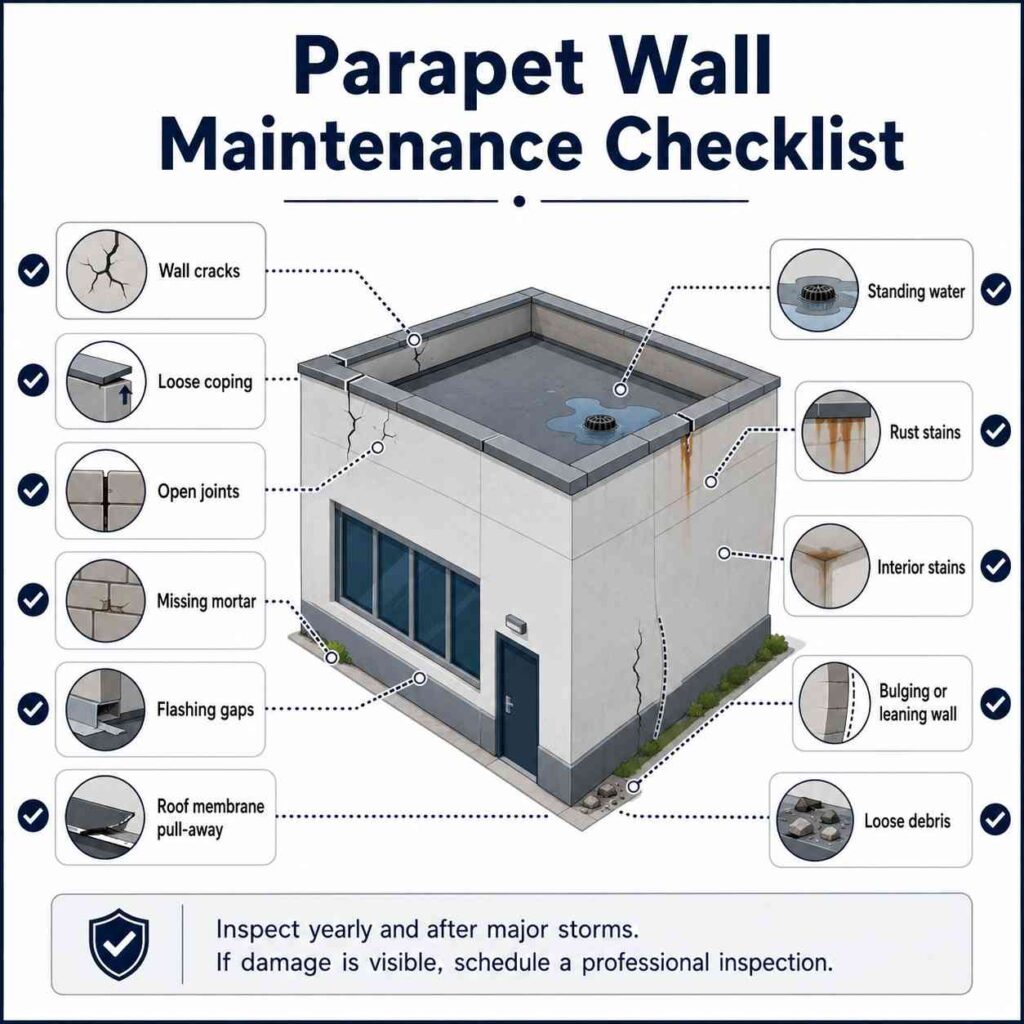
Parapet Wall Maintenance Checklist
Routine maintenance can prevent expensive emergency repairs. Property owners should inspect visible areas at least once a year and after major storms.
Check for:
- Cracks in brick, concrete, stone, or stucco
- Loose coping stones or metal caps
- Open coping joints
- Missing or crumbling mortar
- Flashing gaps or failed sealant
- Roof membrane pulling away from the wall
- Standing water near the roof edge
- Rust stains on masonry or metal
- Interior ceiling stains near exterior walls
- Bulging, leaning, or displaced wall sections
- Loose debris around the roof perimeter
Do not walk near an unsafe roof edge or attempt repairs in hard-to-reach areas. If damage is visible from the ground or roof access point, schedule a professional inspection.
Parapet Wall Repair and Waterproofing
The right repair method depends on the type of wall, the level of damage, and where water is entering.
Minor Repairs
Minor repairs may include sealing small cracks, replacing failed sealant, patching limited areas, or repointing small mortar sections.
These repairs are useful when the wall is mostly stable and the damage is caught early.
Moderate Repairs
Moderate repairs may include replacing damaged bricks, repointing larger areas, resetting coping, repairing flashing, or applying waterproofing after visible defects are corrected.
This level of repair is common when water has started entering but the wall does not need rebuilding.
Major Repairs
Major repairs may involve partial rebuilding, structural reinforcement, full coping replacement, roof-edge reconstruction, or major flashing and membrane work.
These repairs are usually needed when the wall is leaning, bulging, severely cracked, or repeatedly leaking.
Waterproofing Done Correctly
Waterproofing should never be used to hide active structural problems. Coating over cracks, loose masonry, or failed flashing may only trap moisture or delay proper repair.
Good waterproofing starts with diagnosis. The wall should be repaired first, then protected with the right system for the material and exposure conditions.
A professional contractor such as SK Group NYC Corp can evaluate whether the issue is caused by coping, flashing, mortar failure, roof membrane separation, or deeper wall deterioration.
How Much Does a Parapet Wall Cost?
Parapet cost depends on the size of the wall, the material, access conditions, and the repair scope. A small crack repair is very different from rebuilding a damaged masonry parapet with failed coping and roof-edge leaks.
Important cost factors include:
- Wall length and height
- Brick, concrete, stone, or metal materials
- Amount of damage
- Roof access difficulty
- Need for scaffold, lift, or safety setup
- Coping repair or replacement
- Flashing condition
- Roof membrane tie-in work
- Waterproofing requirements
- Labor time and project complexity
- Emergency repair versus planned maintenance
A short section of cracked mortar may only need targeted repair. A severely deteriorated parapet may require masonry rebuilding, coping replacement, flashing work, and waterproofing. That is why an in-person inspection is the most reliable way to understand the actual cost.
When Should You Call a Professional?
You should call a professional when the issue involves safety, water entry, loose materials, or visible movement.
Important warning signs include:
- New or widening cracks
- Loose bricks, blocks, or coping stones
- Recurring roof leaks
- Water stains near the top floor
- Open mortar joints
- Flashing separation
- Rust stains
- Bulging or leaning wall sections
- Falling masonry or debris
- Repeated patch repairs that do not solve the leak
A parapet is connected to the roof system, exterior wall, and building envelope. Delayed repair can lead to moisture damage, unsafe conditions, and higher restoration costs.
Common Mistakes to Avoid
Many parapet problems get worse because repairs are done without finding the source of the damage.
Avoid these mistakes:
- Sealing cracks without checking why they formed
- Painting over damaged masonry
- Ignoring loose coping
- Using waterproof coatings over wet or unstable surfaces
- Patching roof leaks without checking flashing
- Leaving open mortar joints exposed through winter
- Waiting until small leaks become interior damage
- Hiring a contractor without masonry or roof-edge experience
A good repair should solve the cause, not just improve the appearance.
FAQs About Parapet Walls
What is the main purpose of a parapet wall?
The main purpose of a parapet wall is to protect the roof edge, improve safety, support weather resistance, and create a finished architectural edge. It can also help hide rooftop equipment and support drainage details.
What are the common types of parapet walls?
Common types include brick parapets, concrete parapets, decorative parapets, metal-clad systems, and plain roof parapets. The right type depends on the building design, material, budget, and maintenance needs.
Does a parapet wall need waterproofing?
Yes, many parapets need waterproofing because they are exposed to rain, snow, wind, and temperature changes. Waterproofing works best when cracks, coping defects, and flashing problems are repaired first.
What causes cracks in a parapet wall?
Cracks can be caused by moisture entry, freeze-thaw movement, settlement, aging materials, poor drainage, weak mortar, rusting metal, or structural movement.
Can a damaged parapet wall cause roof leaks?
Yes. Damaged coping, failed flashing, open mortar joints, and poor roof membrane tie-ins can allow water to enter near the roof edge. This can cause ceiling stains, wet insulation, mold concerns, and repeated roof leaks.
How often should a parapet wall be inspected?
A visible inspection should be done at least once a year and after strong storms. Older masonry buildings or properties with previous leaks may need more frequent checks.
What is parapet wall coping?
Coping is the protective cap on top of the parapet. It helps shed water away from the wall and protects the top surface from moisture damage.
Final Thoughts
A parapet wall is a small-looking feature with a major role in roof protection, exterior safety, moisture control, and building appearance. When the coping, flashing, mortar, drainage, and waterproofing details are maintained properly, the wall can protect the building for many years.
The key is early action. Cracks, loose coping, open joints, and roof-edge leaks should be inspected before they spread into larger structural or interior problems. For property owners who need professional inspection or repair guidance, SK Group NYC Corp can help evaluate the wall and recommend the right repair approach.