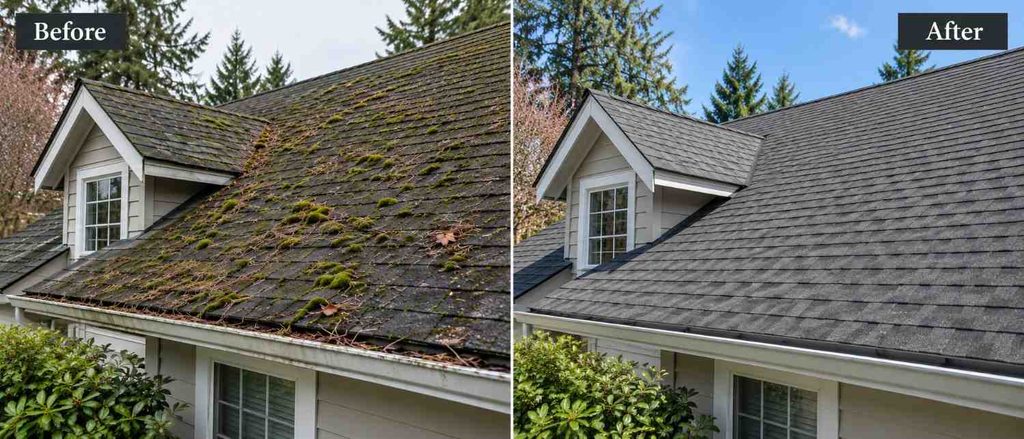
A roof covered with green moss may look like a minor appearance issue, but it can indicate deeper moisture problems within your roofing system. If you are searching for how to remove moss from roof surfaces safely, it is important to avoid harsh methods like pressure washing or aggressive scraping, which can damage asphalt shingles and remove protective granules.
Moss grows when moisture remains trapped on roofing materials for extended periods, especially in shaded areas with limited sunlight, heavy rainfall, humidity, or nearby trees. In places like New York City, changing weather conditions and dense building areas can create ideal environments for moss and algae growth.
This guide explains why moss develops, how it affects shingles, safe roof moss removal methods, common mistakes to avoid, and maintenance practices that help protect your roof and extend its lifespan.
Why Does Moss Grow on Roofs?
Moss is a moisture-loving plant that grows in areas where water remains available for long periods. Unlike normal plants, moss does not need deep soil to spread. It can attach itself directly to roofing materials and gradually expand across shingles.
The most common reasons for moss growth on roofs include:
Excess Moisture and Humidity
Roofs that stay damp after rainfall create ideal conditions for moss development. Poor airflow, frequent rain, and humid weather prevent roofing materials from drying properly.
In NYC neighborhoods with older homes, mature trees, and closely spaced buildings, certain roof sections may receive limited sunlight throughout the day. This allows moisture to remain trapped longer and increases the possibility of moss growth.
Limited Sunlight Exposure
Moss commonly appears on:
- North-facing roof slopes
- Areas beneath large trees
- Shaded extensions
- Roof sections blocked by nearby structures
Sunlight naturally helps roofs dry after rainfall. When sections remain shaded, moisture can collect between shingles and encourage moss development.
Organic Debris on Roofing Materials
Leaves, branches, and dirt create a layer where moisture remains trapped. Over time, this organic material provides an environment where moss and algae can grow.
Regular roof maintenance, including removing debris and maintaining clean gutters, helps reduce these conditions.
Poor Roof Drainage
Water should move efficiently away from the roof through gutters, valleys, and drainage systems. When water remains on roofing surfaces, it increases moisture exposure and can contribute to moss growth.
Flat roofs are especially sensitive to drainage problems because ponding water can accelerate roofing deterioration.
How Moss Damages Roof Shingles
Many homeowners underestimate moss because it feels soft and harmless. However, moss can negatively affect roofing materials when it remains untreated.
Moss Traps Moisture Against Shingles
Moss absorbs water like a sponge. Instead of allowing shingles to dry after rainfall, it keeps moisture directly against the roofing surface.
Long-term moisture exposure can contribute to:
- Shingle deterioration
- Rotting roof components
- Moisture intrusion
- Reduced roof lifespan
Moss Can Lift and Separate Shingles
As moss grows between asphalt shingles, it can push roofing materials upward. Lifted shingles become more vulnerable to wind damage and water penetration.
During inspections, roofing professionals often find moss growing underneath partially lifted shingles where moisture has already started affecting the roofing system.
Moss Can Affect Protective Granules
Asphalt shingles rely on protective mineral granules that help resist UV exposure and weather damage. Aggressive cleaning methods can remove these granules and shorten the useful life of the roof.
This is why safe cleaning techniques are essential when homeowners want to remove moss from roof shingles.
5 Common Places Where Moss Appears on Roofs
Moss does not grow randomly. It usually develops in areas where moisture collects or drying is limited.
| Roof Area | Why Moss Develops |
|---|---|
| North-facing slopes | Receive less direct sunlight and dry slowly |
| Roof valleys | Collect water and organic debris |
| Areas under trees | Increased shade and falling leaves |
| Around gutters | Moisture buildup and trapped debris |
| Near chimneys and flashing | Water movement and seal deterioration |
Identifying these areas helps homeowners address the cause instead of only removing visible moss.
How to Remove Moss From Roof Safely Without Damaging Your Shingles
The safest approach to how to remove moss from roof surfaces is using methods that protect the roofing system rather than aggressively removing growth.
Before starting, consider the roof’s age, slope, and condition. Walking on steep or damaged roofs can be dangerous and may cause additional damage.
Remove Loose Moss Carefully
For small amounts of moss, gentle removal may be possible using a soft-bristle brush.
Important steps:
- Work downward in the direction of shingle installation
- Avoid scraping upward against shingles
- Do not pull aggressively on moss growth
- Avoid damaging granules
The goal is to remove moss without disturbing the protective layers of the roof.
Use Roof-Safe Cleaning Solutions
Roof cleaning solutions designed for shingles can help break down moss and algae without causing unnecessary damage.
When using cleaning products:
- Follow manufacturer instructions
- Protect landscaping below the roof
- Avoid excessive chemical application
- Allow the solution time to work
Professional roof cleaning often focuses on controlled treatment rather than aggressive physical removal.
Allow Natural Removal Over Time
In some cases, treated moss gradually loosens and falls away naturally. This approach reduces the need for harsh scrubbing and protects roofing materials.
Roof Moss Removal Methods to Avoid
Some popular cleaning methods can create more damage than the original moss problem.
Avoid Pressure Washing
Pressure washing is one of the most common mistakes homeowners make.
High-pressure water can:
- Remove asphalt shingle granules
- Damage protective coatings
- Force water beneath shingles
- Affect roof seals
Although pressure washing may work on some surfaces, it is generally not recommended for asphalt roofing systems.
Avoid Harsh Chemicals
Strong chemicals may kill moss quickly but can damage:
- Roofing materials
- Gutters
- Landscaping
- Exterior surfaces
Always use products appropriate for roofing applications.
Avoid Walking Improperly on Shingles
Walking directly on shingles can cause cracking, granule loss, and accidental damage, especially on older roofs.
Tools and Materials Needed for Safe Roof Moss Removal
For minor moss issues, homeowners may use:
- Soft-bristle brush
- Roof-safe cleaning solution
- Protective gloves
- Safety equipment
- Garden hose with gentle water flow
- Ladder safety equipment
However, roof safety should always come first. Steep roofs, multi-story properties, and heavily damaged shingles may require professional assistance.
Preventing Moss Growth on Your Roof
Removing moss solves the current issue, but prevention is the key to long-term roof protection.
Keep Gutters Clean
Blocked gutters can cause water overflow and increase moisture around roof edges. Regular gutter cleaning improves drainage and reduces conditions that encourage moss growth.
Trim Overhanging Trees
Tree branches reduce sunlight exposure and drop organic debris onto roofs. Trimming nearby branches improves airflow and helps roofing materials dry faster.
Improve Roof Ventilation
Proper attic ventilation helps regulate moisture levels and reduces conditions that contribute to roofing problems.
Schedule Regular Roof Inspections
A professional inspection can identify early problems before they become expensive repairs.
During inspections, professionals commonly check:
- Shingle condition
- Roof valleys
- Flashing areas
- Drip edges
- Gutters
- Signs of moisture damage
If moss growth has started affecting shingles or you notice signs of moisture damage, a professional roof inspection can help determine whether cleaning, repair, or further roofing work is needed.
When Should You Call a Professional?
While minor moss growth may sometimes be manageable, professional evaluation is recommended when:
Moss Covers Large Areas
Extensive growth may indicate long-term moisture problems or aging roofing materials.
Your Roof Is Older
Older asphalt shingles become more fragile and may require careful assessment before cleaning.
You Notice Roof Damage
Professional help is recommended if moss appears with:
- Missing shingles
- Roof leaks
- Water stains
- Damaged flashing
- Soft areas on the roof
Safety Is a Concern
Roof cleaning can be dangerous without proper equipment. Experienced roofing contractors understand how to remove moss while minimizing the risk of damage.
Does Moss Mean You Need Roof Replacement?
Moss does not automatically mean a roof needs replacement.
A roof may only require cleaning and maintenance if:
- Shingles remain in good condition
- No leaks exist
- Damage is limited
However, roof repair or replacement considerations become important when moss has contributed to:
- Severe shingle deterioration
- Repeated leaks
- Damaged roof decking
- Significant moisture intrusion
A professional roof inspection helps determine whether cleaning, repair, or replacement is the appropriate solution.
Frequently Asked Questions
How does moss grow on a roof?
Moss grows when moisture remains trapped on roofing materials for extended periods. Shade, humidity, rainfall, and organic debris create ideal conditions for moss development.
Can moss damage asphalt shingles?
Yes. Moss can trap moisture, lift shingles, reduce roof protection, and contribute to premature deterioration.
Can I remove moss from my roof myself?
Small amounts of moss may be removed carefully, but homeowners should avoid aggressive methods that can damage shingles.
Does pressure washing damage roof shingles?
Yes. Pressure washing can remove protective granules and force water underneath roofing materials.
How often should a roof be cleaned?
Cleaning frequency depends on climate, tree coverage, roof condition, and moss development. Regular inspections help determine when maintenance is needed.
When should I call a roofing professional?
Professional evaluation is recommended when moss growth is extensive, the roof is aging, leaks are present, or damage is visible.
Final Thoughts
Moss removal is not only about improving the appearance of a roof. The goal is to eliminate growth while protecting shingles, preventing moisture damage, and maintaining the roof’s ability to protect the property.
Learning how to remove moss from roof surfaces safely helps homeowners avoid common mistakes that can shorten roof lifespan. Gentle cleaning methods, proper maintenance, and regular inspections provide the best approach for long-term roof health.
When moss growth is severe or roofing damage is present, a professional evaluation can help determine whether the right solution is cleaning, repair, or further roofing work.