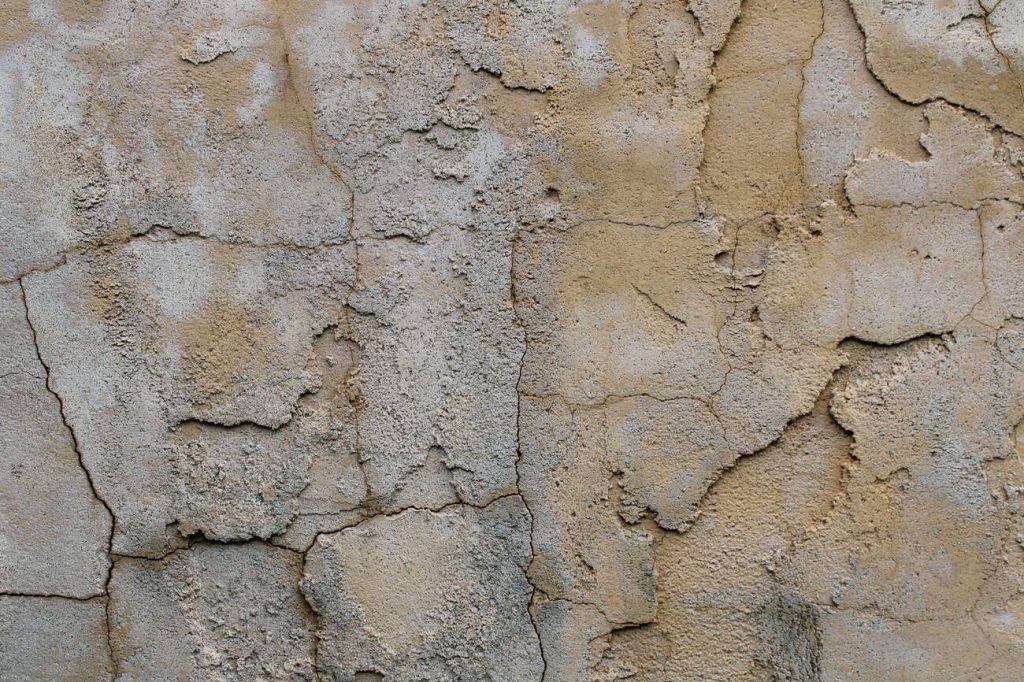
A masonry drill bit is a specialized drill bit designed for drilling into dense, mineral-based materials such as concrete, brick, mortar, concrete block, and certain types of stone. Most masonry bits feature a carbide cutting tip that can withstand the abrasion and impact associated with these materials far better than conventional wood or metal drill bits.
Depending on the material, hole size, and frequency of use, masonry drill bits can be used with a standard drill, hammer drill, or rotary hammer. Selecting the correct bit and drilling method is essential for producing accurate holes, protecting the tool, and achieving reliable anchor or fastener installation.
What Is a Masonry Drill Bit?
A masonry drill bit is engineered specifically for materials that are too hard and abrasive for conventional twist bits.
Its most distinctive feature is the hardened cutting tip, which is typically made from carbide or incorporates a carbide insert. Rather than slicing the material in the same way as a metal or wood bit, a masonry bit chips and fractures the surface as it rotates.
Spiral flutes run along the body of the bit and carry dust and fragmented material out of the hole. This is important because accumulated debris can increase friction, slow drilling progress, and cause unnecessary heat buildup.
Masonry drill bits are commonly used for tasks such as:
- Installing wall plugs in brick
- Drilling anchor holes in concrete
- Mounting fixtures on block walls
- Creating fixing points in mortar joints
- Preparing holes for concrete screws
- Drilling into selected types of natural stone
The effectiveness of the bit depends heavily on matching it to the substrate, drill type, and required hole dimensions.

How Does a Masonry Drill Bit Work?
A masonry drill bit removes material through a combination of rotational cutting and, where applicable, impact force.
When used with a standard drill, the bit rotates against the surface and gradually chips away the material. This method can be suitable for mortar, softer brick, lightweight block, and smaller holes.
When used with a hammer drill, the bit rotates while the tool delivers rapid forward-and-back impacts. These impacts help fracture the material directly in front of the carbide tip, allowing the bit to advance more efficiently.
A rotary hammer operates more aggressively and is designed for heavier-duty masonry work. It uses a dedicated hammering mechanism that transfers greater impact energy to the bit, making it particularly effective for dense concrete, deeper holes, and repeated drilling.
Standard Rotary Drilling
A standard drill provides rotational movement only.
This method is generally suitable for:
- Mortar
- Softer brick
- Lightweight concrete block
- Smaller holes in less demanding materials
Without hammer action, drilling may take longer in harder masonry.
Hammer Drilling
A hammer drill combines rotation with rapid impact.
It is commonly used for:
- Brick
- Concrete
- Dense concrete block
- Small to medium anchor holes
The added impact allows the carbide tip to break the material more efficiently.
Rotary Hammer Drilling
A rotary hammer delivers stronger impact energy and is designed specifically for demanding masonry applications.
It is typically preferred for:
- Dense concrete
- Larger-diameter holes
- Deeper drilling
- Repeated masonry work
- SDS-compatible drill bits
For occasional drilling into brick, a rotary hammer may be unnecessary. For frequent drilling into hard concrete, however, it can significantly improve speed and efficiency.
Why Carbide Tips Matter
Concrete, brick, and stone are highly abrasive materials. Standard steel cutting edges can wear quickly when exposed to these surfaces.
Carbide provides greater hardness and abrasion resistance, which is why it is commonly used at the cutting end of masonry bits.
Even carbide can wear or become damaged if the bit is overheated, subjected to excessive pressure, or forced sideways during drilling. Proper technique therefore plays an important role in extending bit life.
What Are Masonry Drill Bits Used For?
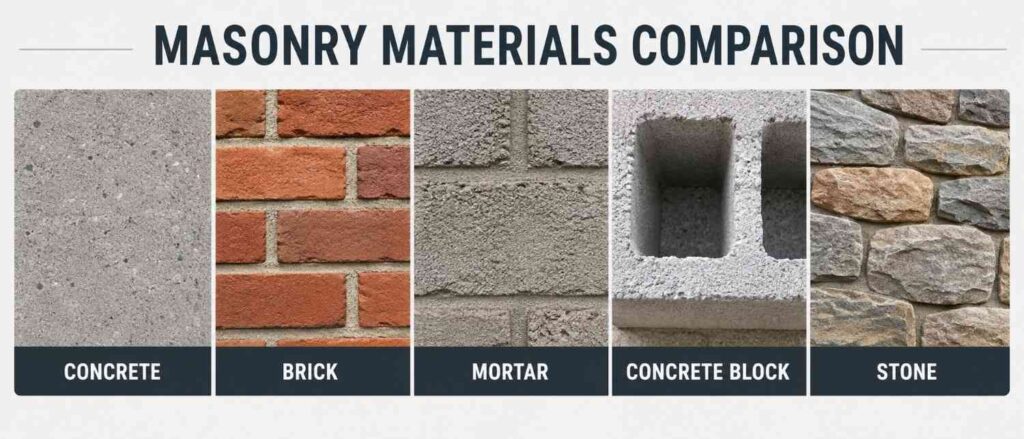
Masonry drill bits are used to drill holes in a range of construction materials, but each substrate requires a slightly different approach.
Concrete
Concrete is dense and abrasive, particularly when it contains hard aggregate.
A carbide-tipped masonry bit used with a hammer drill can handle many small and medium-sized holes. For dense structural concrete, larger diameters, or repeated drilling, an SDS bit combined with a rotary hammer is generally more efficient.
If progress suddenly stops, excessive pressure should be avoided. The bit may have encountered dense aggregate, embedded metal, or another obstruction.
Brick
Brick is generally easier to drill than dense concrete, although older or decorative brick can be brittle.
The drill should be started carefully to prevent the bit from moving across the surface. Excessive hammer action may damage fragile brick faces, especially near edges or corners.
Mortar
Mortar joints are often easier to drill than brick.
They may also be easier to repair later because damaged mortar can often be repointed. However, mortar is not always suitable for heavy loads, so the choice of drilling location should be based on the fastener system and the structural requirements of the installation.
Concrete Block
Concrete block can be solid or hollow.
When drilling hollow block, controlled pressure is important because internal webs may be relatively thin. The anchor or fastener should also be selected specifically for hollow or solid masonry as appropriate.
Natural Stone
Natural stone varies significantly in hardness.
Materials such as limestone, sandstone, and granite do not respond to drilling in the same way. Harder stone may require stronger equipment and a bit specifically rated for that material.
Decorative stone should also be drilled carefully to reduce the risk of surface chipping.
Types of Masonry Drill Bits
Masonry bits are available in several designs, each suited to a different type of drill or workload.
Standard Masonry Bits
Standard masonry bits usually have a round or hex-style shank that fits a conventional keyed or keyless drill chuck.
They are commonly used for:
- Brick
- Mortar
- Block
- Light concrete drilling
- Occasional DIY work
They may be compatible with standard drills or hammer drills, depending on the manufacturer’s recommendations.
Carbide-Tipped Masonry Bits
Carbide-tipped masonry bits are widely used because the hardened cutting tip provides improved resistance to abrasive materials.
They are available in a wide range of diameters, lengths, flute designs, and shank styles.
For general household and light construction work, a conventional carbide-tipped bit is often sufficient.
SDS Plus Bits
SDS Plus bits use a slotted shank designed for compatible rotary hammer chucks.
The shank allows limited forward-and-back movement while remaining securely retained in the chuck, enabling efficient transfer of impact energy.
SDS Plus bits are commonly used for:
- Anchor holes
- Concrete drilling
- Masonry fixings
- Medium-duty construction work
Heavy-Duty Rotary Hammer Bits
Larger rotary hammers may use heavier SDS-type shanks designed for more demanding drilling applications.
These bits are typically selected for larger holes, deeper drilling, and repeated work in hard concrete.
| Bit Type | Best Suited For | Typical Tool | Key Feature |
|---|---|---|---|
| Standard masonry bit | Brick, mortar, block | Drill or hammer drill | Conventional shank |
| Carbide masonry bit | General masonry and concrete | Hammer drill | Abrasion-resistant tip |
| SDS Plus bit | Concrete and repeated drilling | Rotary hammer | Slotted SDS shank |
| Heavy-duty SDS bit | Larger concrete holes | Heavy rotary hammer | High-impact compatibility |
How to Identify a Masonry Bit
A masonry bit can usually be identified by examining the cutting tip, flute design, and shank.
Common features include:
- A blunt or chisel-shaped carbide tip
- A cutting head that may be slightly wider than the shaft
- Spiral flutes designed to remove dust and debris
- A round, hex, or SDS-style shank
- Packaging or markings referring to masonry, brick, stone, or concrete
The cutting tip is often the easiest feature to recognize.
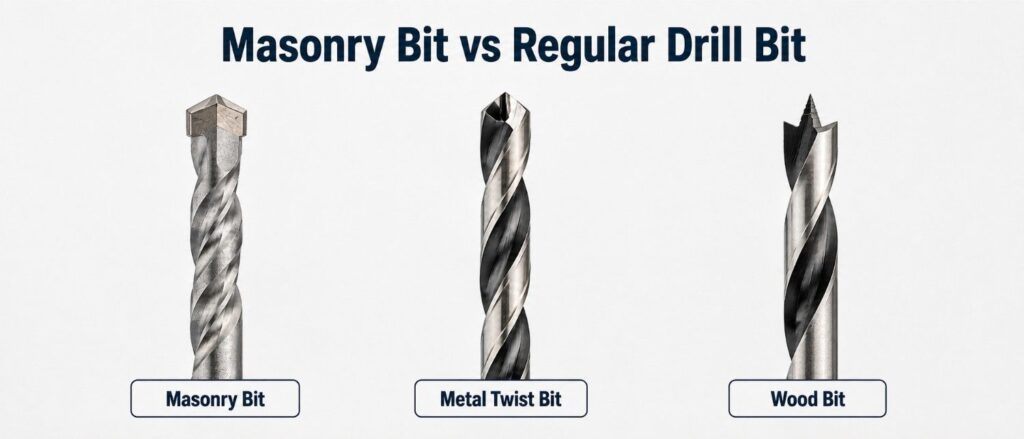
A metal twist bit normally has sharper cutting lips, while a wood bit may include a brad point or cutting spurs. A masonry bit generally has a broader, more robust cutting end.
Masonry Bit vs Regular Drill Bit
A masonry bit and a conventional drill bit are designed for different materials and use different cutting methods.
A metal twist bit uses sharp cutting edges to shave material into chips. A wood bit cuts through fibers. A masonry bit relies on a hardened tip to chip and fracture mineral-based material.
Using a regular metal bit on concrete can result in:
- Slow drilling
- Rapid edge wear
- Excessive heat
- Poor hole accuracy
- Damage to the cutting edges
Similarly, using a masonry bit on wood or metal may produce an inefficient or poorly finished hole because its geometry is not intended for those materials.
The bit should always be matched to the substrate.
Masonry Bit vs Concrete Drill Bit
The terms masonry bit and concrete drill bit often overlap.
Many drill bits marketed for concrete are also suitable for brick, block, and other masonry materials. The more important distinctions are usually found in the bit’s duty rating, cutting head, shank system, and intended drill type.
For example, a conventional round-shank masonry bit may be suitable for occasional brick or light concrete work, while an SDS Plus concrete bit may be better for repeated drilling in dense concrete.
When choosing between products, check:
- Recommended materials
- Compatible drill type
- Shank system
- Bit diameter
- Usable drilling length
- Intended level of use
Do You Need a Hammer Drill for Masonry?
Not every masonry task requires a hammer drill.
A standard drill can handle certain small holes in mortar, softer brick, or lightweight block when paired with a sharp masonry bit.
A hammer drill is generally more effective in harder masonry because the added impact action helps the bit break through the material.
A rotary hammer is usually the better option when:
- The concrete is especially dense
- Larger-diameter holes are required
- Significant drilling depth is needed
- Many holes must be drilled
- A conventional hammer drill is progressing too slowly
The correct tool can reduce drilling time, operator effort, heat buildup, and bit wear.
Choosing the Right Masonry Drill Bit
Selecting the correct masonry drill bit requires more than choosing the right diameter.
Consider the following factors before drilling.
Identify the Material
Determine whether the surface is concrete, brick, mortar, block, or natural stone. A bit that performs well in brick may not be the best choice for granite or dense structural concrete.
Match the Diameter to the Fastener
If the hole is being drilled for a wall plug, concrete screw, sleeve anchor, or another fixing, use the hole diameter specified by the fastener manufacturer.
An oversized hole may reduce grip, while an undersized hole may prevent correct installation.
Check Shank Compatibility
Round and hex shanks fit many conventional drill chucks. SDS Plus bits require a compatible rotary hammer chuck.
The drill and bit should be mechanically compatible before work begins.
Confirm Working Length
Ensure the usable drilling length is sufficient for the required hole depth. The total length of the drill bit is not always equal to its effective drilling depth.
Consider the Workload
A few small holes may only require a standard masonry bit and hammer drill. Repeated drilling into dense concrete may justify using a rotary hammer and SDS-compatible bit.
On larger renovation or construction projects, teams such as SK Group NYC Corp may select drill bits based on the substrate, anchor requirements, required hole dimensions, equipment compatibility, and expected drilling volume.
How to Use a Masonry Drill Bit
Using a masonry drill bit correctly improves hole quality and reduces unnecessary wear.
1. Identify the Surface
Confirm whether you are drilling concrete, brick, mortar, block, or stone. This determines the most appropriate bit and drill mode.
2. Confirm the Hole Diameter
Check the required hole size before drilling. If an anchor, wall plug, or concrete screw is being installed, follow the manufacturer’s specified drill diameter.
3. Mark the Drilling Point
Mark the center of the hole clearly.
For multiple fixing points, confirm measurements and alignment before drilling begins.
4. Check for Hidden Utilities
Before drilling into walls, floors, or ceilings, consider the possibility of concealed electrical cables, plumbing, gas lines, or other building services.
Use appropriate detection equipment where necessary.
5. Secure the Bit Correctly
Insert the bit fully and tighten a conventional chuck securely.
For SDS tools, engage the shank according to the manufacturer’s instructions and confirm that it is properly locked.
6. Select the Correct Drill Mode
Use rotary-only mode for softer materials when impact is not required. Use hammer mode for harder brick or concrete where appropriate.
For rotary hammers, use the drilling mode intended for rotary hammer bits rather than a chiseling-only setting.
7. Begin at a Controlled Speed
Place the bit on the marked point and begin drilling at a moderate speed. This helps the cutting tip establish a stable starting position and reduces the risk of wandering.
8. Maintain Proper Alignment
Keep the drill aligned with the intended direction of the hole.
Excessive sideways movement can enlarge the hole, reduce anchor fit, and place unnecessary stress on the bit.
9. Remove Dust Periodically
Withdraw the bit periodically during drilling.
This allows the flutes to remove accumulated debris and helps reduce friction inside the hole.
10. Stop at the Required Depth
Use a depth stop where available.
Avoid drilling significantly deeper than necessary, particularly when the construction behind the surface is unknown.
11. Clean the Hole
Remove loose dust before installing the fastener.
Some anchoring systems depend on correct hole cleaning for proper performance, so the fastener manufacturer’s installation instructions should always be followed.
Appropriate eye protection should be used during drilling. Concrete, brick, and stone can also generate fine airborne dust, so suitable dust-control measures and respiratory protection may be necessary depending on the material and extent of the work.
How Long Do Masonry Drill Bits Last?
There is no fixed lifespan for a masonry drill bit.
Service life varies according to:
- Material hardness
- Hole diameter
- Drilling depth
- Frequency of use
- Bit quality
- Drill type
- Applied pressure
- Heat buildup
- Dust removal
- Contact with unexpected materials
A bit used occasionally in soft brick may remain serviceable much longer than one used repeatedly in dense concrete.
Regular inspection is important. Heavy rounding, severe chipping, looseness, or visible damage to the cutting tip may indicate that replacement is necessary.
Frequently Asked Questions
Can a masonry drill bit drill concrete?
Yes. A masonry drill bit rated for concrete can be used for small and medium holes. Harder concrete is generally easier to drill with a hammer drill or rotary hammer.
Can you use a masonry bit on brick?
Yes. Brick is one of the main materials masonry bits are designed to drill. Controlled speed and pressure are recommended, particularly with older or decorative brick.
Can you use a masonry bit in a regular drill?
Yes, provided the bit’s shank is compatible with the chuck. A regular drill may be suitable for lighter masonry work, although harder concrete usually benefits from hammer action.
Can a masonry bit drill metal?
A masonry bit is not intended for general metal drilling. A metal-specific drill bit should be used for steel and other metals.
Can a masonry bit drill wood?
It may produce a hole, but it is not the correct choice. Wood bits are designed to cut fibers more cleanly and efficiently.
How can you identify a masonry bit?
Look for a blunt, carbide-style cutting tip that is often slightly wider than the body of the bit. Product markings may also identify it as suitable for masonry, brick, stone, or concrete.
Why is my masonry bit not drilling?
Possible causes include a worn cutting tip, incorrect drill mode, insufficient tool power, packed dust, dense aggregate, or contact with embedded metal.
Should you drill into brick or mortar?
The correct choice depends on the anchor, load, and condition of the wall. Mortar may be easier to repair, while brick may offer different fixing characteristics. Follow the requirements of the selected fastener system.
What size masonry bit should you use for a wall plug?
Use the diameter specified by the wall plug manufacturer. An oversized hole can reduce holding performance, while an undersized hole can prevent proper installation.
Final Thoughts
The right masonry drill bit makes drilling into concrete, brick, mortar, block, and stone more accurate, efficient, and predictable.
For lighter work, a conventional carbide-tipped bit used with a standard or hammer drill may be sufficient. Dense concrete, deeper holes, and repeated drilling are generally better handled with a rotary hammer and a compatible SDS bit.
The most important factors are correct bit selection, proper tool compatibility, accurate hole sizing, controlled drilling pressure, and effective dust removal. Matching the drilling setup to the material helps protect the equipment, improve hole quality, and produce more reliable anchor installations.
Have Questions? Call Us Now!
+1 (718) 507-7000
We’re here to help quick answers, friendly service, anytime you need!
Contact SK Group NYC
🌐 Website: www.skgroupnyccorp.com
📍 Serving: Manhattan, Brooklyn, Queens, The Bronx, and Staten Island
📍 Address: 87-88 172nd St, Jamaica, New York, NY, United States, New York