Stamped concrete patio ideas work best when they improve how a backyard functions, not just how it looks. A patio should feel connected to the home, remain comfortable underfoot, drain correctly, and provide enough room for furniture, cooking, and movement. A beautiful pattern cannot compensate for a layout that is too small or a slab that sends water toward the foundation.
The strongest stamped concrete patio ideas begin with one question: how will the space be used? A dining patio needs room around the table, a pool deck needs reliable traction, and a fire-pit area needs safe seating distances. Once those needs are clear, it becomes much easier to choose a pattern, color, border, and finish.
Stamped concrete is freshly placed concrete that is colored, textured, and patterned to resemble slate, flagstone, brick, cobblestone, tile, or wood. It offers wide design flexibility, but its long-term performance still depends on preparation, drainage, control joints, curing, sealing, and maintenance.
Why Homeowners Choose Stamped Concrete
Stamped concrete offers more design flexibility than plain concrete and can create the appearance of premium materials without using individual stones or pavers. It can follow straight edges, gentle curves, garden beds, pools, and irregular property lines.
Stamped concrete is not maintenance-free. Concrete can crack, dark colors can become hot in strong sun, and some sealers may be slippery when wet. Good site preparation, drainage, control joints, and a suitable sealer can reduce problems, but no installer should promise a completely crack-free surface.
12 Best Stamped Concrete Patio Ideas for Different Backyards
1. Natural Stone-Inspired Patio
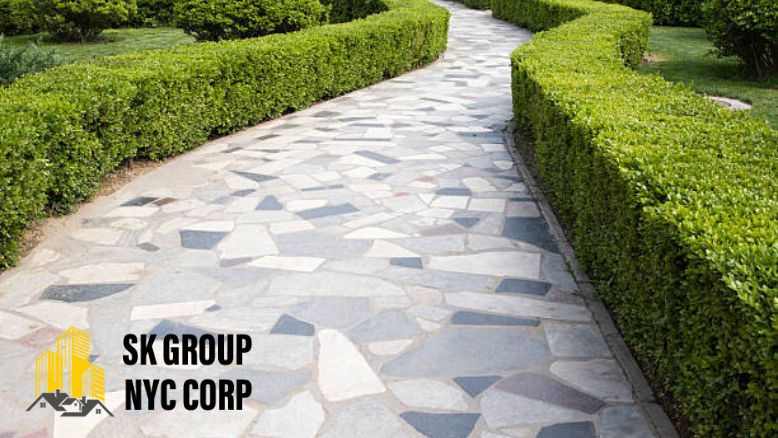
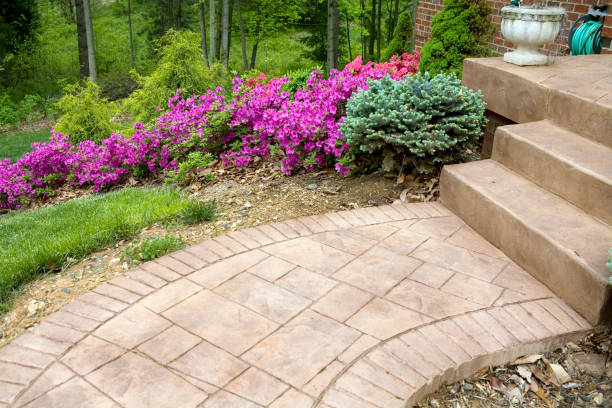
Flagstone, fieldstone, and fractured-slate patterns suit traditional, rustic, and transitional homes. Sandstone, taupe, soft gray, and muted brown usually create a more believable finish than sharp color contrasts.
This look works especially well beside gardens and stone walls. Keep the highlights restrained so the surface looks naturally weathered rather than painted.
2. Modern Large-Slab Design
Large square or rectangular impressions create a clean, architectural look. Pair them with straight planting beds, simple furniture, and a limited palette of light gray, greige, charcoal, or beige.
A shallow texture usually works better than a heavily detailed stamp because the design should support the home’s clean lines rather than compete with them.
3. Patio With a Contrasting Border
A border can define the patio edge, separate activity zones, and connect the surface to nearby brickwork or masonry. Brick, cobblestone, or a darker concrete band can frame a lighter central field.
Keep the border proportionate. A wide, dark edge may make a narrow backyard feel smaller, while a thin border or saw-cut band can provide definition without overwhelming the space.
4. Wood-Plank Stamped Concrete
Wood-plank stamps provide the warmth of decking without splinters, rot, or regular wood staining. Weathered gray, muted tan, and medium brown fit farmhouse, coastal, rustic, and modern homes.
Run the planks along the longest side to make the patio feel wider or deeper. Avoid grooves so deep that chairs wobble or dirt collects in the texture.
5. Patio With a Fire Pit
Plan the fire pit before the concrete is poured. The layout should account for seating distance, foot traffic, wind direction, nearby doors, overhead structures, and local fire requirements.
Circular patterns support conversational seating, while rectangular layouts suit modern benches and sectionals. A contrasting stamped band can define the gathering area without introducing another material.
6. Multi-Tone Stone Finish
A base color with a darker release color or subtle highlights can add depth to slate and stone patterns. Related shades usually look more realistic than extreme contrast.
Review physical samples outdoors because color changes in direct sun, shade, and evening light. A small sample that appears subtle indoors may look much darker across a full patio.
7. Small Backyard Patio
The most effective stamped concrete patio ideas for small yards reduce visual clutter. A seamless stone texture, large-format pattern, or light neutral color can make the area feel more open.
Measure the table, chairs, grill, and planters before approving the slab size. Leave enough room to pull out chairs and walk between the back door, cooking area, and seating zone.
Built-in seating can preserve floor space, but it should not block drainage or make the patio feel enclosed.
8. Patio With a Seating Wall
A low wall can define the patio edge, create overflow seating, and frame a fire pit or raised garden. It can also reduce the need for loose chairs during larger gatherings.
Choose a wall cap that coordinates with the patio without matching it exactly. Confirm that the wall’s position will not interrupt drainage or create areas where water can collect.
9. Brick-Look Patio
Running-bond, herringbone, and basket-weave stamps add traditional character. They suit colonial, craftsman, townhouse, and urban-style properties.
Muted clay, charcoal, brown, and aged red look more natural than bright red. On a large patio, brick may work better as a border because repeating a small pattern across a broad surface can feel busy.
10. Poolside Stamped Concrete
Pool decks require traction, controlled drainage, and colors that stay comfortable in direct sunlight. Pale gray, sand, beige, and light taupe are often more practical than deep charcoal.
Texture alone does not determine slip resistance. The sealer and any traction additive also matter. Ask how the finished surface will perform when wet, particularly around steps, ladders, and shallow-entry areas.
11. Curved Patio Layout
Curved edges help a patio blend with lawns, gardens, ponds, and irregular property lines. Flagstone and seamless stone textures support this softer shape.
Before construction, outline the patio with a garden hose, temporary stakes, or marking paint. Walk through the space to identify awkward corners, narrow passages, or areas where furniture may not fit comfortably.
12. Mixed-Material Design
Stamped concrete can be combined with natural stone, gravel, grass strips, timber structures, or plain concrete bands. Each material should have a clear purpose.
Stone can highlight a fire pit, gravel can support drainage near planting beds, and plain concrete can create a clean walkway transition. Limit the palette to two or three coordinated finishes so the backyard feels unified.
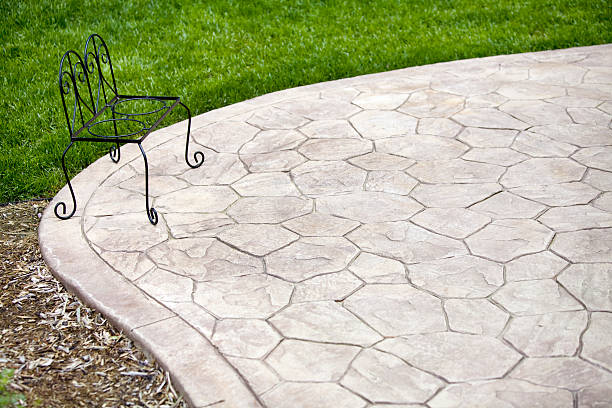
How to Choose the Right Pattern
Choosing among stamped concrete patio ideas becomes easier when the pattern is matched to the patio’s size, the architecture of the home, and the way the space will be used.
Consider these common pattern options:
- Slate: Offers layered texture and works well with modern and transitional homes.
- Flagstone: Creates a more relaxed, natural look that suits gardens, curved patios, and informal landscapes.
- Brick: Adds traditional character and complements colonial, craftsman, and urban-style properties.
- Cobblestone: Works best as a decorative border or accent because its detailed pattern can feel busy across a large patio.
- Wood plank: Adds warmth and directional movement while creating the appearance of natural timber.
- Seamless texture skins: Produce a stone-like surface without visible grout lines, making them a practical choice for compact patios and furniture-heavy areas.
Before making a final decision:
- Review full-patio photographs rather than relying only on close-up images.
- Ask to see completed local projects in similar colors and patterns.
- Consider how the pattern will look across the entire patio, not just on a small sample.
- Choose a pattern scale that fits the size of the space.
- Make sure the texture will not interfere with dining chairs, tables, or walking areas.
A detailed pattern may look attractive on a sample board but appear too busy when repeated across several hundred square feet.
Choosing a Color That Fits the Property
The right patio color should complement the home rather than compete with it. Before choosing a shade, consider the roof, siding, brickwork, walkways, landscaping, outdoor furniture, and the amount of sunlight the patio receives.
Popular color options include:
- Warm tan and taupe: Pair well with brick, natural stone, wood siding, and traditional homes.
- Brown and muted terracotta: Add warmth and work especially well with rustic, Mediterranean, and craftsman-style properties.
- Gray and charcoal: Suit modern and contemporary exteriors, although darker shades may become warmer in direct sunlight.
- Beige and sandstone: Brighten shaded yards and create a softer appearance around pools and garden areas.
- Antiqued finishes: Add depth to slate and stone patterns when the contrast is subtle and evenly applied.
Avoid using overly dark release colors or heavy black highlights. Strong contrast can make a new patio look artificial instead of naturally weathered.
Before approving the final color, place physical samples beside the house and view them in morning light, afternoon sun, deep shade, and wet conditions. A color that looks balanced indoors or on a screen may appear noticeably different across a full patio.
What Affects Stamped Concrete Patio Cost?
Cost depends on site conditions, patio size, and design complexity. A simple one-color pattern generally costs less than a multi-color installation with borders, curves, steps, or custom features.
Common cost factors include:
- Excavation and base preparation
- Patio size and concrete thickness
- Backyard access
- Drainage and grading
- Existing concrete removal
- Pattern and color complexity
- Borders, steps, or seating walls
- Sealer and surface finish
- Local labor and material rates
Compare written specifications rather than price alone. A clear estimate should explain preparation, concrete thickness, reinforcement, color method, pattern, control joints, sealer, cleanup, and warranty terms.
A low estimate may exclude important preparation work or use a simpler coloring and sealing process. Ask contractors to explain what is included before comparing bids.
Stamped Concrete vs. Pavers
| Feature | Stamped Concrete | Pavers |
|---|---|---|
| Look | Seamless, decorative surface | Individual units with varied layouts |
| Repairs | Harder to match after damage | Easier to replace single units |
| Maintenance | May need resealing | May need joint sand and weed control |
| Movement | Can crack over time | Can shift or settle |
| Best for | A unified custom finish | Flexible repairs and future changes |
The better choice depends on budget, climate, maintenance, and design preferences.
How to Maintain a Stamped Concrete Patio
Proper maintenance helps preserve the patio’s appearance, protect the sealer, and reduce the risk of avoidable surface damage.
Clean the Surface Regularly
- Remove leaves, dirt, and grit with a soft broom.
- Wash the patio with water and a mild cleaner approved for decorative concrete.
- Clean grease, food, and drink spills as soon as possible.
- Avoid harsh chemicals that may damage the finish or sealer.
Inspect for Early Signs of Wear
Check the patio periodically for:
- Faded or uneven sealer
- Small cracks
- Scratches caused by furniture
- Standing water or blocked drainage
Resealing frequency varies depending on sunlight, weather, foot traffic, cleaning habits, and the type of sealer used.
Protect the Patio From Damage
- Avoid harsh deicing chemicals during winter.
- Use protective pads beneath metal furniture.
- Lift heavy planters instead of dragging them.
- Keep drains and runoff paths clear.
Addressing minor issues early helps maintain the patio’s appearance and may prevent more costly repairs later.
Frequently Asked Questions
What Are the Best Stamped Concrete Patio Ideas?
Natural stone, slate, wood-plank, brick, and large-slab designs are among the most versatile options. The right design depends on the home’s architecture, backyard size, climate, furniture layout, and maintenance expectations. Pool areas need traction, while compact yards benefit from lighter colors and less detailed patterns.
Does Stamped Concrete Crack?
Stamped concrete can crack because it behaves like any concrete slab. Proper excavation, base preparation, reinforcement, slab thickness, drainage, and control-joint placement reduce uncontrolled cracking but cannot eliminate it completely.
Is It Slippery When Wet?
Stamped concrete can be slippery when a smooth texture or glossy sealer is used. A suitable stamp texture, appropriate sealer, and slip-resistant additive can improve traction around pools, steps, and shaded areas.
Can an Existing Patio Be Stamped?
Traditional stamping is completed while concrete is fresh. An existing slab may accept a stampable overlay if it is structurally sound, but cracks, drainage, movement, and surface contamination should be evaluated first.
How Often Should It Be Sealed?
There is no fixed resealing schedule. Timing depends on weather, sunlight, traffic, cleaning methods, sealer type, and surface condition. Dull color, uneven sheen, or rapid water absorption may indicate that the patio needs evaluation.
Is Stamped Concrete Better Than Pavers?
Stamped concrete may suit homeowners who want a continuous, customized surface. Pavers may be better for those who prioritize individual-unit repairs or future layout changes. Site conditions, appearance, maintenance, and repair preferences should guide the decision.
Final Thoughts
The best stamped concrete patio ideas balance appearance with drainage, safety, maintenance, and daily use. Pattern and color should complement the house, while the layout should leave enough room for furniture, cooking, and movement.
Review physical samples, completed contractor projects, and written installation details before work begins. A well-planned patio should not only look impressive on installation day; it should remain practical, comfortable, and visually connected to the property for years.
Have Questions? Call Us Now!
+1 (718) 507-7000
We’re here to help quick answers, friendly service, anytime you need!
Contact SK Group NYC
🌐 Website: www.skgroupnyccorp.com
📍 Serving: Manhattan, Brooklyn, Queens, The Bronx, and Staten Island
📍 Address: 87-88 172nd St, Jamaica, New York, NY, United States, New York