Brick dimensions play a major role in construction strength, wall alignment, durability, and overall project appearance. Whether you are planning a residential renovation, chimney rebuild, masonry repair, retaining wall, or commercial construction project in New York City, understanding proper brick dimensions helps improve structural stability and installation accuracy.
In this guide, we will explain everything New York homeowners and contractors should know about brick dimensions, including standard sizes, modular sizing, common applications, wall performance, and how brick measurements affect masonry construction in NYC.
What Are Brick Dimensions?
Brick dimensions refer to the length, width, and height of a brick used in construction projects. These measurements help contractors maintain consistent wall patterns, proper mortar joints, and strong structural alignment.
The dimensions of a brick may vary depending on:
- Brick type
- Manufacturer
- Construction purpose
- Residential or commercial use
- Regional building standards
It helps to improve:
- Structural durability
- Waterproofing performance
- Masonry alignment
- Energy efficiency
- Wall stability
- Exterior appearance
For New York construction projects, proper sizing is important because harsh weather conditions can quickly damage poorly aligned masonry systems.
Standard Brick Dimensions
| Brick Type | Length | Width | Height |
|---|---|---|---|
| Standard Brick | 8 inches | 3 5/8 inches | 2 1/4 inches |
| Modular Brick | 7 5/8 inches | 3 5/8 inches | 2 1/4 inches |
| Queen Brick | 7 5/8 inches | 2 3/4 inches | 2 3/4 inches |
| King Brick | 9 5/8 inches | 2 3/4 inches | 2 3/4 inches |
These are commonly used for:
- Exterior walls
- Residential homes
- Brick veneers
- Chimneys
- Retaining walls
- Commercial buildings
In NYC construction, standard-sized bricks are preferred because they simplify wall spacing and improve installation speed.
Typical Brick Dimensions Used in NYC
Older New York brownstones often contain:
- Larger handmade bricks
- Non-standard masonry sizes
- Historic brick measurements
Modern construction projects usually use:
- Modular brick dimensions
- Uniform brick sizing
- Engineered masonry materials
Typical brick dimensions for modern NYC projects help contractors:
- Reduce labor costs
- Improve wall alignment
- Create cleaner finishes
- Increase installation efficiency
Many roofing and waterproofing contractors also prefer modular sizing because it creates more predictable joint spacing.
Modular Brick Dimensions Explained
Modular brick dimensions are designed to work with standard mortar joints for easier wall planning and installation.
The most common modular brick dimensions are:
- 7 5/8″ length
- 3 5/8″ width
- 2 1/4″ height
With mortar joints included, modular sizing creates an even 8-inch module, making wall calculations much easier.
Benefits include:
- Faster construction
- Cleaner masonry patterns
- Easier wall measurements
- Better structural consistency
- Reduced material waste
In NYC residential construction, modular bricks are widely used for:
- Facade restoration
- Chimney rebuilding
- Brick pointing
- Exterior renovations
- Masonry repairs
Average Brick Dimensions for Residential Construction
| Application | Average Size |
|---|---|
| Exterior Walls | 8″ × 3 5/8″ × 2 1/4″ |
| Brick Veneer | 7 5/8″ × 2 1/4″ |
| Pavers | Larger & flatter sizes |
| Retaining Walls | Oversized masonry blocks |
Average brick dimensions are selected based on:
- Structural requirements
- Wall thickness
- Climate conditions
- Waterproofing needs
- Design appearance
For homes in New York, brick sizing also affects insulation performance during winter months.
How NYC Weather Damages Brick Walls
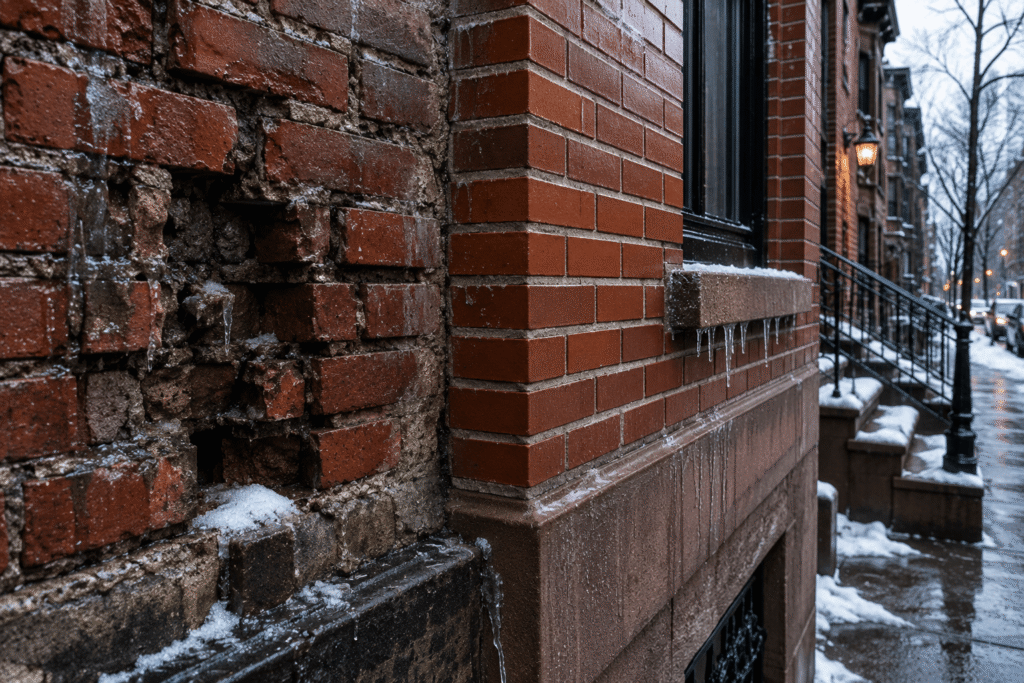
New York weather can be extremely aggressive on masonry structures throughout the year. Heavy rain, snow, humidity, ice buildup, and constant freeze-thaw cycles put continuous pressure on brick walls and mortar joints. As temperatures change, bricks naturally expand and contract, which can slowly weaken the structure over time.
For many NYC homes and brownstones, this weather stress becomes one of the main reasons behind masonry deterioration, water leaks, and exterior wall damage.
Problems Caused by Incorrect Brick Dimensions
Using incorrect brick dimensions during construction can create several long-term structural and waterproofing problems. Poor brick sizing often leads to uneven wall alignment, weak mortar bonding, moisture penetration, and drainage issues.
During winter in New York, trapped water inside masonry surfaces freezes and expands, causing cracks in both bricks and mortar joints. Over time, these issues can reduce the durability and lifespan of exterior walls while increasing repair costs for homeowners and commercial property owners.
Why Proper Brick Dimensions Matter
Proper brick dimensions help create stronger and more stable masonry systems that can better handle harsh NYC weather conditions. Correct sizing improves wall alignment, structural support, waterproofing performance, and overall durability.
Well-installed masonry walls are more resistant to:
- Water leaks
- Freeze damage
- Surface cracking
- Wall movement
- Moisture penetration
This is especially important for New York brownstones, chimneys, retaining walls, commercial buildings, and exterior facades that are constantly exposed to changing weather conditions.
Strong Masonry Protection for NYC Properties
Choosing the right brick size and professional masonry installation methods helps protect properties from long-term structural damage. Proper brick dimensions combined with quality waterproofing systems improve both the appearance and performance of masonry structures across New York City and surrounding areas.the appearance and performance of masonry structures across New York City and surrounding areas.
Dimensions of a Brick and Mortar Joint Spacing
The dimensions of a brick are only part of the wall measurement process. Mortar joints also affect total wall sizing.
Typical mortar joint thickness:
- 3/8 inch
When mortar is added, the wall layout changes slightly. This is why contractors carefully calculate both:
- Brick size
- Joint spacing
Proper spacing helps improve:
- Waterproofing performance
- Structural alignment
- Masonry appearance
- Drainage control
NYC contractors often use modular systems because they simplify these calculations.
Common Brick Types and Sizes
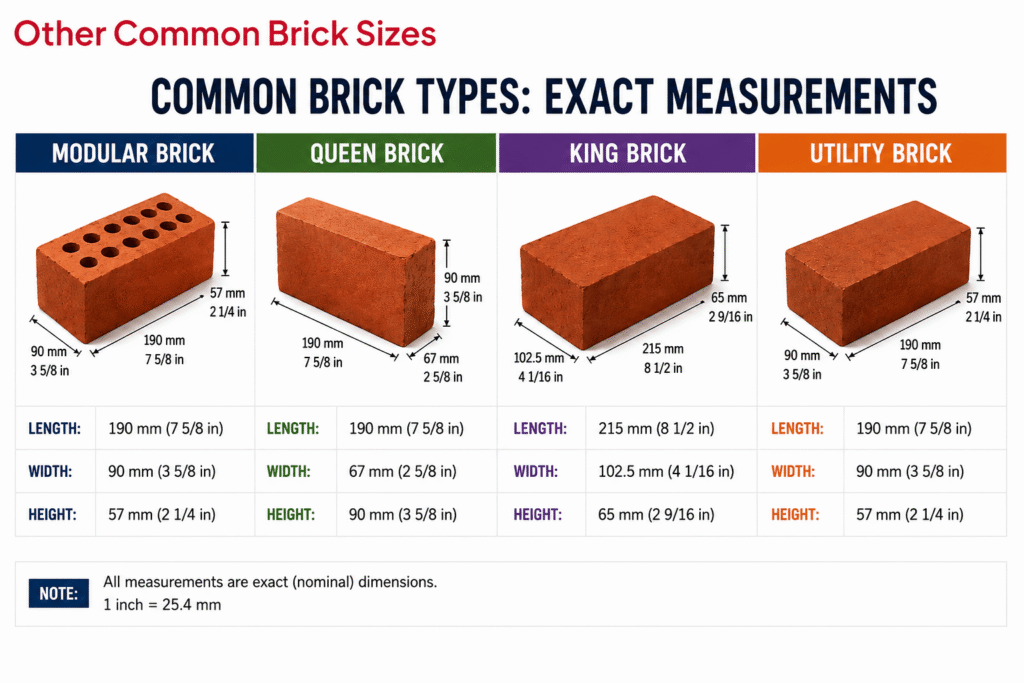
1. Modular Bricks
Most common in modern construction.
Benefits:
- Uniform sizing
- Faster installation
- Cleaner appearance
2. Queen Bricks
Slightly taller than standard bricks.
Often used for:
- Decorative walls
- Exterior facades
3. King Bricks
Larger brick size for wider wall coverage.
Benefits:
- Fewer mortar joints
- Faster installation
4. Utility Bricks
Used for commercial and industrial projects.
Ideal for:
- Large masonry walls
- Structural applications
Brick Dimensions for Different Construction Projects
Different projects require different brick dimensions depending on strength and design requirements.
Chimney Construction
Requires heat-resistant masonry units with precise sizing.
Retaining Walls
Often use oversized blocks for better support.
Brick Veneer Systems
Use thinner bricks for decorative purposes.
Exterior Masonry Walls
Typically use standard brick dimensions or modular brick dimensions.
Commercial Buildings
Larger brick systems improve installation efficiency.
How Brick Dimensions Affect Waterproofing
Brick dimensions directly affect masonry waterproofing performance.
Poor spacing or inconsistent sizing may allow:
- Water intrusion
- Moisture buildup
- Surface cracking
- Mold growth
Professional masonry contractors use proper brick dimensions to improve:
- Drainage systems
- Mortar adhesion
- Waterproof coatings
- Wall durability
In NYC, waterproof masonry construction is essential because buildings face constant rain and humidity exposure.
Choosing the Right Brick Dimensions
Before selecting bricks, homeowners should consider:
Building Type
Residential and commercial buildings often require different masonry sizes.
Climate Conditions
NYC freeze-thaw weather affects masonry performance.
Structural Requirements
Larger walls may require oversized masonry units.
Appearance Goals
Different dimensions create different visual patterns.
Waterproofing Needs
Proper sizing improves moisture resistance.
Brick Dimensions for Brownstone Restoration in NYC
Brownstone restoration projects often require custom brick matching.
Historic buildings may use:
- Handmade brick sizes
- Irregular masonry dimensions
- Older construction standards
Professional NYC masonry contractors carefully measure existing brick dimensions to maintain:
- Historic appearance
- Structural integrity
- Proper wall alignment
Using incorrect brick dimensions during restoration can damage the building’s original architectural character.
Common Brick Dimension Mistakes
Many property owners choose the wrong brick sizes during renovation projects.
Common mistakes include:
- Mixing incompatible brick sizes
- Incorrect mortar spacing
- Using low-quality materials
- Ignoring waterproofing needs
- Choosing appearance over durability
These mistakes may lead to:
- Uneven masonry walls
- Water leaks
- Structural cracks
- Expensive repairs
Brick Dimensions and Energy Efficiency
Brick sizing also affects insulation and thermal performance.
Properly installed masonry systems help:
- Reduce heat loss
- Improve insulation
- Increase energy efficiency
- Maintain indoor comfort
This is especially valuable during cold New York winters.
Modern modular brick dimensions often improve wall consistency and insulation performance.
Professional Masonry Installation Matters
Even the best brick dimensions will not perform properly without skilled installation.
Professional masonry contractors ensure:
- Accurate spacing
- Proper alignment
- Waterproof sealing
- Structural stability
- Clean finishing
For NYC projects, experienced contractors also understand:
- Local building codes
- Freeze-thaw protection
- Waterproofing systems
- Historic restoration requirements
FAQ’s
What are the standard brick dimensions in the USA?
The most common standard brick dimensions are 8″ × 3 5/8″ × 2 1/4″.
What are modular brick dimensions?
Modular brick dimensions are typically 7 5/8″ × 3 5/8″ × 2 1/4″ and are designed for uniform wall spacing.
Why do brick dimensions matter?
Proper sizing improves wall strength, waterproofing, alignment, and structural durability.
What are typical brick dimensions for NYC homes?
Most NYC residential projects use modular or standard-sized bricks depending on the building style.
Do brick dimensions affect waterproofing?
Yes. Incorrect spacing or sizing can allow moisture penetration and wall cracking.
Conclusion
Choosing the right brick dimensions is essential for strong, durable, and weather-resistant masonry construction in NYC. Proper brick sizing helps prevent cracks, water damage, and structural problems caused by harsh New York weather conditions.
Whether you need brick repair, facade restoration, chimney work, or waterproof masonry services, professional installation makes a major difference in long-term performance and protection.
📞 Contact SK Group NYC Corp today for expert masonry and waterproofing services across all 5 NYC boroughs.