A professional power washing service uses pressurized water and, when suitable, heated water to remove dirt, grease, algae, mildew, and other buildup from exterior surfaces. It can refresh concrete, brick, siding, patios, walkways, and commercial entrances, but the method must match the material.
More pressure does not always mean better cleaning. Temperature, nozzle type, working distance, detergent, runoff, and surface condition all affect the result. Durable concrete may tolerate stronger cleaning, while older masonry, paint, wood, and some siding often need lower pressure or soft washing.
Property owners dealing with stained walkways, exterior walls, or commercial entrances can consider professional power washing services to determine the safest cleaning method for each surface.
What Is a Professional Power Washing Service?
Professional exterior cleaning is a planned process that includes inspection, preparation, stain treatment, controlled washing, rinsing, and a final review.
Power washing and pressure washing are often used interchangeably. In many cases, power washing service refers to pressurized cleaning with heated water, which can help loosen grease, oil, and stubborn grime. Pressure washing commonly uses unheated water. Delicate materials may require soft washing, which combines low pressure with an appropriate cleaning solution.
Power Washing vs. Pressure Washing
| Method | Water temperature | Best suited for | Main consideration |
|---|---|---|---|
| Power washing | May use heated water | Grease, oil, soot, and heavy grime | Heat and pressure must suit the surface |
| Pressure washing | Usually unheated | Dirt, mud, and routine buildup | Excess pressure can mark materials |
| Soft washing | Low-pressure application | Siding, stucco, paint, and delicate finishes | Solution strength and dwell time matter |
A professional should choose the method after evaluating the surface, stains, nearby features, and drainage—not simply by using the strongest available setting.
What Does a Power Washing Service Include?
Inspection and Preparation
Before cleaning, the contractor should identify the material and check for cracked concrete, loose mortar, peeling paint, open joints, failed caulking, damaged siding, and possible water-entry points.
Furniture, vehicles, planters, and decorations are moved away. Doors and windows are closed, vulnerable fixtures are protected, and access is restricted. Runoff needs planning because wash water may carry dirt, detergent, oil, or loose coating material.
Pretreatment and Controlled Cleaning
Algae, mildew, grease, and embedded grime often respond better to an appropriate pretreatment. After the required dwell time, the surface is cleaned with controlled, overlapping passes.
The operator adjusts the nozzle, pressure, temperature, and working distance rather than concentrating the spray on one spot. On older, coated, or unfamiliar materials, a small test area helps confirm that the method is suitable.
Final Rinse and Review
After cleaning, the area is rinsed and checked for residue, missed sections, uneven results, and standing water. The contractor should also identify stains or defects that cleaning cannot correct.
Power washing improves appearance; it does not repair cracks, replace missing mortar, restore failed coatings, or stop water intrusion.
Benefits of Professional Power Washing Service
Professional cleaning can:
- Remove accumulated dirt, algae, mildew, and surface grime
- Improve curb appeal before a sale, rental, event, or inspection
- Prepare compatible surfaces for painting, sealing, or repair
- Save time on large or difficult exterior areas
- Reduce the risk of damage caused by incorrect DIY settings
- Improve the appearance of entrances, walkways, patios, and walls
- Reveal cracks, open joints, and failed coatings hidden by buildup
Deep oil, rust, mineral deposits, old paint, and permanent discoloration may require separate treatment or may not disappear completely.
What Surfaces Can Be Power Washed?
Concrete Driveways, Walkways, and Patios
Concrete is commonly pressure cleaned because it is relatively durable. However, narrow nozzles, excessive pressure, or poor technique can leave lines or etch the surface.
New, cracked, decorative, sealed, or spalled concrete needs extra care. Oil may require pretreatment or heated water, while a surface cleaner can create a more even result on large flat areas.
Brick and Masonry
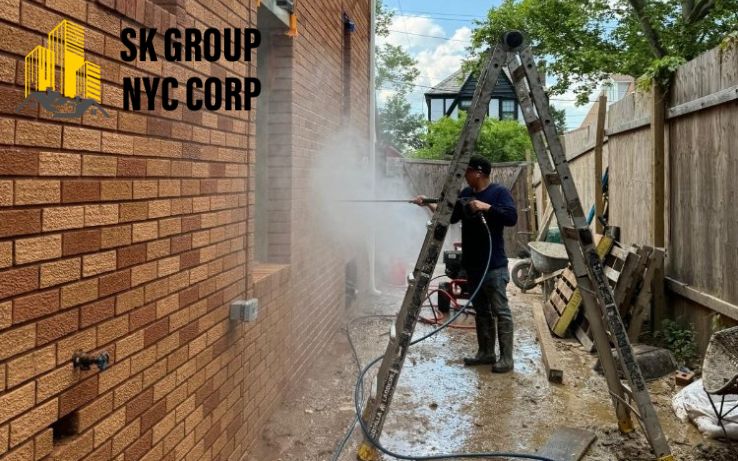
Brick, concrete block, stone, and mortar should be inspected first. Weak mortar can wash out, porous masonry can absorb water, and unsuitable chemicals may discolor the surface.
When cleaning reveals cracked joints, loose mortar, or damaged bricks, the surface may need professional masonry repair services before additional washing is completed.
Older NYC walls may contain softer mortar, patched joints, or replacement bricks. Identifying these variations helps prevent uneven results or damage.
Siding and Building Exteriors
Vinyl, metal, stucco, painted finishes, and composite siding respond differently to pressure. Water forced behind loose panels, failed caulking, or open seams can create hidden problems.
Lower pressure or soft washing may suit delicate finishes, removing buildup without stripping paint, damaging seals, or driving water into the wall.
Decks, Fences, and Wood
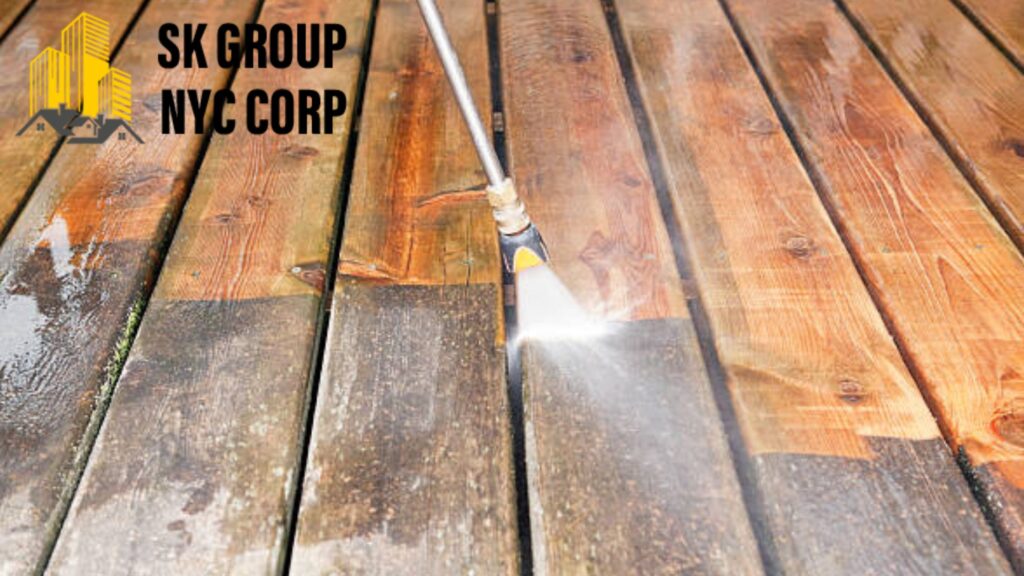
Wood can splinter, become rough, or lose its coating when cleaned aggressively. Species, age, moisture, and existing finishes should guide the method. A test area and lower-pressure technique are usually safer.
Commercial Properties
Commercial power washing service may include storefronts, sidewalks, loading areas, parking surfaces, and entrances. Busy sites can require pedestrian control, off-hours scheduling, staged access, and runoff planning.
In dense NYC locations, neighboring storefronts, parked vehicles, and shared sidewalks also need protection.
Can Power Washing Damage a Property?
Yes. Incorrect technique can etch concrete, remove paint, damage mortar joints, splinter wood, force water behind siding, harm plants, or leave uneven marks.
Professionals reduce risk through inspection, correct nozzle selection, controlled pressure and temperature, test cleaning, and steady spray movement. Loose mortar or unstable coatings may need repair first.
How Much Does a Power Washing Service Cost?
Pricing depends on the work required rather than one universal rate.
| Pricing factor | Why it affects cost |
| Surface area | Larger areas require more labor, water, and setup |
| Material and condition | Fragile surfaces need slower, more careful work |
| Type of buildup | Oil, grease, algae, and heavy grime may need pretreatment |
| Height and access | Upper levels or tight spaces may require special equipment |
| Water and drainage | Limited access or runoff control adds preparation |
| Protection needs | Plants, pedestrians, windows, and nearby property may need protection |
| Cleaning method | Heated water, detergent, or soft washing changes labor and equipment |
Contractors may estimate by square footage, project rate, or minimum charge. A written estimate should define the cleaning area, preparation, method, stain treatment, exclusions, and cleanup.
A low quote is not always the best value if it excludes preparation, stain treatment, runoff control, or protection of surrounding areas. Property owners should compare the scope of work, not only the final price.
How to Prepare for Power Washing
Before the appointment:
- Move vehicles, furniture, planters, and decorations
- Close windows and doors
- Identify leaks, cracks, damaged siding, or loose mortar
- Keep children and pets away
- Point out outlets, cameras, alarms, and fragile fixtures
- Discuss plant protection, water access, parking, and drainage
- Mention previous coatings, sealers, or repairs
Good preparation reduces delays and protects vulnerable areas.
How Often Should a Property Be Power Washed?
There is no universal schedule. Frequency depends on weather exposure, shade, moisture, traffic, pollution, nearby trees, surface material, and how quickly buildup returns.
Many properties are cleaned when visible grime appears or before painting, sealing, repairs, a sale, or seasonal maintenance. The condition of the surface should guide the timing.
Properties in shaded or damp locations may develop algae and mildew more quickly than surfaces exposed to sunlight. Busy commercial entrances and sidewalks may also need attention more often than low-traffic residential areas.
DIY vs. Professional Power Washing
DIY cleaning may be reasonable for a small, durable, ground-level area when the operator understands the equipment and can manage runoff safely.
Professional help is usually better for tall buildings, older masonry, painted surfaces, commercial areas, stubborn stains, and difficult drainage—especially when the correct method is uncertain.
DIY users may also underestimate the effect of nozzle angle, working distance, and water movement. A setting that appears safe on one surface can damage another within seconds.
Choosing the Right Power Washing Company
Ask contractors about:
- Experience with the specific surface
- Inspection and test-cleaning procedures
- Pressure, temperature, detergent, and soft-washing options
- Protection for windows, plants, pedestrians, and nearby property
- Runoff management and cleanup
- Insurance and a written scope
- Realistic expectations for difficult stains
Avoid companies that promise every stain will disappear or recommend the same pressure setting for every material.
A professional estimate should explain what will be cleaned, what preparation is included, how nearby features will be protected, and which stains may remain. Clear expectations help prevent misunderstandings once the work begins.
Professional Power Washing in New York City
NYC properties can involve limited workspace, active sidewalks, neighboring buildings, older masonry, mixed materials, and difficult equipment access.
For property owners considering professional exterior cleaning, SK Group NYC Corp can assess surface condition, access requirements, runoff concerns, and the most appropriate cleaning method. Where damaged mortar, cracked concrete, or failed coatings are present, the team can explain whether repairs should take place before or after cleaning.
Frequently Asked Questions
What is included in a power washing service?
A typical service includes inspection, preparation, pretreatment when needed, controlled washing, rinsing, and a final review. The scope depends on the surface, stains, access, drainage, and written estimate.
Is power washing the same as pressure washing?
The terms are often used interchangeably. Power washing may use heated water, while pressure washing usually uses unheated water. The correct method depends on the surface and buildup.
How long does professional power washing take?
Time depends on area, preparation, stain severity, access, dwell time, and cleanup. A small patio takes far less time than a multi-story facade or busy commercial entrance.
Can power washing remove every stain?
No. It can remove many types of dirt, algae, mildew, and grime, but deep oil, rust, mineral deposits, old paint, and permanent discoloration may remain.
Is power washing safe for brick and concrete?
It can be safe when the material is sound and the method suits its condition. Cracked concrete, weak mortar, soft brick, coatings, and previous repairs require conservative settings.
Conclusion
A power washing service can improve exterior appearance, support routine maintenance, and prepare suitable surfaces for painting, sealing, or repair. Good results depend on the material, stain, pressure, temperature, detergent, drainage plan, and operator technique.
Before work begins, confirm the scope, preparation, expected results, and limitations. For a property-specific recommendation in New York City, SK Group NYC Corp can inspect the area and recommend an appropriate exterior-cleaning approach.
Have Questions? Call Us Now!
+1 (718) 507-7000
We’re here to help quick answers, friendly service, anytime you need!
Contact SK Group NYC
🌐 Website: www.skgroupnyccorp.com
📍 Serving: Manhattan, Brooklyn, Queens, The Bronx, and Staten Island
📍 Address: 87-88 172nd St, Jamaica, New York, NY, United States, New York