Fence installation cost vary widely by material and project conditions. Basic fencing may start near $6 to $10 per linear foot, while many professionally installed wood and vinyl fences cost about $20 to $60 per linear foot. Premium aluminum, ornamental metal, tall privacy fencing, difficult excavation, restricted access, and custom gates can push the price higher. Because published estimates do not always include the same materials, labor, demolition, gates, permits, or site preparation, homeowners should use online figures for preliminary budgeting and rely on a detailed local estimate for the final cost.
Key Takeaways
- Use $20 to $60 per linear foot as an early planning range for many wood or vinyl fences.
- Chain-link is usually the most affordable conventional option.
- Height, post-hole conditions, access, gates, demolition, and grading can change the price substantially.
- Compare contractor bids using the same material and installation specifications.
- Treat online prices as planning estimates, not guaranteed local rates.
Fence Installation Cost at a Glance
| Fence material or service | Typical installed range |
|---|---|
| Chain-link | $8-$40 per linear foot |
| Wood | $10-$45 per linear foot |
| Vinyl | $15-$40 per linear foot |
| Composite | $11-$45 per linear foot |
| Aluminum | $22-$72 per linear foot |
| Existing fence removal | About $3-$7 per linear foot |
These ranges may exclude gates, surveys, permits, grading, tree removal, and unusual access.
How Much Does Fence Installation Cost?
Contractors usually calculate the cost of fence and installation from materials, layout, excavation, concrete, assembly, delivery, equipment, gates, removal, and cleanup.
A low per-foot quote may exclude work included in another contractor’s proposal, so the written scope matters as much as the total. Before comparing prices, confirm that each contractor is quoting the same fence height, material grade, post spacing, gate hardware, removal work, and cleanup requirements.
Fence Installation Cost by Material
Wood Fence Installation Cost
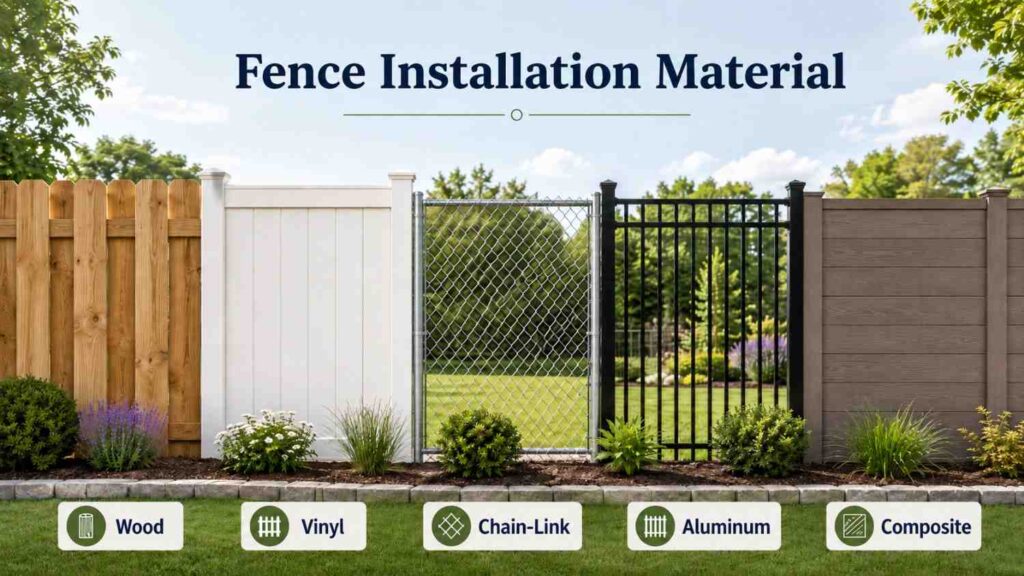
Wood fencing generally costs $10 to $45 per linear foot installed. Pressure-treated pine often sits near the lower end, while cedar, horizontal layouts, board-on-board privacy designs, taller panels, and decorative details increase the price.
Wood is adaptable and repairable, but periodic staining or sealing may be needed. The final cost also depends on board thickness, post material, fence style, and whether the design requires more lumber than a standard vertical fence.
Vinyl Fence Installation Cost
Vinyl fence installation cost approximately $15 to $40 per linear foot. Price depends on panel height, wall thickness, reinforcement, color, texture, and gate design.
Vinyl provides privacy without routine painting or staining. Compare construction details and warranty coverage, not appearance alone. Lower-priced panels may use thinner components or less internal reinforcement than premium systems.
Chain-Link Fence Installation Cost
Chain-link costs about $8 to $40 per linear foot, although many standard residential projects fall between $10 and $20. Height, wire gauge, mesh size, coating, posts, and privacy slats affect the price.
It is usually the best budget choice for pets, utility areas, and long boundaries. Standard galvanized fencing generally costs less than black or green vinyl-coated mesh. Adding privacy slats increases both material and installation costs.
Composite, Aluminum, and Ornamental Metal
Composite fencing costs about $11 to $45 per linear foot installed. It offers a wood-like appearance with less routine maintenance, but proprietary components can complicate future repairs.
Complete aluminum installation commonly ranges from $22 to $72 per linear foot. Aluminum resists rust and suits decorative boundaries and pool enclosures, although open designs provide limited privacy.
Wrought-iron installations commonly fall around $25 to $55 per foot, with galvanized or highly ornamental work potentially costing more.
What Determines Fence Labor Cost?
Fence labor cost depends on the time, equipment, and difficulty involved in completing the installation. Key factors include:
- Soil conditions: Rock, clay, roots, and buried concrete make post-hole digging more difficult.
- Property access: Narrow passages, stairs, and limited equipment access increase material-handling time.
- Slopes and layout: Uneven ground, corners, and irregular fence lines require more measuring and adjustment.
- Fence height and weight: Taller or heavier panels may need stronger posts, deeper footings, and additional workers.
- Gates: Walk gates, driveway gates, and automated systems require reinforced posts and precise alignment.
- Old fence removal: Demolition, concrete footing removal, hauling, and disposal add labor.
- Site preparation: Grading, vegetation removal, and cleanup can increase the total installation time.
A flat, accessible yard with a straight fence line usually costs less to install than a property with difficult soil, restricted access, or multiple custom features.
Additional Fence Installation Cost
Gates and Custom Features
Gates require hinges, latches, bracing, careful alignment, and stronger support posts. Double gates, automation, lattice, decorative caps, custom colors, and specialty hardware can materially increase the budget.
Ask whether gate hardware is included in the quoted price. A contractor may include a basic walk gate but charge separately for upgraded hinges, locks, self-closing mechanisms, or reinforced frames.
Removal and Site Preparation
Existing fence removal commonly costs $3 to $7 per linear foot. Concrete-set posts, heavy materials, disposal fees, roots, shrubs, retaining walls, drainage problems, and uneven grades may increase the charge.
The estimate should state whether demolition includes concrete footing removal, debris hauling, soil replacement, and restoration of disturbed areas.
Surveys, Permits, and Utilities
A fence should follow the legal property boundary, not an assumed lawn edge or an old fence line. Consider a survey when markers are missing or placement is disputed.
Contact 811 or the appropriate state center a few business days before digging. The national 811 service specifically includes fence installation among projects that require a utility-location request.
Utility marking identifies participating public utility lines. It does not necessarily locate privately installed lines serving features such as outdoor lighting, irrigation systems, pools, or detached structures. Discuss known private utilities with the contractor before excavation begins.
Fence Installation Cost by Project Size
The following estimates use a broad installed range of $20 to $60 per foot and exclude major extras.
| Fence length | Estimated project cost |
| 50 linear feet | $1,000-$3,000 |
| 100 linear feet | $2,000-$6,000 |
| 150 linear feet | $3,000-$9,000 |
| 200 linear feet | $4,000-$12,000 |
Add gates, removal, permits, site preparation, and a contingency for uncertain ground conditions.
Smaller projects may have a higher cost per foot because delivery, mobilization, layout, and equipment expenses must be spread across fewer linear feet. Longer, straight installations may produce a lower unit cost, although the total project price will still be higher.
A Practical Fence Cost Example
Consider a 150-foot privacy fence priced at $35 per foot:
| Item | Example amount |
| Fence installation | $5,250 |
| Reinforced walk gate | $550 |
| Old-fence removal | $750 |
| Minor site preparation | $400 |
| 10% contingency | $695 |
| Planning budget | $7,645 |
This is an illustrative calculation, not a contractor quote. It shows why multiplying length by a headline price is only the first step.
An actual estimate should also explain whether taxes, delivery, permits, finishing, cleanup, and property restoration are included.
How to Compare Fence Contractors
Ask at least three contractors to quote the same scope. Each proposal should identify:
- Material brand, grade, style, and color
- Fence height and total linear footage
- Number, width, and type of gates
- Post material, spacing, and installation depth
- Concrete and footing method
- Removal, delivery, hauling, and cleanup
- Permit and survey responsibilities
- Payment schedule and change-order process
- Workmanship and manufacturer warranties
A cheaper proposal may use lighter materials, wider post spacing, weaker hardware, or exclude disposal and restoration.
Ask how unforeseen conditions will be handled. Rock, buried concrete, unknown utility lines, or unstable soil can create legitimate additional work, but the contract should explain how changes are documented and approved.
New York City Fence Requirements
Fence rules in New York City depend on the property type, fence height, location, and zoning requirements. Before construction begins, property owners should review the following:
- Permit requirements: The NYC Department of Buildings generally does not require a permit for fences six feet or lower at one- and two-family homes.
- Other property types: Multifamily, commercial, landmarked, or otherwise regulated properties may require additional review or approval.
- Height and placement rules: Zoning requirements may limit fence height, location, materials, or visibility near sidewalks, driveways, and property lines.
- Property boundaries: A survey may be necessary when the legal boundary is unclear or disputed.
- Utility marking: Underground utilities should be located before post-hole excavation begins.
- Restricted access: Narrow passages, attached homes, stairs, and rear yards without machine access can increase labor costs.
- Surface protection: Crews may need additional time to protect floors, walkways, landscaping, or finished areas while transporting materials.
- Site conditions: Concrete, masonry, roots, poor drainage, and confined work areas can affect the final price.
Property owners can request a written estimate from SK Group NYC Corp based on the fence design, material specifications, access conditions, removal work, and site preparation. The estimate should clearly identify standard fence installation cost and any additional charges for gates, grading, demolition, disposal, or difficult excavation.
Frequently Asked Questions
What is the average fence installation cost per foot?
Many common wood or vinyl projects cost $20 to $60 per linear foot installed. Basic chain-link may cost less, while premium metal, difficult excavation, taller panels, and custom gates can push the price higher.
What is the cheapest fence to install?
Chain-link is generally the least expensive conventional residential option. A basic galvanized system usually costs less than vinyl-coated mesh, privacy slats, wood privacy panels, vinyl fencing, or ornamental metal.
Is vinyl fencing more expensive than wood?
The price ranges overlap. Vinyl commonly costs $15 to $40 per foot, while wood ranges from about $10 to $45. Vinyl may cost more than basic pine initially but generally requires less routine finishing.
How long does fence installation take?
A simple residential fence may take several working days. Demolition, approvals, concrete setting, weather, material availability, custom gates, difficult excavation, and restricted access can extend the schedule.
Do I need a permit to install a fence?
Permit requirements depend on location, property type, fence height, and zoning. Check with the local building or planning authority before ordering materials or beginning excavation.
How can I get an accurate fence installation estimate?
Measure the proposed fence line, count gates and corners, identify access restrictions, and obtain an on-site assessment. Request a written proposal that clearly lists specifications, included work, exclusions, warranties, and possible change-order charges.
Conclusion
Fence installation cost depends on more than material and linear footage. Post-hole conditions, access, height, gates, demolition, grading, approvals, and workmanship can substantially change the final price.
Use online ranges to establish a preliminary budget, then compare itemized, property-specific proposals. The best estimate is not necessarily the lowest. It is the one that clearly defines the materials, installation method, exclusions, warranty, and responsibilities of both the contractor and property owner.