
Small NYC apartments do not need more space to feel better. They need paint choices that work with the space they already have.
The right painting ideas for small apartments can make a narrow room feel more balanced, give an open studio clearer zones, add depth to a dark bedroom, or create a focal point without adding furniture. The challenge is choosing colors and wall treatments that work with limited natural light, connected rooms, existing finishes, and the compact layouts common in NYC apartments.
The best painting ideas are not simply about choosing the lightest paint color. They are about matching color, lighting, room function, and layout so the apartment feels intentional rather than visually crowded.
How Paint Can Change the Feel of a Small Apartment
Paint changes more than wall color. It affects how the eye reads the boundaries, proportions, and connections between rooms.
A continuous light palette can make several small spaces feel connected. A carefully selected accent wall can create a focal point. Color blocking can visually separate a living area from a dining or work zone without adding a divider.
In a small apartment, these decisions matter because walls, furniture, doors, trim, and architectural details are often visible at the same time. A paint scheme that looks good on one wall can feel disconnected when viewed from an adjoining room.
The goal is to use paint to organize the visual space, not simply cover it.
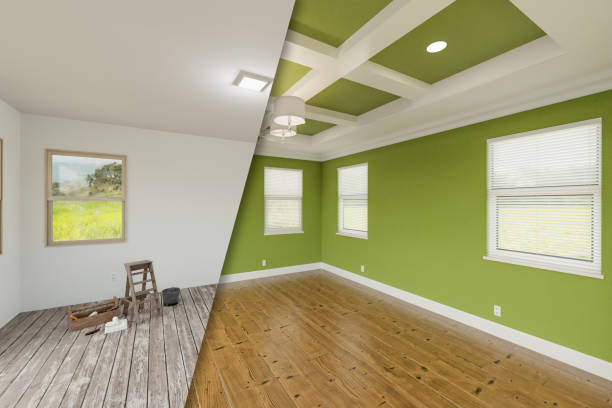
Painting Ideas That Work Well in Small NYC Apartments
The most effective painting ideas solve a specific visual or functional problem. Instead of applying the same approach to every room, consider how the layout, light, and existing finishes affect the result.
1. Create a Light Base Without Making Everything Stark White
A light base remains one of the most practical painting ideas for a compact apartment, but pure white is not the only option.
Warm whites, soft greige, muted beige, and other restrained neutrals can provide brightness while working more comfortably with wood floors, natural fabrics, and existing furniture.
For a connected apartment, using one main neutral across the living room, hallway, and adjoining areas can also reduce visual interruptions.
Best for: dark apartments, open layouts, and homes where you want flexibility with furniture and décor.
2. Use an Accent Wall to Give the Room a Purpose
An accent wall works best when it has a clear relationship with the room.
In a living room, the wall behind the sofa can provide a natural focal point. In a bedroom, the wall behind the bed is often the strongest choice. In a home office, a defined color area can visually establish the workspace.
Try a muted sage, dusty blue, warm terracotta, or deeper neutral when the surrounding walls remain relatively restrained.
Avoid choosing an accent wall simply because it is available. Its position should support furniture placement and the way the room is viewed.
3. Define an Open Studio With Color Blocking
Open-plan NYC apartments often need different areas to perform different functions without physical walls.
A subtle color change can help distinguish:
- Living area from dining area
- Bedroom zone from living space
- Home office from the main room
- Entryway from the apartment interior
For example, keep the main room in a soft neutral and use a related, slightly deeper tone around the workspace.
This creates visual zoning while maintaining a connected color palette and is one of the more useful small apartment painting ideas when adding furniture or partitions would make the room feel crowded.
4. Try a Two-Tone Wall Treatment
Two-tone walls can add character without requiring wallpaper or architectural changes.
A simple approach is to use a lighter color above and a slightly deeper tone below. Another option is to create a horizontal color boundary that works with existing furniture or wall features.
The important consideration is proportion. A strong horizontal division can emphasize the height or shape of a room, so the treatment should complement the apartment rather than make an awkward wall more noticeable.
5. Bring the Ceiling Into the Color Scheme
The ceiling does not always need to be treated as a completely separate white surface.
In a compact room, a very subtle ceiling color related to the walls can create continuity and soften the visual boundary between surfaces.
For a more traditional apartment, keeping the ceiling lighter may provide better contrast. For a room where you want a more enveloping feel, a closely related ceiling and wall palette can work particularly well.
The best choice depends on ceiling height, natural light, architectural details, and the effect you want.
6. Coordinate Doors, Trim, and Built-Ins
Doors, trim, shelving, and built-ins can become visually prominent in a small apartment because there is less wall area to absorb attention.
Painting these elements in a color closely related to the walls can make the room feel calmer and more continuous.
Alternatively, a contrasting trim color can intentionally highlight architectural details.
This is especially useful in apartments with original trim, built-in shelving, or other features worth emphasizing.
7. Build Depth With a Tonal Color Palette
You do not need several unrelated colors to make a small apartment interesting.
Choose one dominant color family and vary the depth between rooms or features.
For example:
Soft neutral walls → slightly deeper hallway → muted accent behind the bed
The colors remain connected while giving individual areas their own identity.
This approach is particularly effective when multiple rooms are visible from one another and works well for NYC apartment painting ideas where several compact spaces may visually overlap.
Budget-Friendly Painting Ideas That Create More Impact
A limited budget does not mean every wall needs to be repainted.
Start with the areas that will change the apartment’s appearance most noticeably.
For the biggest visual impact, prioritize:
- One focal wall if the room already has a strong layout.
- The most-used room if the existing color feels dated.
- An entryway or hallway if the apartment lacks visual definition.
- A work or dining zone if an open layout feels undefined.
- Doors, trim, or built-ins when those details look tired but the main walls are still suitable.
If the walls already have a compatible base color and are in good condition, a focused update can make more sense than changing the entire apartment.
Budget-conscious painting is less about using the cheapest option everywhere and more about putting the painting effort where it produces the most noticeable improvement.
For renters or homeowners working within a limited budget, focused painting ideas can create a noticeable update without requiring a full-apartment color change.
How to Choose Paint Colors for a Small NYC Apartment
Do not select a paint color from a screen alone. Look at how it interacts with the actual apartment.
Consider Natural Light
A north-facing or heavily shaded room can make cool colors appear different from how they looked in a store or online. A room with strong daylight may handle deeper tones more easily.
Check Artificial Lighting
The same wall can look noticeably different under warm bulbs at night. View samples during both daytime and evening before committing.
Match Existing Finishes
Look at the flooring, cabinetry, countertops, furniture, doors, and metal finishes already in the apartment. A paint color that works by itself may clash with a prominent existing surface.
Think About Connected Rooms
If the living room, hallway, kitchen, and bedroom are visually connected, choose colors that relate to one another. Small apartments generally benefit from a deliberate palette rather than several unrelated wall colors.
Painting Ideas by Room
Living Room
Use a restrained wall color throughout the main area and place a deeper tone behind the sofa or another natural focal point. In an open-plan apartment, the same accent color can help connect the living area with nearby décor.
Bedroom
The wall behind the bed is an obvious place for a deeper or softer color. Muted blue, green, earthy neutrals, or a deeper version of the room’s main color can create more visual depth without requiring every wall to be dark.
Entryway
A small entryway can handle more contrast because it is a transition space. A slightly deeper color can establish a clear entrance while keeping the adjoining living area lighter.
Kitchen
Consider the relationship between wall color and cabinets, backsplash, countertops, and flooring. If the kitchen already contains several finishes, a quieter wall color can prevent the space from feeling visually busy.
Home Office or Work Nook
Use color to establish the workspace without physically separating it. A painted wall section or deeper tone can create a visual boundary while keeping the apartment open.
NYC Apartment Considerations Before Painting
Painting a small NYC apartment involves more than selecting colors.
Renters should check lease requirements before changing wall colors, particularly if the apartment must be returned to an original condition.
Co-op and condo residents may need to follow building procedures regarding work hours, elevator use, access, or protection of shared areas. Requirements vary by building, so confirm them before scheduling work.
Older apartments can also present different surface conditions. Multiple paint layers, patched areas, plaster, uneven walls, and detailed trim can affect how the finished color looks. In compact rooms, surface imperfections may be particularly noticeable because walls are viewed from relatively close distances.
For that reason, the condition of the existing surface should be considered alongside the color choice before deciding which painting ideas are practical for the apartment.
DIY or Professional Painting?
DIY painting can make sense for a straightforward room with manageable walls and a simple color change.
Professional painting becomes more valuable when the project involves multiple rooms, difficult access, detailed trim, built-ins, significant surface preparation, or a finish that needs to look consistent across connected spaces.
The biggest difference is not simply applying paint. It is getting the surface, color, edges, coverage, and final appearance to work together.
Which Painting Approach Fits Your Apartment?
| Apartment Challenge | Painting Approach | Why It Works |
|---|---|---|
| Dark room | Warm, light palette | Keeps the space visually brighter |
| Open studio | Related color blocking | Defines zones without adding walls |
| Narrow hallway | Coordinated wall and trim colors | Reduces visual interruptions |
| Low-ceiling room | Closely related wall and ceiling tones | Creates stronger visual continuity |
| Limited budget | One high-impact area | Concentrates the update where it matters |
| Busy existing finishes | Restrained wall palette | Prevents visual competition |
FAQs About Painting Small NYC Apartments
What is the best paint color for a small NYC apartment?
There is no single best color for every apartment. Soft whites, warm neutrals, muted greens, and subdued blues can work well, but the right choice depends on natural light, artificial lighting, flooring, furniture, and connected rooms.
Can dark paint work in a small apartment?
Yes. Dark paint can work particularly well on a focal wall, in a bedroom, or in an entryway. The key is controlling where the deeper color is used and balancing it with the room’s lighting and surrounding finishes.
How can I make a narrow NYC apartment look wider with paint?
Use a cohesive wall palette to reduce visual interruptions. Keeping adjoining areas in related colors can make the space feel more continuous, while carefully placed color blocking can define areas without visually closing them off.
Should a small apartment use one paint color throughout?
Not necessarily. One primary color can create continuity, while one or two related shades can give individual spaces more definition. The important part is keeping the palette visually connected.
What is the easiest budget-friendly painting idea?
A single focal wall is often one of the simplest ways to create a noticeable change without repainting every surface. Entryways, work areas, and walls behind beds or sofas can also provide strong visual impact.
Should the ceiling be painted the same color as the walls?
It can be, particularly when a continuous, enveloping look is desired. A lighter ceiling may provide better contrast in other rooms. Consider ceiling height, lighting, architectural details, and the overall color scheme before deciding.
Make Your Paint Choices Work Harder
The best painting ideas for a small NYC apartment are not necessarily the most dramatic. They are the ones that solve a specific problem in the space.
Use color to define an open layout, create a focal point, connect adjoining rooms, add depth, or refresh a tired area without making the apartment feel more crowded. Before choosing paint, consider the room’s light, existing finishes, layout, and building requirements.
If you are planning a residential painting project in NYC and need help turning your ideas into a practical plan, SK Group NYC Corp provides professional painting services for apartments and homes across the five boroughs. A professional approach can be especially useful when surface preparation, detailed trim, multiple connected rooms, or building requirements are part of the project.
Have Questions? Call Us Now!
+1 (718) 507-7000
We’re here to help quick answers, friendly service, anytime you need!
Contact SK Group NYC
🌐 Website: www.skgroupnyccorp.com
📍 Serving: Manhattan, Brooklyn, Queens, The Bronx, and Staten Island
📍 Address: 87-88 172nd St, Jamaica, New York, NY, United States, New York