A bathroom renovation can improve comfort, functionality, storage, and the overall value of a home, but the quality of the result depends heavily on planning and execution. Experienced bathroom renovation contractors do much more than install tile or replace fixtures. They coordinate plumbing, electrical work, waterproofing, ventilation, cabinetry, flooring, lighting, and finishing details so the room functions properly as a complete system.
For homeowners, the biggest questions usually involve cost, timeline, contractor selection, and what actually happens once work begins. A renovation can become expensive quickly if the scope is unclear, hidden damage is discovered, or major design decisions are made after demolition starts.
This guide explains the bathroom renovation process from planning to completion, what affects the budget, how long projects can take, which upgrades are worth considering, and what to ask before hiring a contractor.
Why Hiring Professional Bathroom Renovation Contractors Matters
Many homeowners underestimate the complexity of bathroom remodeling because the space is usually smaller than other areas of the house. However, bathrooms contain several systems that must work together, including water supply lines, drainage, ventilation, lighting, and moisture protection.
Professional bathroom renovation contractors bring experience that goes beyond installation. They understand how different materials perform in wet environments, how to plan layouts efficiently, and how to coordinate different trades without unnecessary delays.
A professional contractor can also identify potential issues before construction begins. Problems such as outdated plumbing, poor ventilation, hidden water damage, or improper waterproofing can become expensive repairs if they are ignored during renovation planning.
Experienced renovation professionals usually help homeowners with:
- Creating a realistic renovation plan
- Selecting suitable materials and fixtures
- Managing plumbing and electrical requirements
- Coordinating different specialists
- Maintaining project timelines
- Ensuring quality installation standards
A well-planned renovation not only improves the appearance of your bathroom but can also increase comfort, energy efficiency, and long-term property value.
How Much Does a Bathroom Renovation Cost?
There is no single universal bathroom renovation cost because the final price depends on the room, location, labor requirements, material selections, and project scope.
A cosmetic renovation that keeps the existing plumbing layout is usually much simpler than a complete remodel that moves a toilet, expands a shower, replaces old pipes, or changes walls. Material choices also create a wide cost range. Standard tile and prefabricated vanities can keep a project relatively controlled, while custom cabinetry, premium stone, frameless shower systems, and designer fixtures can increase the budget considerably.
Main factors that affect renovation costs
| Cost Area | What Can Increase the Price |
|---|---|
| Labor | Complex installation, specialized trades, difficult access |
| Plumbing | Moving fixtures, replacing old pipes, drainage changes |
| Electrical | New lighting, outlets, switches, ventilation, wiring updates |
| Tile & Flooring | Premium materials, complex patterns, additional preparation |
| Fixtures | Higher-end toilets, faucets, showers, tubs, smart features |
| Cabinetry | Custom vanities, built-in storage, specialty finishes |
| Waterproofing | Repair work, shower preparation, moisture damage |
| Structural Work | Wall changes, subfloor repair, layout modifications |
One of the most important budgeting decisions is whether to keep major fixtures in their existing locations. Moving plumbing can affect multiple parts of the project, which is why experienced bathroom renovation contractors usually evaluate layout changes carefully before recommending them.
Homeowners should also leave room in the budget for unexpected conditions. Once walls, flooring, or old fixtures are removed, contractors may discover water damage, deteriorated subflooring, outdated plumbing, or previous work that was installed incorrectly.
A contingency fund of roughly 10% to 20% can provide useful flexibility, particularly in older homes or projects where the condition behind walls is unknown.
Bathroom Renovation Process: What Happens Step by Step?
Understanding the bathroom renovation process makes the project less stressful because homeowners know what decisions need to be made and when.
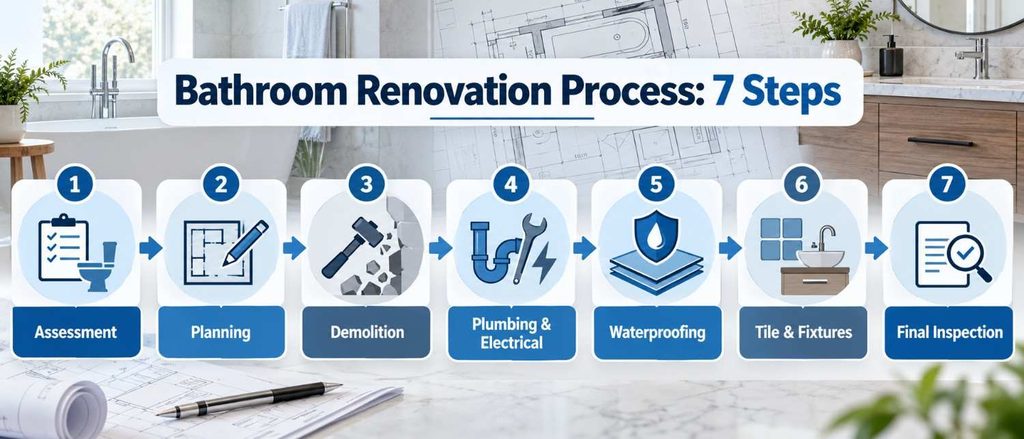
1. Consultation and Existing Bathroom Assessment
The project normally starts with an evaluation of the current bathroom. The contractor reviews the layout, existing fixtures, visible plumbing, ventilation, storage limitations, and the homeowner’s renovation goals.
This is also the right stage to discuss priorities. Some homeowners care most about a larger shower, while others need better storage, easier maintenance, accessibility, or a more modern design.
An experienced contractor should distinguish between essential improvements and optional upgrades instead of treating every renovation as the same project.
2. Scope, Budget, and Design Planning
Once the existing space has been reviewed, the renovation scope should be clearly defined.
The planning stage may include tile selections, vanity dimensions, shower configuration, lighting placement, plumbing fixtures, hardware, colors, storage, and other finishes.
This is where detailed decisions save money later. Changing a faucet before construction begins is simple. Changing the vanity size after plumbing has already been installed can cause delays and extra labor.
Professional bathroom renovation contractors should help coordinate these decisions with the technical requirements of the project.
3. Demolition and Site Preparation
Demolition involves removing the materials that are being replaced. Depending on the renovation, this may include tile, flooring, drywall, fixtures, cabinetry, shower enclosures, or old plumbing components.
Demolition is also when hidden conditions often become visible. Moisture damage around showers, deteriorated flooring near toilets, or improperly installed waterproofing may not be obvious before materials are removed.
These findings should be documented and discussed before additional work proceeds.
4. Plumbing, Electrical, and Rough-In Work
After demolition and repairs, contractors can complete plumbing and electrical rough-ins.
This may involve repositioning water lines, adjusting drainage, adding electrical outlets, installing new lighting connections, or preparing wiring for exhaust fans and other bathroom features.
This stage has a significant impact on the final result because mistakes are difficult and expensive to correct after walls and tile are finished.
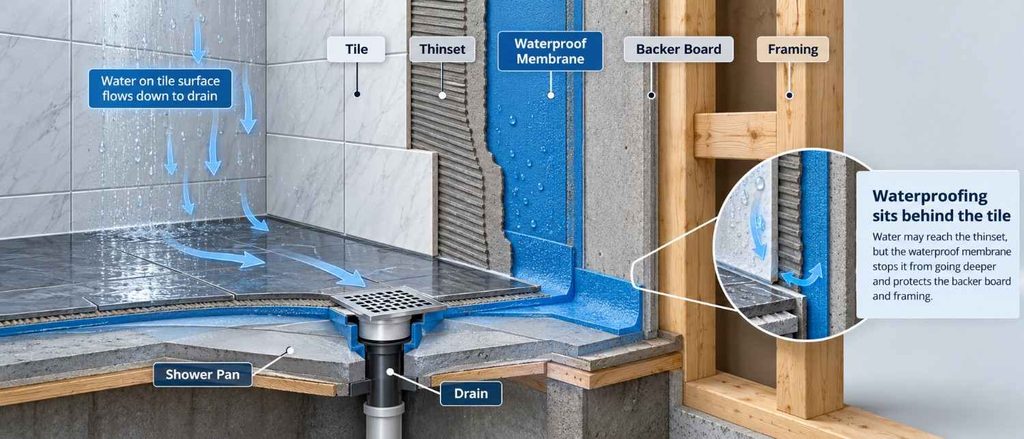
5. Waterproofing and Surface Preparation
Waterproofing deserves special attention because bathrooms are constantly exposed to moisture.
Shower walls, shower floors, wet areas, and vulnerable transitions need appropriate preparation before tile installation. The exact system depends on the project and construction method, but the goal is consistent: prevent water from reaching materials that are not designed for prolonged moisture exposure.
Good tile cannot compensate for poor waterproofing underneath it.
6. Tile, Fixtures, Cabinetry, and Finishes
Once the technical work is complete, visible finishes begin to transform the room.
Tile is installed, walls are finished, the vanity is fitted, plumbing fixtures are connected, mirrors and lighting are installed, and accessories are added.
Attention to details such as grout alignment, silicone joints, fixture positioning, door clearance, and vanity height can make the difference between a bathroom that merely looks renovated and one that feels professionally planned.
7. Final Inspection and Project Handover
Before the renovation is considered complete, all systems should be checked.
The contractor should confirm that faucets, drains, toilets, lighting, ventilation, shower components, drawers, doors, and other installed elements operate correctly.
Homeowners should also inspect finishes and ask about care requirements for tile, grout, stone, glass, cabinetry, or specialty fixtures.
How Long Does a Bathroom Renovation Take?
A typical bathroom renovation timeline depends on the extent of the work rather than simply the size of the room.
A straightforward renovation using readily available materials may progress relatively quickly. A project involving structural repairs, custom cabinetry, special-order tile, plumbing relocation, or inspection requirements may take significantly longer.
Several issues commonly affect the schedule:
- Material delivery delays
- Hidden water or structural damage
- Plumbing or electrical changes
- Custom fabrication
- Design changes after work starts
- Trade scheduling
- Required approvals or inspections
Reliable bathroom renovation contractors should provide a realistic schedule rather than promising the fastest possible completion date. Homeowners should also ask whether the project timeline includes material ordering and preparation or only the construction period.
What to Look for When Hiring Bathroom Renovation Contractors
Choosing the right contractor should involve more than comparing prices.
A professional estimate should make it reasonably clear what work is included, what materials are included or excluded, and how changes will be handled. A vague low quote can become expensive if important work is later treated as an additional charge.
Before hiring bathroom renovation contractors, evaluate their experience with projects similar to yours. A contractor who regularly renovates bathrooms should understand moisture protection, tile preparation, fixture coordination, plumbing limitations, ventilation, and sequencing between trades.
You should also look for evidence of completed work and consistent communication. Depending on your location and project scope, licensing, insurance, permits, or specialized trades may also be relevant.
For homeowners in New York City, a company such as SK Group NYC Corp can be considered when comparing professional renovation providers and evaluating project scope, design requirements, and construction needs.
Questions to Ask Before Signing a Contract
A short conversation before hiring can reveal a great deal about how the project will be managed.
Ask questions such as:
- What exactly is included in the estimate?
- Who handles plumbing and electrical work?
- How will waterproofing be completed?
- What happens if hidden damage is discovered?
- Who purchases and receives materials?
- How are project changes priced and approved?
- Is debris removal included?
- What warranty or post-project support is provided?
The quality of the answers matters as much as the answers themselves. Good contractors should be able to explain their process clearly without avoiding reasonable questions.
Modern Bathroom Renovation Ideas Worth Considering
A successful renovation should fit the homeowner’s lifestyle rather than simply follow design trends. The best upgrades improve comfort, maintenance, accessibility, storage, and everyday usability.
Some practical bathroom remodel ideas worth considering include:
- Walk-in showers: Create a more open feel and can improve accessibility, especially when designed with low or curbless entry.
- Large-format tiles: Reduce grout lines, simplify cleaning, and give the bathroom a cleaner, more seamless appearance.
- Floating vanities: Help smaller bathrooms feel less crowded while creating a modern look and improving visible floor space.
- Recessed storage: Shower niches and recessed cabinets add useful storage without taking up valuable floor area.
- Layered lighting: Combine general lighting, vanity lighting, and task lighting instead of relying on a single ceiling fixture.
- Water-efficient fixtures: Modern faucets, toilets, and shower systems can reduce water use while maintaining everyday comfort.
- Improved ventilation: A properly sized exhaust fan helps control humidity and protects finishes from excess moisture.
- Easy-to-clean surfaces: Porcelain tile, quartz surfaces, and low-maintenance finishes can reduce long-term upkeep.
- Heated flooring: Adds comfort in colder climates and can make the bathroom feel more luxurious.
- Accessibility upgrades: Wider entrances, grab-bar reinforcement, better lighting, and easier-to-use fixtures can improve safety and long-term usability.
- Smart bathroom features: Smart mirrors, programmable lighting, digital shower controls, and similar technology can be useful when they solve a practical need.
The strongest bathroom designs balance appearance with function. Instead of choosing every new trend, homeowners should focus on upgrades that make the space easier to use, maintain, and enjoy over the long term.
Bathroom Renovation Checklist Before Work Begins
Before starting demolition, make sure every important detail is planned. A clear preparation checklist helps avoid delays, unexpected costs, and last-minute changes.
Key Things to Confirm:
- Final Layout: Confirm the placement of the shower, vanity, toilet, storage, and other fixtures.
- Materials & Fixtures: Select tiles, flooring, lighting, faucets, and bathroom accessories early.
- Budget Planning: Keep room for unexpected expenses such as repairs or material changes.
- Plumbing & Electrical: Review all upgrades or changes before construction begins.
- Timeline & Responsibilities: Confirm project schedule, material handling, cleanup, and communication process.
A well-prepared renovation plan helps bathroom renovation contractors complete the project more efficiently while reducing unnecessary delays and surprises.
Frequently Asked Questions
How much does a bathroom renovation cost?
The cost depends on bathroom size, labor rates, material choices, plumbing and electrical work, layout changes, and the overall renovation scope. The most accurate approach is to obtain a detailed estimate based on your actual bathroom rather than rely on a generic national average.
How long does a bathroom renovation take?
Many bathroom renovations take several weeks, but complex projects may take longer. Material availability, structural repairs, plumbing changes, custom products, and inspections can all affect the schedule.
Is it better to renovate a bathroom yourself or hire a contractor?
DIY work may be reasonable for simple cosmetic tasks such as painting or replacing accessories. Projects involving waterproofing, plumbing, electrical work, tile preparation, or major fixture installation are usually better handled by experienced professionals.
What should a bathroom renovation quote include?
A useful quote should clearly identify the scope of work, labor, major materials or allowances, demolition, installation responsibilities, waste removal, and how additional work or unexpected conditions will be handled.
When should I contact bathroom renovation contractors?
Ideally, contact contractors before purchasing major materials or making irreversible design decisions. Early professional input can help identify installation limitations, sizing issues, and hidden costs before money is committed.
Final Thoughts
A successful bathroom remodel requires more than attractive tile and modern fixtures. Planning, waterproofing, plumbing, electrical work, ventilation, material selection, installation quality, and project coordination all influence how the finished bathroom performs over time.
Experienced bathroom renovation contractors can help homeowners understand these moving parts before construction begins. The right contractor should provide clear communication, realistic expectations, detailed planning, and workmanship that supports both the design and the technical requirements of the space.
Before moving forward, compare more than the final price. Review the contractor’s experience, scope of work, project process, communication, and approach to unexpected problems. Whether you are completing a modest upgrade or a full bathroom transformation, careful preparation is the best starting point for a renovation that looks good and works properly for years.
Have Questions? Call Us Now!
+1 (718) 507-7000
We’re here to help quick answers, friendly service, anytime you need!
Contact SK Group NYC
🌐 Website: www.skgroupnyccorp.com
📍 Serving: Manhattan, Brooklyn, Queens, The Bronx, and Staten Island
📍 Address: 87-88 172nd St, Jamaica, New York, NY, United States, New York