Cleaning concrete patio surfaces is not just about making them look brighter. The safest method depends on the condition of the concrete, the type of stain, whether the surface is sealed or decorative, and how long the buildup has been present.
A good cleaning process starts with diagnosis, not with the strongest chemical or highest pressure setting. Ordinary dirt, algae, oil, rust, and organic stains behave differently, so they should not all be treated the same way.
This guide explains how to clean a concrete patio step by step, how to choose the right cleaner, what can damage the surface, and when professional help makes more sense than repeated DIY treatment.
What Is the Best Way to Clean a Concrete Patio?
Start with the least aggressive treatment likely to work. Sweep, rinse, apply the correct cleaner, scrub where needed, and rinse thoroughly. Move to stronger stain-specific products or pressure washing only when basic cleaning is not enough.
Before cleaning concrete patio areas, inspect both the stain and the surface condition.
| What You See | Likely Cause | Best Starting Approach |
|---|---|---|
| Gray or brown film | Dirt, dust, soil | Mild detergent + brush |
| Green or slippery patches | Algae or organic growth | Concrete-safe organic-growth cleaner |
| Black patches | Mildew, algae, embedded dirt | Identify cause before treatment |
| Dark greasy spots | Oil or grease | Concrete degreaser |
| Orange or reddish marks | Rust | Concrete-safe rust remover |
| Brown leaf-shaped stains | Organic material | Mild cleaner, then targeted treatment |
Also check for cracks, scaling, flaking, weak repairs, decorative finishes, or worn sealer. These conditions may require gentler cleaning.
What You Need for Cleaning Concrete Patio Surfaces
| Tool or Cleaner | Best Used For | Practical Tip |
|---|---|---|
| Outdoor broom | Loose debris | Remove dry material first |
| Garden hose | Pre-rinsing and rinsing | Good for routine cleaning |
| Stiff nylon brush | Embedded dirt | Avoid wire brushes on decorative surfaces |
| Mild dish soap | Light dirt and fresh grease | Start mild |
| Concrete degreaser | Oil and grease | Follow label dwell time |
| Oxygen-based cleaner | Mold, mildew, algae | Protect nearby landscaping |
| Concrete rust remover | Rust stains | Spot-test first |
| Pressure washer | Heavy buildup | Use a fan pattern |
Do not combine cleaners unless the product labels specifically say they are compatible.
How to Clean a Concrete Patio Step by Step
Step 1: Inspect the Concrete
Look for cracks, crumbling edges, loose surface material, old repairs, coatings, or sealer. Aggressive pressure can worsen existing damage.
This inspection is important when cleaning concrete patio surfaces because it determines how much pressure and chemical strength the surface can safely tolerate.
Step 2: Clear and Sweep the Patio
Remove furniture, rugs, grills, planters, leaves, sand, and soil. Dry debris is easier to remove before it turns into muddy residue.
Step 3: Pre-Rinse the Surface
Rinse with a garden hose to remove fine dust and reveal stains that need targeted treatment.
Step 4: Match the Cleaner to the Problem
Use mild detergent for routine dirt, a concrete-safe degreaser for oil, an organic-growth cleaner for mold or algae, and a concrete rust remover for rust.
A stronger cleaner is not automatically better. Strong products can discolor decorative concrete, affect nearby plants, or damage some sealers.
Step 5: Apply and Scrub
Work in manageable sections. Follow the product instructions for dilution and dwell time, and do not let strong cleaner dry on the surface. Scrub stubborn areas with a stiff nylon brush.
Step 6: Rinse Thoroughly
Rinse until no slippery or foamy residue remains. Keep concentrated runoff away from sensitive plants and ponds.
Step 7: Let the Concrete Dry
Wet concrete looks darker and can hide remaining marks. Allow the patio to dry before deciding whether another treatment is necessary.
How to Clean a Concrete Patio Without a Pressure Washer
A pressure washer is not essential for light or moderate buildup. A hose, suitable concrete patio cleaner, and stiff brush can handle many surfaces effectively.
For routine cleaning concrete patio areas, manual scrubbing gives better control around older concrete, decorative finishes, doors, siding, and landscaping.
Apply the cleaner, allow the recommended dwell time, scrub stained sections, and rinse well. If the stain remains after drying, reassess the cause before using a stronger chemical.
How to Pressure Wash a Concrete Patio Safely
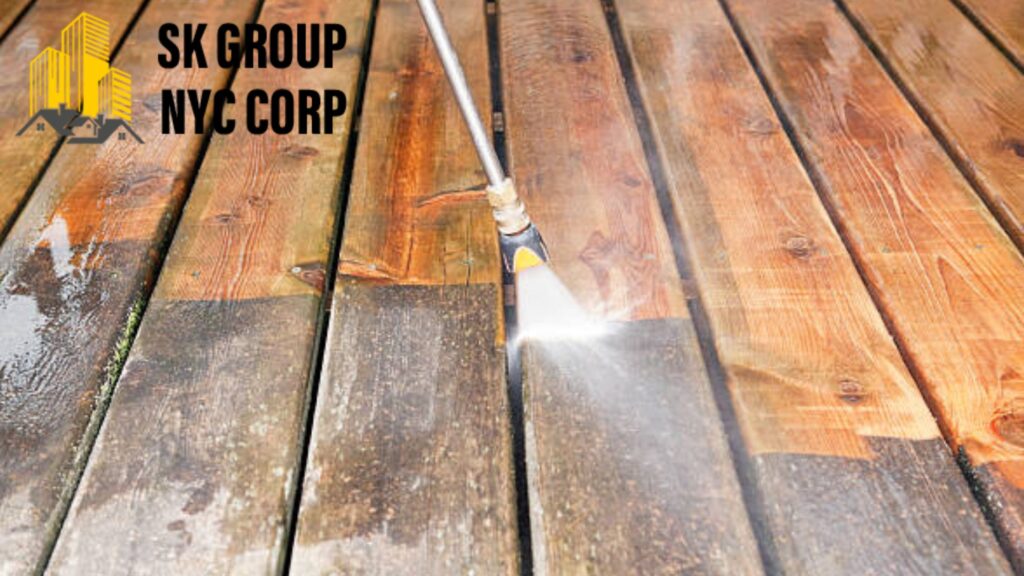
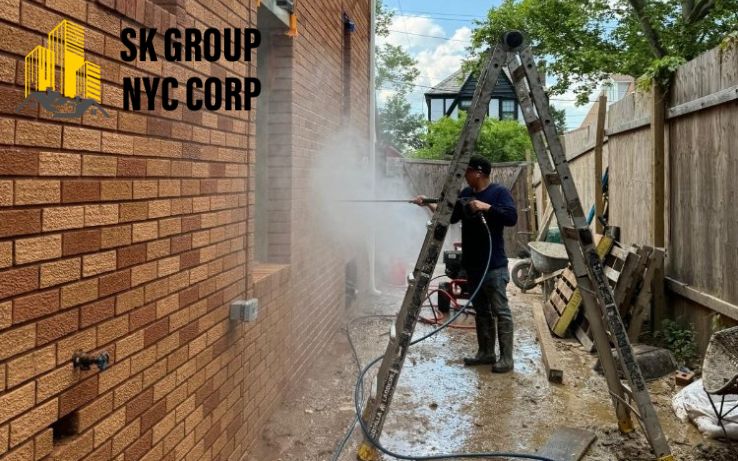
Use a fan-pattern spray rather than a concentrated jet. Start farther from the surface, test a small inconspicuous area, and move closer only if needed. Keep the wand moving in overlapping passes to avoid visible lines or etching.
Pretreat oil, rust, and biological growth instead of expecting water pressure alone to solve every stain.
Use extra caution with older, cracked, repaired, stamped, colored, or sealed concrete. If the surface begins flaking, exposing aggregate, or losing finish, stop and reassess.
How to Remove Common Concrete Patio Stains
Dirt and General Grime
Start with water, mild detergent, and a stiff brush. When cleaning concrete patio surfaces that are simply dull from soil and traffic, a mild method should be your first option.
Mold, Mildew, and Algae
Green, black, or slippery areas often indicate organic growth. Use a concrete-compatible cleaner designed for this problem.
If growth keeps returning, check for shade, standing water, poor drainage, leaking irrigation, or planters that trap moisture. Cleaning alone may only provide temporary improvement if the surface stays damp.
Oil and Grease
For fresh spills, absorb as much oil as possible before applying a degreaser. Older stains may need repeated treatments because concrete is porous. Deep oil marks may improve without disappearing completely after one cleaning.
Rust Stains
Use a rust remover specifically labeled for concrete. Test it first on colored, stamped, decorative, or sealed surfaces. Do not mix household chemicals; unsafe combinations can create dangerous reactions and damage concrete.
Leaf, Berry, and Food Stains
Remove organic debris quickly. Start with mild soap and water, then use a concrete-safe product for organic staining if discoloration remains after drying.
Homemade vs. Commercial Concrete Patio Cleaners
| Factor | Homemade Cleaner | Commercial Cleaner |
|---|---|---|
| Light dirt | Often effective | Effective |
| Cost | Usually lower | Usually higher |
| Oil stains | Limited | Better targeted options |
| Rust stains | Usually not ideal | Specialized products available |
| Convenience | Requires preparation | Often ready to use or dilute |
A DIY cleaner can work for basic maintenance, but it should not be treated as a universal patio and concrete cleaner.
Concrete Patio Cleaning Mistakes to Avoid
Avoid:
- Mixing cleaning chemicals
- Using a narrow high-pressure jet on one spot
- Letting strong cleaner dry on the surface
- Using wire brushes on decorative concrete
- Treating every stain with the same product
- Ignoring damaged or flaking concrete
- Repeating aggressive cleaning before the patio dries
How Often Should You Clean a Concrete Patio?
For many homes, a thorough cleaning once or twice a year is a reasonable starting point, with spot cleaning whenever spills, stains, or algae appear.
Patios under trees, in humid or shaded locations, near grills, or in areas with poor drainage may need attention more often.
How to Keep a Concrete Patio Clean Longer
Sweep leaves and soil regularly. Clean grease and food spills quickly, keep drainage routes clear, and move planters occasionally so trapped moisture can dry.
A compatible concrete sealer may help reduce water and stain absorption on suitable surfaces. Choose a product that matches the patio’s finish.
When Professional Concrete Cleaning Makes Sense
DIY cleaning works well for many patios, but professional help may be the better choice when the area is large, stains are deeply embedded, biological growth is widespread, or the concrete has decorative finishes or visible deterioration.
If repeated treatments are not improving the stain, using stronger chemicals or more pressure can create damage without solving the cause.
Property owners who prefer professional assistance can consider an exterior-cleaning provider such as SK Group NYC Corp for an assessment and suitable cleaning approach.
Frequently Asked Questions About Cleaning Concrete Patios
What Is the Best Thing to Use to Clean a Concrete Patio?
For ordinary dirt, start with water, mild detergent, and a stiff nylon brush. For oil, rust, algae, or mildew, use a concrete-safe product designed for that specific problem.
Can I Clean a Concrete Patio Without a Pressure Washer?
Yes. A hose, suitable cleaner, and manual scrubbing can handle many patios effectively.
How Do I Know What Cleaner My Patio Needs?
Identify the stain first. Green growth usually needs an organic-growth cleaner, greasy dark spots need a degreaser, and orange or reddish stains usually require a concrete-safe rust remover.
Can Dish Soap Be Used on Concrete?
Yes. Mild dish soap works for routine dirt and some fresh greasy residue, but it is usually not enough for deep oil, rust, or heavy biological growth.
Will Pressure Washing Damage Concrete?
It can. Excessive pressure, narrow nozzles, or holding the spray too close can etch or weaken the surface.
How Can I Stop Algae From Returning?
Improve drainage, remove wet organic debris, move moisture-trapping planters, and address sources of constant dampness where possible.
When Should I Stop DIY Cleaning?
Stop if the concrete begins flaking, the finish changes, cracks worsen, or repeated treatments fail.
Final Thoughts on Cleaning Concrete Patio Surfaces
Effective cleaning concrete patio surfaces starts with diagnosis. Identify whether you are dealing with dirt, biological growth, grease, rust, or another stain before choosing the treatment.
Use the mildest method likely to work, inspect the condition of the concrete first, follow product instructions, test unfamiliar cleaners, and allow the surface to dry before judging the result.
The goal is not to make cleaning as aggressive as possible. It is to remove the problem while preserving the concrete.
Have Questions? Call Us Now!
+1 (718) 507-7000
We’re here to help quick answers, friendly service, anytime you need!
Contact SK Group NYC
🌐 Website: www.skgroupnyccorp.com
📍 Serving: Manhattan, Brooklyn, Queens, The Bronx, and Staten Island
📍 Address: 87-88 172nd St, Jamaica, New York, NY, United States, New York