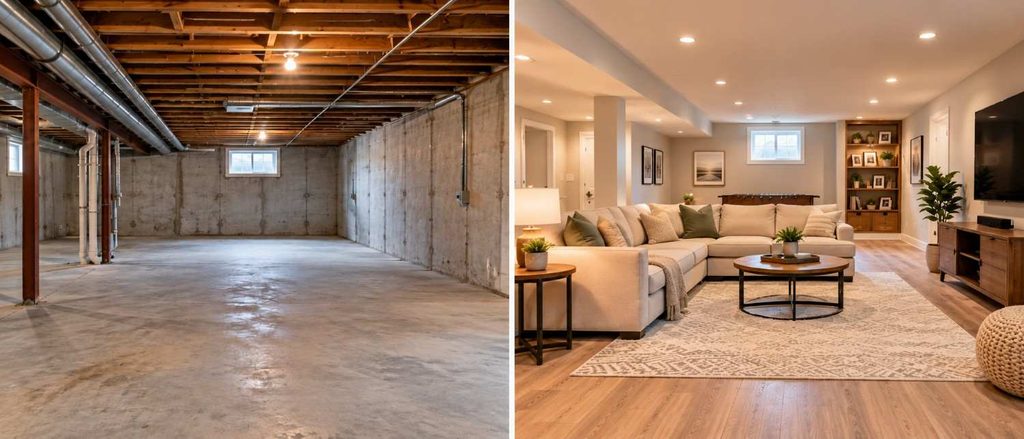
An unfinished basement can be one of the most valuable areas in your home, but turning it into a comfortable living space requires more than adding drywall and flooring. Choosing the right Basement Finishing Contractors helps ensure your renovation is completed safely, efficiently, and according to local building standards. A skilled contractor can transform an empty basement into a functional family room, home office, entertainment area, guest suite, or additional living space while avoiding expensive mistakes.
Many homeowners underestimate the complexity of basement renovations. Issues like moisture control, insulation, electrical upgrades, plumbing requirements, ventilation, permits, and structural considerations all play an important role in the final result. Working with experienced professionals allows homeowners to create a finished basement that not only looks attractive but also provides long-term comfort and value.
Before hiring a contractor, it is important to understand what services they provide, what questions to ask, how much the project may cost, and which warning signs to avoid.
What Do Professional Basement Finishing Contractors Do?
Professional basement contractors handle much more than basic construction work. They manage the complete transformation of an unfinished basement into a safe and usable area.
A reliable contractor typically helps with:
- Basement design and layout planning
- Framing and drywall installation
- Insulation and moisture protection
- Electrical wiring and lighting
- Flooring installation
- Ceiling solutions
- Bathroom or plumbing additions
- Painting and interior finishing
- Permit coordination
- Final inspections
Experienced contractors also evaluate the condition of the existing basement before construction begins. They look for issues such as water leaks, foundation concerns, poor ventilation, low ceiling height, and outdated electrical systems.
This early assessment prevents homeowners from investing in a renovation that may later require costly repairs.
Why Hiring Experienced Basement Finishing Contractors Matters
A basement renovation has different challenges compared to remodeling an above-ground room. Basements are naturally more exposed to moisture, temperature changes, and drainage problems.
An inexperienced contractor may focus only on appearance while ignoring important construction details. This can lead to problems such as mold growth, damaged flooring, poor air quality, and expensive repairs.
Professional contractors understand how to:
- Protect the basement from moisture damage
- Select suitable materials for below-grade spaces
- Follow local building codes
- Improve energy efficiency
- Create functional layouts
- Complete work safely
For example, experienced remodeling companies such as SK Group NYC Corp focus on proper planning, quality workmanship, and clear communication throughout renovation projects. These qualities are important when homeowners compare different contractors.
How to Choose the Right Basement Finishing Contractors
Choosing the right contractor requires more than comparing prices. A successful basement renovation depends on experience, reliability, communication, and attention to detail.
Here are the most important factors to evaluate.
Review Their Basement Remodeling Experience
Experience with basement projects should be one of your first considerations. A contractor who mainly works on kitchens or bathrooms may not understand basement-specific challenges.
Ask potential contractors:
- How many basement finishing projects have you completed?
- Can you show examples of similar renovations?
- Have you worked on basements with moisture issues?
- Can you provide references from previous clients?
Reviewing a contractor’s portfolio helps you understand their design approach and construction quality.
Look for projects that include features similar to what you want, such as bedrooms, bathrooms, entertainment rooms, or home offices.
Verify Licensing, Insurance, and Professional Credentials
A professional basement renovation contractor should have proper licensing and insurance based on your location.
Licensing shows that the contractor understands construction requirements and follows industry standards. Insurance protects homeowners from potential liability if accidents or property damage occur during the project.
Before signing an agreement, confirm:
- Contractor license information
- Liability insurance coverage
- Worker protection coverage
- Permit responsibilities
A trustworthy contractor will be transparent about credentials and documentation.
Understand the Basement Finishing Process
A quality contractor should explain each stage of the renovation process before work begins.
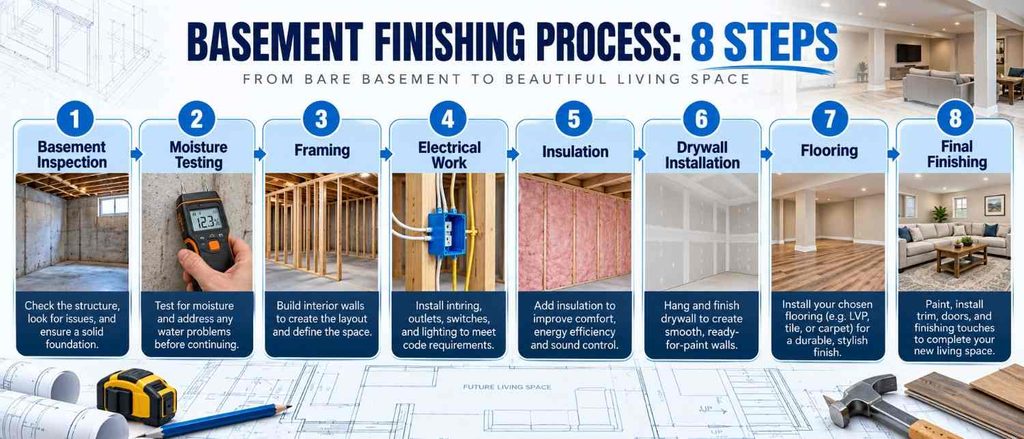
Basement Inspection and Planning
The first step is evaluating the existing basement. Contractors check:
- Foundation condition
- Moisture levels
- Existing plumbing
- Electrical capacity
- Ceiling height
- Natural lighting options
This information helps create a realistic renovation plan.
Moisture Control and Waterproofing
Moisture is one of the biggest concerns in basement renovations. Before installing walls, flooring, or insulation, contractors should address any water-related problems.
Common solutions include:
- Waterproof coatings
- Drainage improvements
- Vapor barriers
- Sump pump installation
- Moisture-resistant materials
Ignoring moisture issues can damage finished surfaces and create unhealthy indoor conditions.
Insulation, Electrical, and HVAC Improvements
A comfortable finished basement requires proper insulation and temperature control.
Contractors may upgrade:
- Wall insulation
- Heating systems
- Air circulation
- Electrical outlets
- Lighting systems
Good insulation improves comfort and reduces energy costs.
Flooring, Walls, and Interior Finishing
The final stage focuses on creating the finished appearance.
Popular basement finishing choices include:
- Luxury vinyl flooring
- Engineered wood
- Carpet
- Drywall walls
- Recessed lighting
- Built-in storage
Materials should be selected based on durability, moisture resistance, and homeowner needs.
Important Features Professional Contractors Consider
A quality basement renovation requires attention to details that homeowners may overlook.
Egress Windows and Safety Requirements
If a basement includes a bedroom or sleeping area, many locations require egress windows for emergency exits.
A professional contractor understands these safety requirements and can recommend suitable solutions.
Bathroom Installation and Plumbing
Adding a basement bathroom can significantly improve functionality, but it requires proper planning.
Contractors consider:
- Existing plumbing connections
- Drainage systems
- Water supply
- Ventilation
- Possible sewage requirements
Poor plumbing planning can create serious problems later.
Ceiling Height and Layout Planning
Not every basement has the same potential. Ceiling height, support columns, and mechanical equipment affect the final design.
Experienced contractors help homeowners create layouts that maximize available space while maintaining comfort.
How Much Does Basement Finishing Cost?
The cost of finishing a basement depends on several factors, including size, materials, design complexity, and required upgrades.
Common cost factors include:
| Project Element | Impact on Budget |
|---|---|
| Flooring selection | Varies based on material quality and installation |
| Electrical upgrades | Higher cost if major rewiring is needed |
| Bathroom addition | Increased cost due to plumbing work |
| Waterproofing | Essential expense for moisture protection |
| Custom features | Adds cost for specialized designs |
A professional contractor should provide a detailed estimate explaining labor, materials, timeline, and possible additional expenses.
Avoid contractors who provide extremely low quotes without explaining what is included. A cheap estimate may later increase because of hidden costs or poor planning.
How Long Does Basement Finishing Take?
The timeline depends on the size and complexity of the renovation.
A typical basement finishing project may include:
Planning and Design
Usually involves layout decisions, budgeting, and material selection.
Permits and Preparation
Depending on location, approvals may take additional time.
Construction Phase
Includes framing, electrical work, insulation, drywall, flooring, and finishing.
Most standard basement renovations take several weeks to a few months. Larger projects with bathrooms, custom rooms, or structural changes may require additional time.
A reliable contractor should provide a realistic timeline instead of promising unrealistic completion dates.
Questions to Ask Before Hiring a Contractor
Before choosing a contractor, ask detailed questions to avoid misunderstandings.
What experience do you have with basement renovations?
This helps determine whether they understand below-grade construction challenges.
What is included in your estimate?
A complete estimate should include labor, materials, permits, and possible additional costs.
Do you handle permits?
Professional contractors should understand local requirements and help manage necessary approvals.
How do you handle unexpected problems?
A good contractor should explain how they manage issues such as hidden water damage or outdated systems.
Red Flags to Avoid When Hiring a Basement Contractor
Some warning signs indicate a contractor may not be the right choice.
Avoid contractors who:
- Refuse to provide references
- Do not have proper insurance
- Request large upfront payments
- Provide unclear estimates
- Avoid written contracts
- Have consistently poor reviews
A professional contractor should communicate clearly, explain the process, and provide documentation before beginning work.
Final Thoughts
Finishing a basement is a major home improvement investment, and the contractor you choose plays a significant role in the final outcome. The right professional will help you avoid common problems, make smart design decisions, and create a space that adds comfort and value to your home.
Before hiring Basement Finishing Contractors, compare experience, check credentials, review past projects, and ask detailed questions about the renovation process. A reliable contractor is not simply someone who completes construction work; they are a partner who helps turn an unfinished basement into a safe, functional, and valuable part of your home.