White powdery stains appearing on brick walls, concrete floors, basement surfaces, or outdoor pavers can be frustrating for homeowners. These chalky deposits are often mistaken for dirt, mold, or damage, but they are usually caused by a process called efflorescence.
If you are searching for how to get rid of efflorescence, the most important thing to understand is that removing the white residue is only part of the solution. The deposits form because moisture moves through porous materials and carries dissolved salts to the surface. If the source of moisture is not addressed, the problem may return.
This guide explains what causes efflorescence, the safest removal methods, how to prevent it from coming back, and when professional help may be necessary.
Quick Answer: How Do You Remove Efflorescence?
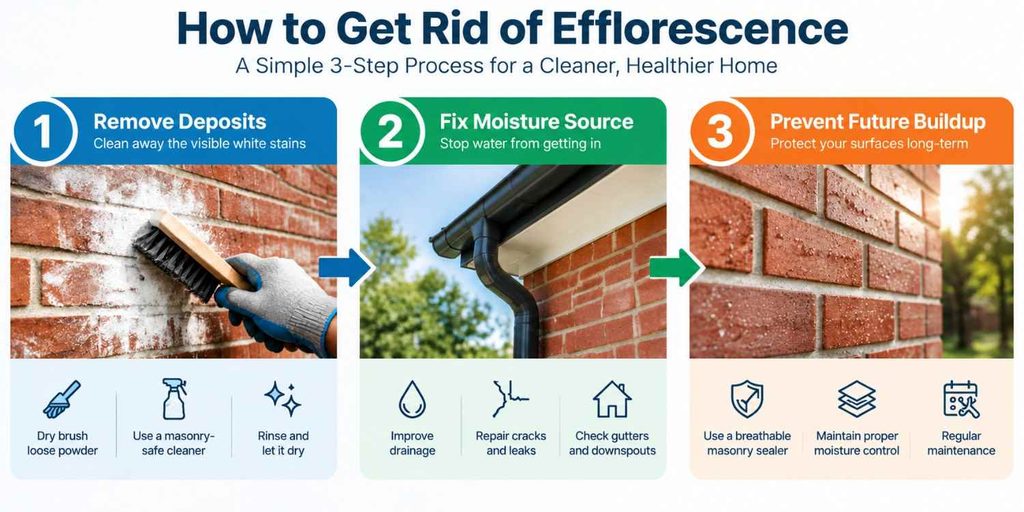
To remove efflorescence, start by allowing the surface to dry completely, then use a stiff brush to remove loose salt deposits. For heavier buildup, apply a masonry-safe efflorescence cleaner and follow proper cleaning instructions. After removal, fix the moisture source through drainage improvements, sealing, repairs, or waterproofing to prevent recurrence.
The key is simple:
Remove the salt deposits + control moisture = long-term efflorescence prevention.
What Is Efflorescence and Why Does It Happen?
Efflorescence is a white, powder-like substance that appears on masonry surfaces such as brick, concrete, stone, and mortar. It forms when water travels through these materials, dissolves natural salts, and carries them toward the surface.
When the moisture evaporates, the minerals remain behind, creating visible white stains.
Efflorescence commonly appears on:
- Brick exterior walls
- Concrete driveways
- Basement walls
- Foundation surfaces
- Stone patios
- Retaining walls
- Masonry structures
Many homeowners notice efflorescence after:
- Heavy rainfall
- New masonry installation
- Basement moisture problems
- Poor drainage conditions
- Seasonal temperature changes
The appearance can be concerning, but efflorescence itself is usually not harmful. However, recurring buildup often indicates that moisture is continuously moving through the surface.
What Causes Efflorescence on Brick, Concrete, and Walls?
Efflorescence requires three main elements:
- Water or moisture source
- Soluble salts inside the material
- A pathway that allows moisture movement
If any one of these factors is removed, efflorescence becomes less likely to occur.
Common Causes Include:
1. Excess Moisture
Water is the main trigger behind efflorescence. Rainwater, groundwater, plumbing leaks, or humidity can introduce moisture into porous building materials.
Examples include:
- Water collecting near foundations
- Poor drainage systems
- Leaking gutters
- Basement moisture infiltration
2. Porous Masonry Materials
Materials like brick and concrete naturally contain tiny pores that allow water movement.
The more moisture these materials absorb, the higher the chance of salt deposits appearing.
3. Poor Drainage Around the Property
When water remains near walls or foundations, it increases moisture absorption.
Common drainage issues include:
- Incorrect gutter direction
- Blocked downspouts
- Poor grading around the foundation
- Water pooling near masonry surfaces
4. New Construction Materials
Fresh concrete, mortar, and brickwork often contain natural salts that can appear during the drying process.
This type of efflorescence may reduce over time as the materials fully cure.
How to Get Rid of Efflorescence: Step-by-Step Removal Guide
Learning how to get rid of efflorescence starts with choosing the correct cleaning method for your surface. Removing deposits from brick requires different care compared with concrete or natural stone.
Step 1: Allow the Surface to Dry
Before cleaning, make sure the affected area is dry.
Trying to remove efflorescence while the surface is wet can make it harder to identify the actual buildup and may spread dissolved salts further.
Step 2: Remove Loose Deposits With a Dry Brush
For light efflorescence, dry brushing is often the safest first option.
Tools needed:
- Stiff nylon brush
- Gloves
- Safety glasses
- Vacuum or broom
Process:
- Brush the white deposits firmly.
- Collect the loosened powder.
- Inspect the surface.
- Repeat if necessary.
Avoid using excessive force because aggressive scrubbing can damage softer masonry surfaces.
Step 3: Use a Masonry-Safe Cleaning Solution
If brushing does not remove the buildup, a specialized efflorescence cleaner may be required.
A proper cleaning process usually involves:
- Testing the product on a small hidden area.
- Applying the cleaner according to instructions.
- Gently scrubbing the surface.
- Rinsing thoroughly.
- Allowing the area to dry.
The correct product depends on the surface type.
For example:
- Brick may require a gentler approach.
- Concrete may tolerate stronger cleaning solutions.
- Natural stone may require specialized products.
Best Efflorescence Removal Methods Compared
| Removal Method | Best For | Advantages | Considerations |
|---|---|---|---|
| Dry brushing | Light white powder deposits | Safe, affordable, simple | May not remove heavy buildup |
| Water cleaning | Small surface areas | Easy method | Excess moisture can worsen recurrence |
| Masonry cleaner | Stubborn deposits | More effective for heavy stains | Requires correct application |
| Professional treatment | Large or recurring problems | Addresses underlying causes | Higher investment |
How to Remove Efflorescence From Brick, Concrete, and Basement Walls
Removing Efflorescence From Brick
Brick is one of the most common surfaces affected by efflorescence because it naturally absorbs and releases moisture.
Recommended approach:
- Start with dry brushing
- Use brick-safe cleaners if needed
- Inspect mortar joints for moisture issues
- Improve drainage around the wall
Avoid sealing brick immediately without identifying the moisture source. Trapping moisture inside masonry can create additional problems.
Removing Efflorescence From Concrete
Concrete surfaces such as driveways, sidewalks, and basement floors can develop white mineral deposits.
Effective methods include:
- Surface brushing
- Concrete-safe cleaners
- Proper rinsing
- Moisture control
If the concrete continues producing white deposits, investigate drainage and water penetration issues.
Removing Efflorescence From Basement Walls
Basement efflorescence deserves extra attention because it often points to moisture movement.
Check for:
- Foundation leaks
- Cracks
- Condensation
- Poor exterior drainage
Cleaning the wall may improve appearance, but fixing the moisture source is necessary for long-term results.
Efflorescence vs Mold: How to Tell the Difference
Many homeowners confuse efflorescence with mold because both can appear as white patches on walls, concrete, or basement surfaces. However, they are very different problems and require different solutions.
Understanding the difference helps you choose the correct treatment.
| Feature | Efflorescence | Mold |
|---|---|---|
| Appearance | White, powdery, crystal-like deposits | Fuzzy, uneven patches |
| Cause | Moisture carrying mineral salts | Moisture supporting organic growth |
| Texture | Dry and chalky | Soft or slimy |
| Location | Brick, concrete, masonry surfaces | Wood, drywall, damp organic materials |
| Removal | Cleaning salts and controlling moisture | Mold treatment and moisture removal |
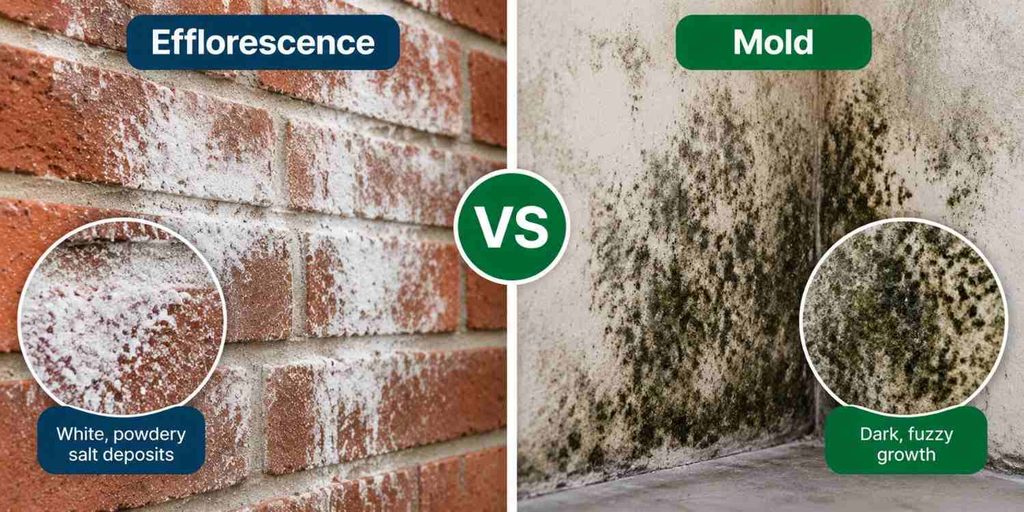
A simple test is to rub the affected area gently. Efflorescence usually feels powdery and can brush away easily. Mold often has a different texture and may have a musty smell.
If you are unsure, it is better to identify the problem correctly before applying cleaning products.
Can Efflorescence Come Back After Cleaning?
Yes, efflorescence can return after cleaning if the underlying moisture problem is not corrected.
Many homeowners make the mistake of treating efflorescence as only a surface stain. In reality, the white powder is often a visible sign that water is moving through the masonry.
Common reasons efflorescence returns include:
- Water entering through cracks
- Poor drainage around the foundation
- Leaking gutters or downspouts
- Damaged mortar joints
- Lack of proper waterproofing
- High moisture levels indoors
A successful solution requires two steps:
- Remove existing salt deposits.
- Prevent future moisture movement.
Without addressing the cause, the same white deposits may appear again within weeks or months.
How to Prevent Efflorescence From Coming Back
After removing efflorescence, prevention is the most important step. Proper moisture management helps protect brick, concrete, and masonry surfaces from repeated staining.
1. Improve Drainage Around Your Home
Water should always move away from your foundation and exterior walls.
Check:
- Gutters are clean and working properly
- Downspouts direct water away from the building
- Soil slopes away from the foundation
- Water does not pool near masonry surfaces
Poor drainage is one of the most common reasons homeowners experience recurring efflorescence.
2. Repair Cracks and Damaged Masonry
Small cracks in brick, mortar, or concrete can allow moisture to enter.
Inspect for:
- Cracked mortar joints
- Damaged brick surfaces
- Open gaps around windows and doors
- Deteriorated sealants
Repairing these areas reduces the amount of water entering the structure.
3. Use the Right Masonry Sealer
A breathable masonry sealer can help reduce water absorption while allowing trapped moisture vapor to escape.
However, sealing should be done carefully.
Applying the wrong product too early may trap moisture inside the wall and create additional problems.
Before sealing:
- Remove existing efflorescence
- Allow the surface to dry completely
- Confirm the moisture source has been addressed
4. Maintain Proper Indoor Humidity
For interior areas such as basements, controlling humidity is important.
Helpful steps include:
- Using a dehumidifier when needed
- Improving ventilation
- Repairing plumbing leaks quickly
- Checking basement moisture levels
Reducing indoor moisture can help prevent recurring wall problems.
Common Mistakes Homeowners Make When Removing Efflorescence
Even though efflorescence removal seems simple, incorrect methods can make the problem worse.
Mistake 1: Painting Over Efflorescence
Some homeowners cover white stains with paint without fixing the moisture source.
This can trap moisture behind the coating and cause:
- Peeling paint
- Blistering
- More visible damage later
Always solve the moisture issue before applying paint.
Mistake 2: Using Harsh Chemicals Without Testing
Strong acids or cleaners may damage certain surfaces.
Before using any cleaning product:
- Read instructions carefully
- Test a small area
- Protect nearby surfaces
Different masonry materials react differently.
Mistake 3: Pressure Washing Too Aggressively
Pressure washing can remove surface deposits, but excessive pressure may damage porous materials.
Potential problems include:
- Surface erosion
- Damaged mortar joints
- Increased water absorption
Use appropriate pressure levels and techniques.
Mistake 4: Ignoring the Root Cause
Cleaning removes the symptom, not always the cause.
If water continues entering the material, efflorescence may return.
A complete solution requires identifying where moisture is coming from.
How Long Does Efflorescence Removal Take?
The time required depends on:
- Amount of buildup
- Surface type
- Cleaning method
- Moisture conditions
Typical situations:
Light efflorescence:
May be removed within a few hours using brushing and basic cleaning.
Heavy buildup:
May require multiple cleaning treatments and additional inspection.
Recurring efflorescence:
Requires more time because the moisture source must be identified and corrected.
The fastest approach is not always the best approach. Removing the deposits while ignoring the cause usually leads to repeated maintenance.
When Should You Hire a Professional for Efflorescence Problems?
DIY cleaning works well for small, isolated areas. However, professional evaluation is recommended when the problem is extensive or keeps returning.
Consider professional help if:
- Efflorescence appears repeatedly
- Large sections of walls are affected
- Basement walls show moisture problems
- Brick or mortar is deteriorating
- Water intrusion is suspected
- You cannot identify the moisture source
Experienced professionals can evaluate whether the issue is related to drainage, waterproofing, masonry condition, or another underlying problem.
For homeowners dealing with recurring exterior wall or masonry issues, SK Group NYC Corp provides professional property improvement and masonry-related solutions focused on identifying problems and improving long-term building performance.
Frequently Asked Questions
What is the easiest way to remove efflorescence?
The easiest method is usually dry brushing the surface when the deposits are light and loose. For heavier buildup, a masonry-safe cleaner may be required.
Does vinegar remove efflorescence?
Vinegar may help dissolve some mineral deposits, but it is not suitable for every surface. Brick, stone, and concrete can react differently to acidic cleaners, so testing is recommended first.
Is efflorescence a sign of water damage?
Efflorescence does not always mean structural water damage. However, recurring deposits often indicate that moisture is moving through the material and should be investigated.
Can efflorescence damage concrete?
Efflorescence itself usually does not damage concrete. However, the moisture conditions causing it may contribute to long-term surface deterioration if left unresolved.
How do I permanently stop efflorescence?
The best way to reduce recurring efflorescence is to control moisture by improving drainage, repairing cracks, maintaining waterproofing, and using appropriate masonry protection.
Should I remove efflorescence before sealing brick?
Yes. Efflorescence should generally be removed and the surface should be completely dry before applying a masonry sealer. Sealing over active moisture problems may trap water inside the material.
Final Thoughts
Understanding how to get rid of efflorescence requires more than simply cleaning away white stains. While brushing and masonry cleaners can improve the appearance of affected surfaces, long-term results depend on controlling the moisture that causes salt deposits to form.
For small areas, homeowners can often handle efflorescence removal with careful cleaning methods. However, recurring problems may point to drainage issues, water infiltration, or masonry concerns that require professional attention.
The most effective approach is:
Identify the moisture source → Remove the deposits → Protect the surface → Prevent future buildup.
With proper maintenance, drainage improvements, and timely repairs, you can keep brick, concrete, and masonry surfaces cleaner while protecting the long-term condition of your property.
Have Questions? Call Us Now!
+1 (718) 507-7000
We’re here to help quick answers, friendly service, anytime you need!
Contact SK Group NYC
🌐 Website: www.skgroupnyccorp.com
📍 Serving: Manhattan, Brooklyn, Queens, The Bronx, and Staten Island
📍 Address: 87-88 172nd St, Jamaica, New York, NY, United States, New York