
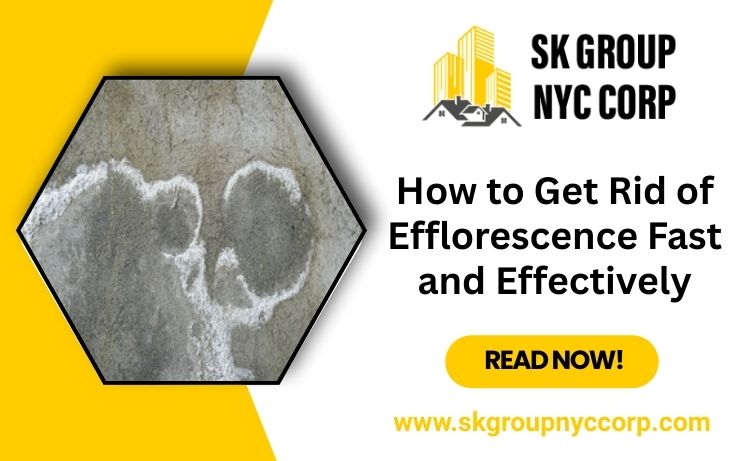
When you walk through neighborhoods in Brooklyn, Queens, or Manhattan, brick and concrete buildings surround you. These structures define New York City’s character. But sometimes, those strong-looking walls develop white, chalky stains that ruin their appearance. That white powder is called efflorescence, and it is one of the most common masonry problems we see at SK Group NYC Corp.
Efflorescence is not just a surface issue. It is your wall telling you that moisture is moving through it. Understanding how to get rid of efflorescence properly helps protect your home, basement, and foundation from long-term damage.
What Is Efflorescence and Why Does It Appear?
Efflorescence is a white, powdery salt deposit that forms on brick, concrete, and block walls. It appears when water enters masonry materials, dissolves natural salts inside them, and then evaporates at the surface. Once the water disappears, the salts remain visible as a chalky residue.
This problem is extremely common in NYC because many buildings are older, basements sit below ground level, and rainwater drainage is often limited. Seasonal freeze-thaw cycles also force moisture in and out of masonry, making efflorescence a frequent issue across Brooklyn, the Bronx, Queens, Staten Island, and Manhattan.
Is Efflorescence Dangerous for Your Property?
Efflorescence itself is not harmful, but the moisture causing it can be. When water continuously moves through masonry, it can lead to mold growth, peeling paint, weakened mortar joints, and long-term structural damage. Many homeowners clean the white powder and ignore the cause, which allows the problem to return again and again.
That is why proper efflorescence treatment always focuses on moisture control, not just cleaning.
How to Get Rid of Efflorescence the Right Way
To completely solve efflorescence, two things must happen. First, existing surface salts need to be removed safely. Second, the underlying moisture issue must be fixed to prevent the salts from returning. Cleaning without prevention may improve appearance temporarily, but it never delivers lasting results.
Before starting any removal method, always work on a dry surface, wear a dust mask, and test products on a small hidden area to avoid damage.
Dry Brushing: The First Step You Should Always Try
Dry brushing is the safest and most effective method for light or new efflorescence. Using a stiff nylon brush or wire brush, gently sweep the powdery salts away from the surface while the wall is completely dry. This prevents salts from being pushed deeper into the masonry pores.
Dry brushing works especially well for interior basement walls and concrete block surfaces where moisture is minimal.
Water and Mild Detergent Cleaning
If dry brushing does not fully remove the efflorescence, the next step is gentle washing. A mixture of warm water and mild dish soap can help dissolve remaining salts. Scrub the area carefully and rinse thoroughly with clean water.
Avoid soaking the wall, as excess water can feed the moisture problem and cause efflorescence to return more quickly.
Vinegar Solution for Stubborn Efflorescence
For tougher deposits, a vinegar solution can be effective, especially on brick less than 20 years old and concrete block walls. Mix white vinegar and water in a 1:1 ratio, spray it on the affected area, allow it to sit for about five minutes, then scrub gently and rinse well.
After using vinegar, it is important to neutralize the acid. Spray a solution of two to three tablespoons of baking soda mixed in water, then rinse again. This step protects the masonry surface from acid damage.
Commercial Efflorescence Removers for Better Results
In many cases, commercial efflorescence removers provide safer and more consistent results than DIY acids. Products such as RadonSeal Efflorescence Remover or F9 Efflo are designed specifically for masonry and help dissolve salts without weakening the surface.
At SK Group NYC Corp, we often recommend these products for recurring efflorescence problems, especially on exterior walls and foundations.
Muriatic Acid: A Last Resort Only
Muriatic acid should only be used when all other methods fail. It requires extreme caution and proper dilution. The correct ratio is one part muriatic acid to twelve parts water, and acid must always be poured into water, never the reverse.
Before application, the wall should be pre-soaked with clean water to prevent the acid from penetrating too deeply. After applying with a brush, wait five minutes and rinse thoroughly. Improper use can permanently damage brick and mortar.
How to Get Rid of Efflorescence on Basement Walls Permanently
Basement efflorescence almost always indicates moisture pressure from outside the foundation. Cleaning alone will never solve the issue permanently. To stop efflorescence on basement walls, moisture movement must be controlled.
Permanent solutions include sealing foundation cracks, improving exterior drainage, repairing gutters, installing proper ventilation, and reducing indoor humidity. At SK Group NYC Corp, we always address these root causes before cleaning, ensuring long-term protection.
Preventing Efflorescence from Returning
Efflorescence will continue to appear as long as water travels through masonry. Preventing it starts with fixing water entry points, such as cracked mortar joints, damaged gutters, or poor grading around the foundation. Water should always be directed away from the structure.
Once the surface is clean and completely dry for at least two to three days, applying a breathable, penetrating masonry sealer is essential. Unlike paint, breathable sealers block water while allowing trapped moisture vapor to escape safely.
Important Precautions Every Homeowner Should Know
Always test cleaning solutions on a small area first to check for discoloration. Avoid pressure washing, as high pressure opens masonry pores and makes moisture problems worse. Never use acidic cleaners on polished or porous natural stone like marble or limestone, as acids will etch and permanently damage these surfaces.
Why Efflorescence Keeps Coming Back in NYC Homes
Homeowners often ask why efflorescence returns even after cleaning. The most common reasons include ignoring moisture sources, trapping water behind paint, using incorrect cleaning methods, or failing to address drainage problems. Efflorescence is only a symptom; moisture is the real cause.
Why Professional Efflorescence Treatment Matters
Efflorescence may look simple, but its causes are often complex. At SK Group NYC Corp, we bring hands-on NYC masonry experience, waterproofing expertise, and long-term solutions tailored to local building conditions. We do not just clean walls we protect structures.
Learn more about our services at
👉 https://skgroupnyccorp.com
Frequently Asked Questions About Efflorescence
How to eliminate efflorescence permanently?
To eliminate efflorescence permanently, you must remove the visible salt deposits and stop moisture from moving through the masonry. Dry brushing or gentle cleaning removes surface salts, but long-term elimination requires fixing water sources such as foundation cracks, poor drainage, or high humidity. Applying a breathable masonry sealer after the wall is fully dry helps block future moisture while allowing trapped vapor to escape.
How to remove efflorescence from basement walls?
If you want to know how to remove efflorescence from basement walls, start by dry brushing the white powder when the wall is completely dry. If stains remain, use mild detergent or a vinegar-and-water solution, followed by proper rinsing. However, basement efflorescence usually means moisture pressure, so permanent results require waterproofing, crack sealing, and humidity control rather than cleaning alone.
What causes efflorescence to keep coming back?
Efflorescence keeps returning when moisture continues to pass through brick, concrete, or block walls. Common causes include leaking gutters, poor exterior drainage, foundation cracks, or trapped moisture behind paint. Until the moisture source is corrected, even the best cleaning method will only provide temporary results.
Is efflorescence on stone different from brick or concrete?
Efflorescence on stone forms in a similar way, but removal methods must be chosen carefully. Porous or polished natural stones like marble and limestone should never be cleaned with acidic solutions, as acids can etch and permanently damage the surface. In these cases, dry brushing and professional efflorescence treatment are the safest options.
When should I hire a professional for efflorescence treatment?
You should hire a professional when efflorescence returns quickly, basement walls feel damp, paint starts peeling, or cracks appear in masonry. Professional efflorescence treatment focuses on identifying and fixing moisture sources, not just cleaning the surface. This approach protects the structure and prevents repeated damage, especially in NYC homes.
Final Thoughts: Fix the Cause, Not Just the Stain
Understanding how to get rid of efflorescence properly helps protect your property’s value and structure. Removing surface salts is important, but stopping moisture movement is the key to permanent results. When handled correctly, efflorescence does not have to return.
Have Questions? Call Us Now!
+1 (718) 507-7000
We’re here to help quick answers, friendly service, anytime you need!
Contact SK Group NYC
🌐 Website: www.skgroupnyccorp.com
📍 Serving: Manhattan, Brooklyn, Queens, The Bronx, and Staten Island
📍 Address: 87-88 172nd St, Jamaica, New York, NY, United States, New York