Sidewalk width matters for every NYC property owner because it affects pedestrian safety, accessibility, sidewalk repair planning, and city compliance. A sidewalk may look wide enough at first glance, but tree pits, poles, signs, cellar doors, planters, or damaged concrete can reduce the clear walking space people actually use.
In New York City, sidewalk dimensions are not based on one simple number. NYC DOT looks at pedestrian demand, corridor type, sidewalk zones, and available street space. ADA accessibility also focuses on maintaining a usable clear route for people using wheelchairs, walkers, strollers, and other mobility devices.
This guide explains what sidewalk width means, how it differs from clear path width, what NYC DOT guidance says, and when repair or replacement may be needed.
Quick Answer: What Is the Standard Sidewalk Width?
There is no single standard sidewalk width for every NYC property. NYC DOT’s Pedestrian Mobility Plan uses corridor-based guidance, with desirable sidewalk widths ranging from 8 feet or more on Baseline Streets to 25 feet or more on Global Corridors. These guidelines are based on pedestrian demand and sidewalk function.
For property owners, the most important distinction is this: sidewalk width is the full sidewalk area, while clear path width is the unobstructed walking space pedestrians can actually use. A sidewalk can be physically wide but still difficult to use if obstructions or damage reduce the clear path.
What Sidewalk Width Means
Sidewalk width is the horizontal measurement of the sidewalk area, usually from the curb edge toward the property line or building frontage, depending on the site layout.
This total width may include the pedestrian walking area, tree pits, utility poles, signs, street furniture, cellar doors, planters, or other features. Because of that, the full sidewalk width is not always the same as usable pedestrian space.
Sidewalk Width vs. Clear Path Width
Sidewalk width refers to the total sidewalk area. Clear path width refers to the unobstructed part of the sidewalk reserved for pedestrian movement.
NYC DOT defines clear path as the portion of the walk lane that is free from amenities and supports uninterrupted pedestrian flow. The city also separates sidewalks into three functional zones: walk lane, clear path, and furnishing zone.
For example, if a sidewalk is 10 feet wide but a tree pit, pole, and sign leave only 4 feet of open walking space, the total sidewalk width is 10 feet, but the usable clear path may be only 4 feet.
NYC Sidewalk Width Guidelines
NYC DOT’s Pedestrian Mobility Plan provides desirable sidewalk widths by corridor type. The guidelines are described as aspirational, not regulatory, but they are useful for understanding how much pedestrian space different streets may need.
| NYC Corridor Type | Desirable Sidewalk Width | Walk Lane | Clear Path | What It Means |
|---|---|---|---|---|
| Baseline Street | 8 ft or more | 5 ft | 4 ft | Lower pedestrian demand streets |
| Community Connector | 10 ft or more | 8 ft | 5 ft | Streets connecting neighborhood destinations |
| Neighborhood Corridor | 15 ft or more | 12 ft | 8 ft | Active neighborhood business or school areas |
| Regional Corridor | 20 ft or more | 15 ft | 12 ft | Crowded streets with major destinations |
| Global Corridor | 25 ft or more | 20 ft | 15 ft | Highest-demand pedestrian corridors |
These numbers do not mean every NYC sidewalk must be rebuilt to the same size. They show how sidewalk width expectations change based on pedestrian use, street context, and corridor demand.
ADA Sidewalk Width Requirements
wADA guidance focuses on accessible routes and clear passage. The U.S. Access Board states that accessible walking surfaces generally require a 36-inch minimum continuous clear width, with limited reductions to 32 inches at certain points for a maximum distance of 24 inches.
This does not mean a complete sidewalk should only be 36 inches wide. It means the pedestrian route must preserve enough unobstructed space for accessibility. In NYC, property owners should be especially careful because sidewalk obstructions, slopes, raised flags, and damaged concrete can all affect safe access.
Residential Sidewalk Width in NYC
Residential sidewalks are usually expected to support normal daily pedestrian movement, including residents, visitors, strollers, delivery workers, and mobility devices. In many cases, the concern is not only the original sidewalk width, but whether the surface remains safe and clear.
A residential sidewalk with raised concrete, cracked flags, tree root damage, or blocked walking space can become a problem even if the total sidewalk width looks acceptable. Property owners should check both the walking surface and the clear path.
Commercial Sidewalk Width in NYC
Commercial sidewalks often need more usable pedestrian space because they serve customers, employees, deliveries, storefront entrances, and heavier foot traffic. Signs, outdoor displays, planters, street furniture, and loading activity can reduce clear path width if they are not managed carefully.
For commercial property owners, sidewalk width also affects customer access. A clear, level, and open walking surface makes the property easier to enter and reduces safety concerns.
Factors That Affect Sidewalk Width
Property Type
Residential, commercial, mixed-use, and industrial properties all create different sidewalk needs. A quiet residential frontage does not usually experience the same pedestrian demand as a retail corridor or busy avenue.
Property type also affects how often the sidewalk is used and how quickly cracks, settling, or wear may appear.
Pedestrian Traffic
Pedestrian traffic is one of the biggest factors in sidewalk planning. Streets near stores, offices, subway stations, schools, parks, and major destinations need more clear walking space.
When sidewalks are crowded or blocked, pedestrians may walk around obstacles or step toward the curb, which can create safety concerns.
Street Classification
NYC DOT uses corridor categories to understand pedestrian demand and guide sidewalk design. A Baseline Street does not have the same pedestrian-space needs as a Regional or Global Corridor.
This is why sidewalk width can vary significantly from one NYC block to another.
Sidewalk Obstructions
Common sidewalk obstructions include tree pits, utility poles, cellar doors, signs, bike racks, planters, street furniture, and outdoor dining setups. These may be located within the sidewalk area, but they should not block the required pedestrian clear path.
NYC Street Design Manual guidance describes clear path as essential for safe and accessible sidewalks throughout the city.
Accessibility Needs
Sidewalks should support people using wheelchairs, walkers, canes, strollers, and other mobility aids. Accessibility depends on more than width alone. Surface condition, slope, curb ramps, obstructions, and drainage also matter.
A sidewalk that is technically wide but uneven, blocked, or poorly repaired may still create accessibility problems.
How to Measure Sidewalk Width Correctly
To measure sidewalk width correctly, start with two separate measurements: the total sidewalk width and the clear path width. Total sidewalk width is the full distance from the curb edge to the property line or building frontage, where applicable. Clear path width is the open walking space pedestrians can actually use.
Follow these steps:
- Measure the full sidewalk area from the curb edge toward the property line or building frontage.
- Measure the clear pedestrian path separately.
- Exclude anything that blocks walking space, such as tree pits, utility poles, signs, cellar doors, planters, street furniture, or damaged concrete.
- Check whether cracks, raised sidewalk flags, or uneven sections reduce safe walking space.
- Take photos if there is damage, blocked access, or a possible DOT sidewalk violation.
For example, a sidewalk may be 12 feet wide in total, but if a 3-foot furnishing zone and a 2-foot obstruction reduce the open walking route, the usable clear path is much smaller than the full sidewalk width. This is why NYC property owners should measure both the full sidewalk area and the unobstructed pedestrian path before planning sidewalk repair or replacement.
Common Sidewalk Width Problems for NYC Property Owners
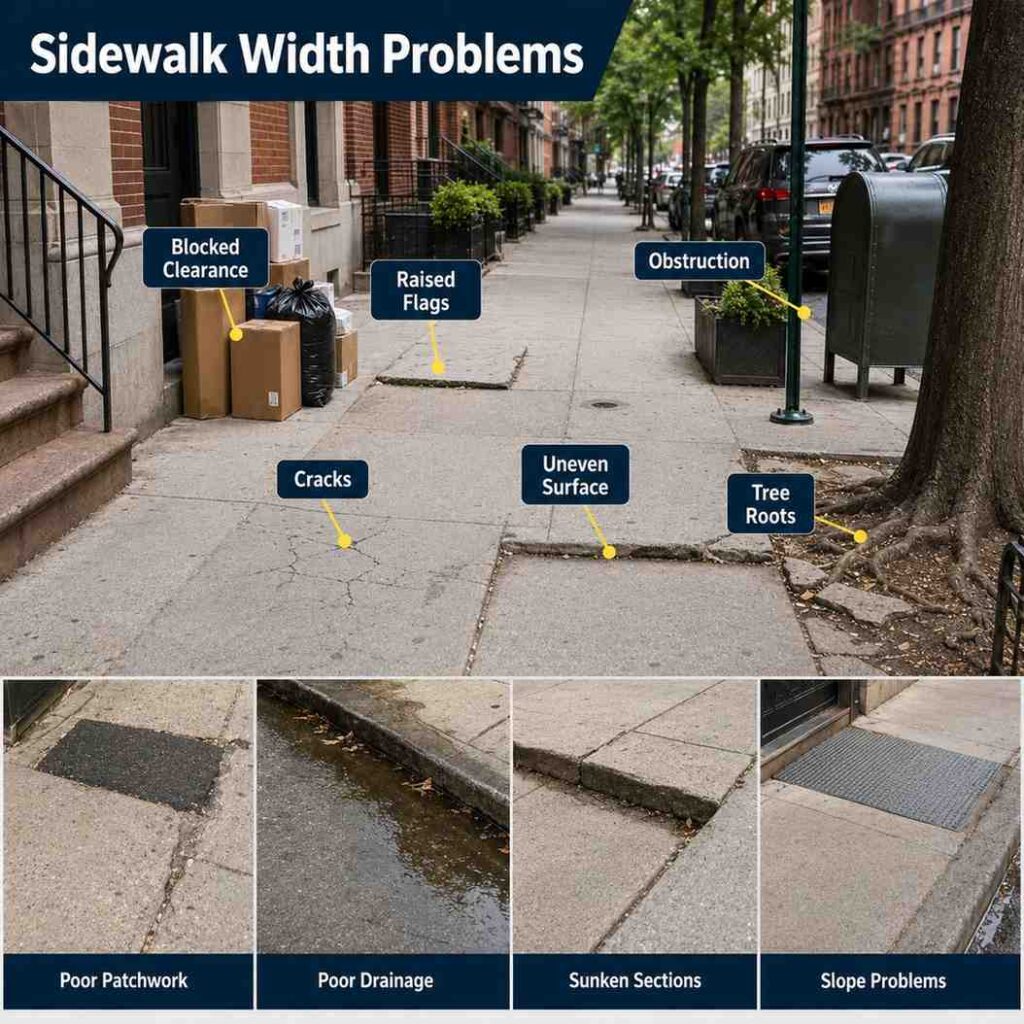
NYC property owners often face sidewalk width issues when the total sidewalk area does not match the usable walking space. The most common problems include:
- Confusing total width with clear path width
- Blocked pedestrian clearance
- Raised sidewalk flags
- Small holes or surface damage
- Cracked or uneven concrete
- Tree root damage
- Poor patchwork repairs
- Drainage and slope problems
- Sunken sidewalk sections
- Obstructions from signs, poles, planters, or street furniture
These issues can reduce safe pedestrian movement, create accessibility concerns, and increase the risk of sidewalk violations.
NYC Property Owner Sidewalk Responsibilities
NYC property owners are responsible for maintaining, repairing, and installing sidewalks next to their property.
If a sidewalk violation is issued, the property owner may need to hire a licensed contractor. NYC311 says the contractor must obtain a sidewalk construction permit before beginning repair or installation work.
For owners of residential properties with three or fewer units, NYC DOT may assign the repair work to a contractor and bill the owner if repair work does not begin within 75 days of receiving a sidewalk violation.
When Sidewalk Repair or Replacement May Be Needed
Sidewalk repair or replacement may be needed when the sidewalk is cracked, raised, uneven, sunken, blocked, improperly sloped, or affected by tree root damage. It may also be needed after a DOT sidewalk violation notice.
Property owners should not wait until the sidewalk becomes severely damaged. Early repair can help improve pedestrian safety, preserve accessibility, and reduce the risk of more expensive work later.
If the sidewalk has multiple raised flags, drainage problems, large cracks, or repeated patchwork, full replacement may be more practical than small repairs.
Why Professional Sidewalk Installation Matters
Professional sidewalk installation helps ensure proper measurements, concrete depth, surface leveling, drainage, pedestrian access, and long-term durability. It also helps avoid mistakes that can lead to repeat violations or failed dismissal inspections.
For NYC property owners who need sidewalk repair, replacement, or installation support, SK Group NYC Corp can help review sidewalk conditions and plan practical repair options based on the property’s layout and compliance needs.
FAQs
1. What is a standard walkway width?
A standard walkway is commonly around 4 to 5 feet wide for comfortable pedestrian use, but in NYC, the needed sidewalk width can vary by street type, pedestrian traffic, and available space.
2. What is the standard width of a sidewalk in centimeters?
A 36-inch accessible clear path is about 91.44 centimeters. This is a minimum accessibility reference for clear walking space, not necessarily the ideal full sidewalk width.
3. What is the typical sidewalk width in meters?
A typical 4 to 5 foot residential sidewalk is about 1.22 to 1.52 meters wide. Commercial and high-traffic sidewalks in NYC may need more space.
4. Is 30 inches wide enough for a walkway?
No, 30 inches is generally not wide enough for an accessible walkway because ADA guidance usually requires at least 36 inches of continuous clear width.
Final Thoughts
Sidewalk width is not just a measurement. It affects pedestrian safety, accessibility, property responsibility, curb appeal, and NYC sidewalk compliance.
The key is to understand both the full sidewalk width and the clear path width. A sidewalk should be wide enough, but it also needs to be clear, level, safe, and usable for pedestrians.
If your sidewalk is damaged, blocked, uneven, or connected to a violation notice, professional repair or replacement may be the best next step. SK Group NYC Corp can assist NYC property owners who need help improving sidewalk safety, concrete condition, and long-term durability.
Have Questions? Call Us Now!
+1 (718) 507-7000
We’re here to help quick answers, friendly service, anytime you need!
Contact SK Group NYC
🌐 Website: www.skgroupnyccorp.com
📍 Serving: Manhattan, Brooklyn, Queens, The Bronx, and Staten Island
📍 Address: 87-88 172nd St, Jamaica, New York, NY, United States, New York